













Make Outdoor Cushions Last Longer: Removable Covers, Cleaning & Storage

Outdoor cushions take the hardest beating of any patio furniture component. While aluminum frames and HDPE rattan resist years of weather exposure, the cushions sitting on top of them face a relentless cycle of ultraviolet radiation, moisture infiltration, and surface abrasion — all of which conspire to turn a $200 cushion set into a faded, musty disappointment in as little as one season.
The good news: homeowners who follow a three-pillar approach — investing in removable covers, maintaining a proper cleaning routine, and practicing smart seasonal storage — can realistically double or even triple the functional lifespan of their outdoor cushions.
This guide breaks down the science behind cushion deterioration and lays out a step-by-step care framework built on material-specific best practices.
Why Do Outdoor Cushions Wear Out Faster Than the Furniture Frame?
Cushions sit directly in the path of UV rays, rain, and daily abrasion without the protective coatings that shield metal or resin frames. The polymer chains inside fabric fibers break down under sustained sun exposure while trapped moisture breeds mold inside foam cores — a combination that shortens cushion life to roughly one-third of the frame's lifespan.
Three forces drive this accelerated deterioration. First, ultraviolet radiation breaks polymer chains in polyester, olefin, and acrylic fibers at a molecular level, weakening tensile strength long before visible fading appears. Solution-dyed fibers — where pigment is embedded into the molten polymer before extrusion — resist this degradation far better than surface-dyed alternatives.
Second, mold spores colonize fabric whenever warmth, sustained moisture, and organic residue (pollen, food crumbs, skin oils) converge. The most dangerous growth happens invisibly inside foam cores, where trapped rainwater creates a humid microenvironment that accelerates decay from the inside out.
Third, wind-blown particulates cause constant micro-abrasion, while pollen and tree sap act as chemical staining agents that bond with water-repellent coatings and create permanent marks if not addressed promptly.
Which Fabric Delivers the Best Value for Replacement Covers?
Three fabrics dominate the outdoor cushion market, each with distinct performance profiles.
Solution-dyed acrylic — the premium tier of outdoor fabrics — offers the highest UV resistance and colorfastness but carries a higher price point. Sunbrella® is one well-known example in this category. For example, Marindo collections come standard with solution-dyed acrylic (Sunbrella®) cushion covers — delivering the premium-tier fabric without requiring a separate upgrade purchase.

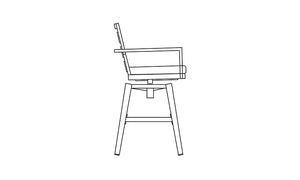
Shop the look: Marindo 6 Piece Outdoor Sofa Set With Swivel Chair and Ottoman
Olefin (polypropylene) provides excellent moisture resistance and stain repellency at a lower price point, with the added benefit of machine washability.
Standard polyester blends are the most affordable but fade fastest and require more frequent replacement.
What Is the Safest and Most Effective Way to Clean Patio Cushions?
The safest method starts with checking the manufacturer's care label, then follows a five-step sequence: dust removal, immediate spot treatment of spills, fabric-specific deep cleaning, complete air drying, and a finishing coat of fabric protectant spray. The critical safety rule is to never combine bleach with vinegar — the mixture generates toxic chlorine gas.
Essential Cleaning Tools and Supplies
Before starting any cleaning session, homeowners should gather the following tools and supplies to avoid interruptions mid-process:
Basic Tools:
- Soft-bristle brush (natural fiber or nylon — avoid wire brushes)
- Upholstery vacuum attachment
- Clean microfiber cloths (at least 3–4)
- Two large buckets (one for cleaning solution, one for rinse water)
- Garden hose with a gentle spray nozzle
- Spray bottle for spot treatments
Cleaning Agents:
- Mild liquid dish soap (fragrance-free preferred)
- White distilled vinegar
- Baking soda
- Cornstarch (for oil-based stains)
- Oxygen-based bleach (sodium percarbonate formula — not chlorine bleach)
- Fabric protectant spray (look for products labeled for outdoor UV and water protection)
Protective Gear:
- Rubber or nitrile gloves (required when using any bleach product)
- Old towels for blotting and propping cushions during drying
Why the Care Label Must Come Before Any Cleaning Advice
Every outdoor fabric carries specific care parameters dictated by its coating, stitching, and dye process. Deviating from manufacturer instructions risks shrinkage, color bleeding, or coating delamination — and may void the warranty entirely. Before reaching for any cleaning solution, homeowners should locate the care label (typically sewn into a seam or printed on the underside) and follow its guidance as the baseline.
Daily Maintenance: The 5-Minute Weekly Habit That Prevents Most Problems
A soft-bristle brush or an upholstery vacuum attachment removes pollen, dust, and food debris before they bond with fabric coatings. Flipping and rotating cushions weekly ensures even UV exposure and wear distribution. A quick 30-second check of the undersides, zipper seams, and corner crevices catches mold formation early — when a damp cloth wipe is still sufficient to stop it.
Permanent Staining: How Quickly Must Spills Be Treated to Prevent it?
Immediately. Fresh spills should be blotted (never rubbed) with a clean microfiber cloth, then treated with a mild soap-and-water solution. For bird droppings, scraping off the solids first before spot cleaning prevents the acids from being ground deeper into the weave. The faster a homeowner acts, the less likely the stain will set permanently.
Deep Cleaning Parameters by Fabric Type
Not all outdoor fabrics tolerate the same cleaning method.
The table below provides a quick reference for the three most common cushion materials:
|
Parameter |
Solution-Dyed Acrylic |
Olefin (Polypropylene) |
Polyester Blends |
|
Wash Method |
Hand wash / soak; cold gentle machine cycle may be acceptable — check manufacturer's care label |
Removable covers are machine washable (cold, gentle cycle) — do not machine wash foam inserts |
Hand wash only |
|
Water Temperature |
Lukewarm (≤100°F / 38°C) |
Cold |
Cold to lukewarm |
|
Detergent |
Mild liquid dish soap |
Mild laundry detergent |
Mild liquid dish soap |
|
Scrub Tool |
Soft-bristle brush |
Not required (machine agitation) |
Soft cloth or sponge |
|
Bleach Safe? |
Yes — diluted chlorine bleach OK |
No — chlorine bleach damages fiber |
No — use Oxygen-based bleach only |
|
Machine Dryable? |
No — air dry only |
No — air dry only |
No — air dry only |
|
Key Risk |
Harsh chemicals strip UV coating |
Hot water causes shrinkage |
Machine wash causes fiber matting |
Stain-Specific Quick-Reference Chart
For targeted stain removal, the following chart maps each common stain type to its recommended cleaning approach:
|
Stain Type |
Cleaning Solution |
Method |
Important Notes |
|
Food & drink spills |
Mild dish soap + warm water |
Blot immediately, then sponge with solution, rinse |
Act within minutes for best results |
|
Bird droppings |
Mild soap + warm water |
Scrape off solids first, then spot clean |
Never rub — acids spread deeper into weave |
|
Mold / mildew (light) |
1 cup white vinegar + 1 cup warm water |
Spray on, wait 1 hour, scrub gently, rinse |
Dry in direct sunlight to boost effect |
|
Mold / mildew (heavy) |
Oxygen-based bleach (per package instructions) |
Soak affected area, place in sunlight, scrub, rinse thoroughly |
Never use chlorine bleach on olefin or polyester |
|
Oil / grease / sunscreen |
Cornstarch or baking soda → dish soap |
Blot oil, apply powder 10–15 min, scrape, follow with soap + water |
Untreated oil attracts dirt and accelerates wear |
|
Tree sap |
Rubbing alcohol on cloth → mild soap rinse |
Dab gently (do not rub), then clean residue with soap |
Test alcohol on hidden area first |
|
Pollen |
Dry brush first → mild soap + water |
Brush off loose pollen before wetting (water sets the stain) |
Vacuum or shake off before any liquid contact |
|
Red wine |
Baking soda paste → Oxygen-based bleach if needed |
Cover with baking soda immediately, let absorb, brush off, wash |
Speed is critical — set wine stains are nearly permanent |
|
Grass stains |
Oxygen-based bleach + warm water |
Soak 30 minutes, scrub gently, rinse |
Avoid chlorine bleach — it may set the stain |
When and How Often to Apply Fabric Protectant Spray
Fabric protectant spray should be applied after every deep cleaning session. The spray creates an invisible barrier that enhances water beading, UV blocking, and stain resistance. Seasonal reapplication — or after any major storm exposure — maintains the protective layer. One often-overlooked tip: applying protectant to brand-new cushions immediately out of the box provides maximum defense from day one.
Pro Tip: Never pressure-wash outdoor cushions — the force destroys water-repellent coatings and pushes moisture deep into foam where mold develops invisibly.
How Should Homeowners Prepare and Store Patio Cushions for the Off-Season?
The complete storage protocol runs: deep clean, air-dry fully, apply fabric protectant, place in breathable storage bags, and store in a cool, ventilated space. Sealed plastic bags should never be used — they trap residual moisture and can trigger mold growth within weeks. Monthly inspections during the storage period catch problems early.
Optimal Storage Timing by Climate Zone
In temperate four-season regions, cushions should be stored before the first frost — falling nighttime temperatures below 40°F (4°C) combined with morning dew create ideal mold conditions. In humid subtropical zones, the onset of monsoon season is the trigger point. Homeowners in year-round outdoor climates can skip full storage but should implement shade strategies and a cushion rotation schedule to distribute UV exposure evenly.
Temperature, Humidity, and Ventilation Requirements
Because temperature and humidity fluctuations are smaller, indoor storage in a garage, basement, or garden shed generally outperforms outdoor deck boxes. The ideal environment is cool, dry, and well-ventilated. Breathable fabric storage bags are essential — sealed plastic bags trap any residual moisture and create exactly the warm, humid microenvironment that mold thrives in.
Preventing Pest Damage During the Off-Season
Insects and rodents view stored cushions as nesting material. Using tightly sealed or lidded storage containers provides the first line of defense. Cedar blocks or lavender sachets placed inside storage bags serve as natural pest deterrents. Cushions should be stored well away from pet food, birdseed, or any other organic material that attracts pests.
How Often to Inspect Cushions During Storage
A monthly check for signs of mold, mildew, or pest activity takes only a few minutes and prevents unpleasant spring surprises. On mild winter days, airing cushions out in direct sunlight for an hour resets any moisture accumulation and disrupts early-stage mold growth.
What Common Care Mistakes Accelerate Cushion Deterioration?
The three most destructive errors are storing cushions while still damp inside sealed containers (triggering internal mold), pressure-washing fabric (destroying water-repellent coatings), and mixing bleach with vinegar during cleaning (creating toxic chlorine gas). Any single mistake can halve a cushion's remaining lifespan within one season.
When Is It Time to Replace Cushions Instead of Continuing to Clean Them?
Replacement becomes the better option when:
- The foam core has lost its resilience and no longer springs back after use
- fabric remains permanently stained or thinned despite repeated cleaning
- mold has penetrated the foam interior (visible dark spots, persistent musty odor)
- structural components like seams and zippers have failed beyond repair.
Recognizing this tipping point is not a failure of maintenance — it is a natural endpoint in the product lifecycle, and an opportunity to upgrade to cushions with better materials and construction from the outset.
When shopping for replacements, prioritize the features this guide has highlighted: powder-coated aluminum frames for structural longevity, solution-dyed acrylic covers for UV resistance, and a fully removable zipper design for easy seasonal cleaning. The Peakhome Chamber collection was designed around exactly these principles — and every care step in this article applies directly to it.

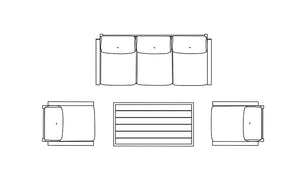
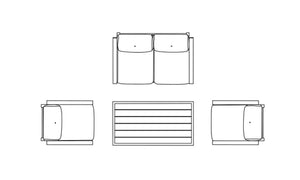
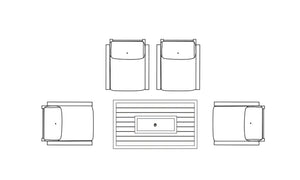
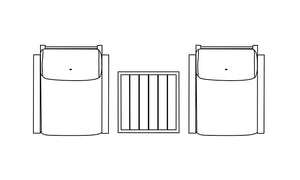
Shop the look: Chamber Patio 4 Seat Conversation Sets With Sunbrella® Cushions
FAQs
How often should outdoor cushions be cleaned?
A weekly brush-down for loose debris, a monthly spot inspection for early mold, and a full deep clean two to three times per season keeps cushions in optimal condition.
Can outdoor cushion covers go in the washing machine?
It depends on the fabric. Olefin covers handle a cold, gentle machine cycle well. Solution-dyed acrylic covers generally perform better with hand washing, though some manufacturers permit a cold gentle cycle. The care label is the final authority.
How should outdoor cushions be stored for winter?
Clean thoroughly, dry completely (including the foam core), apply fabric protectant, place in breathable bags, and store in a cool, well-ventilated space.
Are solution-dyed acrylic cushion covers worth the premium price?
In most cases, yes — solution-dyed acrylic generally outlasts standard polyester by a significant margin, with notably higher UV resistance and mold resistance across the fabric's lifespan. The exact longevity gain depends on climate, usage intensity, and maintenance habits.
Can outdoor cushions be left out in the rain?
Occasional light rain is manageable if the cushions are dried immediately afterward. Prolonged wet exposure allows moisture to penetrate the foam core and trigger mold colonization.
Should fabric protectant be applied to brand-new cushions?
Yes — spraying protectant on new cushions immediately out of the box establishes maximum defense from the first day of use. Reapply each season.
How can odors be removed from outdoor cushions?
Sprinkling baking soda generously over the fabric, letting it sit for several hours, and vacuuming it off absorbs most odors. Persistent smells respond to a diluted vinegar spray.
Related Articles

Collection Spotlight: Who Is the Chamber Collec...
Not every outdoor furniture collection is meant for every backyard. The Chamber Collection — Peakhome's bestselling line — earns that status not by appealing to everyone, but by solving a...
Collection Spotlight: Who Is the Chamber Collec...
Not every outdoor furniture collection is meant for every backyard. The Chamber Collection — Peakhome's bestselling line — earns that status not by appealing to everyone, but by solving a...
Continue Reading
Make Outdoor Cushions Last Longer: Removable Co...
Outdoor cushions take the hardest beating of any patio furniture component. While aluminum frames and HDPE rattan resist years of weather exposure, the cushions sitting on top of them face...
Make Outdoor Cushions Last Longer: Removable Co...
Outdoor cushions take the hardest beating of any patio furniture component. While aluminum frames and HDPE rattan resist years of weather exposure, the cushions sitting on top of them face...
Continue Reading
What Is a Quick-Dry Foam/Seat Board? Best for R...
A homeowner invests in a gorgeous outdoor sofa set, arranges it beside the pool, and then one thunderstorm turns the cushions into soggy sponges that take two days to dry...
What Is a Quick-Dry Foam/Seat Board? Best for R...
A homeowner invests in a gorgeous outdoor sofa set, arranges it beside the pool, and then one thunderstorm turns the cushions into soggy sponges that take two days to dry...
Continue Reading