






Outdoor Color Guide: Black vs White vs Woodgrain — How to Pick the Right Finish for Your Patio Furniture

Finish color is the first visual variable that shapes an outdoor space. Before a single cushion is placed or a planter positioned, the frame color of patio furniture sets the tone for everything that follows.
Across the outdoor furniture market, the vast majority of aluminum frames converge on three options: matte black, clean white, and hand-brushed woodgrain. Each carries a distinct design personality, a unique set of practical trade-offs, and a different maintenance profile.
Choosing between them is not a matter of taste alone — it is a decision that intersects with home architecture, regional climate, daily usage patterns, and long-term upkeep tolerance. This guide breaks down all three finishes so homeowners can match the right color to their space with confidence.
Why Does Outdoor Furniture Color Affect More Than Just Appearance?
Outdoor furniture color directly influences surface heat, dirt visibility, perceived space size, and how well a piece coordinates with the home exterior. It also determines maintenance frequency and long-term UV fading behavior — making it a functional decision, not just an aesthetic one.
Color psychology plays a real role outdoors. Black grounds a space with authority and modernity. White opens it up with airiness and calm. Woodgrain introduces organic warmth that echoes the natural environment. These associations are not abstract — they interact concretely with cushion fabrics, hardscape materials, and surrounding vegetation to create a cohesive or disjointed visual experience.
On the functional side, heat absorption is the most immediate difference. Dark surfaces under direct sunlight can become noticeably hot to the touch, while lighter finishes reflect more solar energy and stay cooler. Woodgrain sits in the moderate range. However, modern powder-coating technology has leveled the durability playing field across all three — the color difference changes touch temperature, not structural lifespan.
Before selecting a furniture color, homeowners should look at what already exists. The siding color, window trim, brickwork, deck material, and fence all form a visual context that the furniture must sit within. Three strategies work well: complementary contrast (a dark frame against light stonework), analogous harmony (woodgrain furniture echoing a cedar fence), or a neutral-base approach where the frame stays understated and personality comes through textiles and accessories. If a living room connects to the patio through glass doors, the color transition between indoor and outdoor furniture should feel intentional rather than jarring.
Light conditions also shift how colors read throughout the day. Morning light runs cool and golden, flattering warm tones like woodgrain. Midday sun is harsh and direct, making lighter finishes appear more stable and comfortable. Evening light enriches deeper hues, which is why black frames look their most dramatic at dusk. Homeowners who primarily use their patio in the evening may find black more rewarding than those who gather for weekend brunches in full sun.
What Are the Strengths and Weaknesses of Matte Black Outdoor Furniture?
Matte black anchors outdoor spaces with a modern, grounding presence. It hides scuffs and watermarks effectively but absorbs the most solar heat and shows dust and pollen clearly. It performs best in shaded setups and evening-focused patios.
From a design standpoint, black is the most versatile anchor color. It pairs naturally with contemporary, industrial, mid-century modern, and minimalist aesthetics. Against greenery, light-toned stone, or concrete, black frames create sharp, satisfying contrast. That said, using black wall-to-wall in a small balcony or enclosed patio can visually compress the space — it works best when balanced with lighter cushions or accessories.
Practically, black is forgiving where it counts. Minor scuffs, frame wear, and water spots are far less visible on dark surfaces than on white. Routine maintenance is simple: soap, water, and a soft cloth. However, dust, pollen, and pet hair stand out against a dark background, meaning surfaces may need a quick wipe more often during peak allergy seasons.
UV fading deserves honest discussion. Over years of extreme sun exposure, black powder-coated aluminum can develop slight chalking — a faint whitish film on the surface. Quality coatings that include UV stabilizers dramatically slow this process. Peakhome's powder-coating formulations are engineered with this protection, and an annual wash is typically enough to restore full luster. Placing black furniture under a hardtop gazebo or pergola extends the finish even further.
The following environments bring out the best in black-finished outdoor furniture:
- Large open decks with neutral hardscape — black frames create dramatic focal points against concrete, limestone, or pale pavers without overwhelming the space.
- Poolside areas — routine water splashes leave fewer visible marks on dark surfaces than on white, reducing day-to-day wipe-downs.
- Shaded structures such as gazebos and pergolas — reduced direct sun exposure keeps black frames cool to the touch while preserving the finish for years.
- Evening-focused patios with fire features and string lighting — black absorbs surrounding light during the day but reflects warm ambient glow at dusk, looking its most striking after sunset.
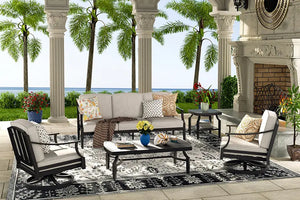
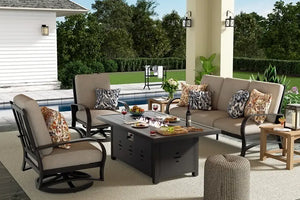
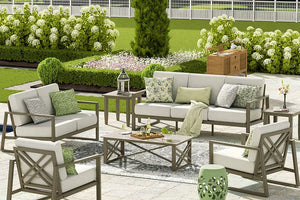
Collections like Peakhome's Chamber — with its bronze-look powder-coated frames — and its range of conversation sets demonstrate how black tones can anchor a complete outdoor living room with sophistication.

Shop the look: Chamber Patio 4 Seat Conversation Sets With Sunbrella® Cushions
Is White the Right Color for Outdoor Furniture — Or a Maintenance Nightmare?
White outdoor furniture reflects sunlight, stays cooler, and visually expands small spaces. On powder-coated aluminum it resists yellowing. However, it reveals dirt, pollen, and stains faster than any other finish, requiring more frequent cleaning to look its best.
The first nuance worth understanding is pure white versus off-white. In dry, dusty climates or areas with heavy pollen, bright white shows every speck. Design professionals consistently recommend leaning toward off-white, creamy white, or warm beige — these retain the brightness and space-expanding quality of white without the relentless cleaning cycle. Homeowners set on true white can reduce upkeep by pairing it with overhead shade from a patio umbrella or pergola.
A common concern is yellowing over time. On quality powder-coated aluminum, this is virtually a non-issue. The UV stabilizers embedded in modern coatings prevent the chemical reaction that causes yellowing. This risk applies mainly to cheap plastics and untreated resin furniture — not to properly finished aluminum. Peakhome's coating technology keeps white finishes color-stable across multiple seasons of continuous outdoor exposure.
White's greatest strength is spatial. It visually pushes walls outward, making compact balconies and narrow patios feel more generous. It brightens shaded or north-facing areas and creates a resort-like serenity that resists trend fatigue. The trade-off is transparency: mud splashes, mildew, bird droppings, and grass stains are immediately visible and demand prompt attention.
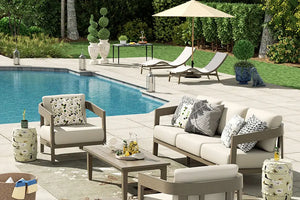
White furniture works best in coastal and Mediterranean-inspired patios, small spaces needing visual expansion, and covered porches where direct soil and pollen contact is limited. Pairing a white chaise lounge set with earth-tone cushions and a natural-wood coffee table creates a layered, relaxed aesthetic without the full maintenance burden of an all-white setup.
How Does Woodgrain Aluminum Compare to Real Wood for Outdoor Use?
Woodgrain aluminum delivers the visual warmth of natural timber with zero maintenance. It cannot rot, warp, splinter, or attract termites. Over a ten-year span it costs significantly less than real teak or cedar when annual sealing, staining, and sanding are factored in.
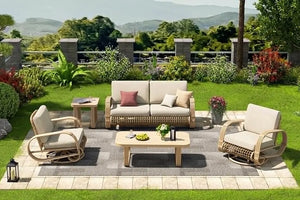
The technology behind the finish is worth understanding. Woodgrain aluminum starts with the same rust-proof, powder-coated aluminum frame used in black and white pieces. A secondary decorative layer is then applied — through heat-transfer sublimation or hand-brushing — to create realistic wood grain patterns. Each piece carries subtle variation, which adds authenticity. Peakhome's Sereno collection is a clear example: the surface preparation and layered coating available in both a warm teak tone and a refined smoke gray, both of which read as natural wood at conversational distance, while the underlying structure remains fully weatherproof.

Shop the look: Sereno Outdoor Sofa Set With Swivel Chairs and Round Coffee Table (Set of 4)
The following table illustrates the total cost of ownership difference between real teak and woodgrain aluminum over a ten-year period:
|
Cost Factor |
Real Teak Set |
Woodgrain Aluminum Set |
|
Upfront purchase price |
$2,000 – $4,000 |
$1,500 – $3,500 |
|
Annual oiling / sealing |
$50 – $100 / year |
$0 |
|
Sanding (every 2–3 years) |
$30 – $60 per session |
$0 |
|
Estimated 10-year total cost |
$2,650 – $5,200+ |
$1,500 – $3,500 |
|
Risk of rot, termites, warping |
Yes |
None |
|
Routine cleaning method |
Specialized teak cleaner |
Soap and water |
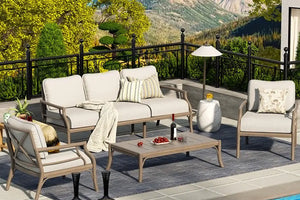
Woodgrain bridges traditional and transitional aesthetics — farmhouse, Craftsman, rustic-modern, and Mediterranean styles all benefit from its organic warmth. It pairs naturally with stone, greenery, and mixed-material spaces. Homes with natural wood siding or cedar fencing find an especially harmonious echo in woodgrain furniture. Peakhome offers this finish across multiple collections: Azur mimics weathered teak, Harmonti features hand-painted aluminum frames, Marindo features hand-brushed frames available in rustic weathered gray and warm aged-teak tones, and Nuova blends aluminum with a teak-inspired warmth.
Which Finish Color Works Best in Each Climate Zone?
Hot-dry climates favor woodgrain or white because black absorbs excessive heat. Coastal environments suit white or woodgrain for salt-deposit concealment. Humid regions benefit from black or woodgrain since white shows mildew faster. Rainy northern climates pair well with black or woodgrain.
The following table maps each major U.S. climate zone to its most practical finish choice and the reasoning behind the recommendation:
|
Climate Zone |
Recommended Finish |
Reasoning |
|
Hot & dry (AZ, NV, inland TX) |
Woodgrain |
Black absorbs excessive heat; white shows dust in arid air; woodgrain balances both |
|
Coastal / salt air (FL, CA coast) |
White or woodgrain |
Light and mid-tone surfaces conceal salt deposits better than dark finishes |
|
Humid subtropical (SE US) |
Black or woodgrain |
White shows mildew staining faster in persistent moisture |
|
Northern / rainy (PNW, NE) |
Black or woodgrain |
Frequent rain keeps white looking dirty; darker tones mask moisture marks |
Can Homeowners Mix Black, White, and Woodgrain in One Patio Setup?
Yes — and designers recommend it. The 60-30-10 rule works well: one dominant frame color covers sixty percent of pieces, a second provides thirty percent contrast, and the third appears as a ten percent accent through accessories, creating a layered, intentional look.
Here are three proven two-tone pairings that work across a wide range of patio styles:
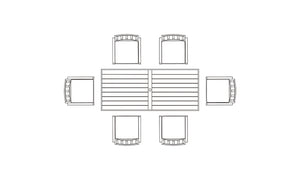
- Woodgrain dining table + black dining chairs — the warm table surface softens the modern edge of black seating, creating a warm-contemporary balance ideal for family meals outdoors.
- Black sofa frame + white or beige cushions — the classic monochrome combination that delivers high visual contrast with minimal effort; Peakhome's Arsterie and Tamarin collections pair especially well in this configuration.
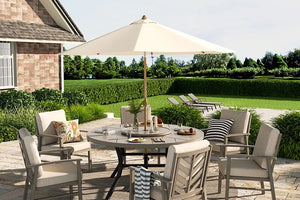
- White umbrella over a woodgrain conversation set — layering two neutral tones at different heights adds depth without complexity, producing a relaxed, resort-like atmosphere.
All three finishes share a critical advantage: they are neutral bases. This means homeowners can swap cushion covers, outdoor rugs, and planters seasonally without clashing. Bright textiles for spring, earth tones for fall — the frame never becomes the bottleneck. This is the primary reason experts discourage investing in trend-dependent bold furniture colors. A set of outdoor furniture covers extends this flexibility by protecting pieces between seasonal refreshes.
Why Does Powder-Coated Aluminum Make All Three Finishes Equally Durable?
Powder coating bakes a protective resin layer onto aluminum that blocks moisture, UV rays, and salt corrosion regardless of surface color. Black, white, and woodgrain finishes all inherit the same rust-proof, chip-resistant, and fade-resistant performance from this shared coating process.
This is the critical equalizer. Homeowners no longer need to choose a color for durability reasons — the decision is purely about design, climate comfort, and lifestyle fit. Peakhome subjects all products to year-round outdoor weathering tests and backs every piece with a comprehensive limited warranty, regardless of finish color. For a closer look at how different aluminum coating methods compare, Peakhome's aluminum finish guide offers a comprehensive technical overview.
FAQs
Does black outdoor furniture get too hot to sit on? Black frames absorb more solar heat and can feel warm in direct summer sun. Placing them under shade structures or using them primarily in the evening eliminates this issue.
Will white patio furniture yellow over time? Not on powder-coated aluminum. Yellowing occurs on cheap plastics and untreated resins, not on properly coated metal frames.
Is woodgrain finish actually made of wood? No. It is a decorative surface treatment applied over powder-coated aluminum, designed to replicate the look of natural timber with none of its maintenance requirements.
Which color hides scratches best? Black and woodgrain both conceal minor surface marks effectively. White shows the highest contrast against any imperfection.
What is the most low-maintenance outdoor furniture color? Woodgrain requires the least frequent cleaning because its mid-tone pattern naturally masks dust, pollen, and water spots.
Related Articles

Small Balcony Dining: How to Choose Bistro & Co...
Small balcony dining works best when the furniture fits the space, seating height, and daily use without blocking movement. A well-chosen bistro or compact dining set depends on three factors:...
Small Balcony Dining: How to Choose Bistro & Co...
Small balcony dining works best when the furniture fits the space, seating height, and daily use without blocking movement. A well-chosen bistro or compact dining set depends on three factors:...
Continue Reading
Do You Need a Lazy Susan Outdoor Table? Practic...
A Lazy Susan outdoor table makes it easier for multiple people to share food and keeps dishes within reach, but it is not necessary for every patio setup. If a...
Do You Need a Lazy Susan Outdoor Table? Practic...
A Lazy Susan outdoor table makes it easier for multiple people to share food and keeps dishes within reach, but it is not necessary for every patio setup. If a...
Continue Reading
Round Dining Tables: Best For Who? 4-Seat vs 6-...
Round dining tables work best for small groups, conversation-focused meals, and compact dining spaces. A 4-seat round dining table suits small families and tight layouts, while a 6-seat round table...
Round Dining Tables: Best For Who? 4-Seat vs 6-...
Round dining tables work best for small groups, conversation-focused meals, and compact dining spaces. A 4-seat round dining table suits small families and tight layouts, while a 6-seat round table...
Continue Reading