





Bar Height vs. Counter Height: How to Choose the Right Outdoor Table and Stools

Bar height vs. counter height outdoor tables shape how you sit, talk, and move outside. Choose counter height (about 34–36 inches tall with 24–26 inch stools) for relaxed meals and easy comfort, and choose bar height (about 40–42 inches tall with 28–30 inch stools) for casual drinks and standing-friendly gatherings.
Given that height sets elbow room and leg clearance, it directly influences comfort and how long you want to stay seated.Counter height feels closer to a kitchen counter, so you keep feet grounded and posture natural. Consequently, it suits family dining, smaller patios, and mixed-age seating.
Bar height lifts sightlines and creates a pub-style feel; this directly influences social flow by making it easier to chat while standing or perching.
Outdoor use adds limits that matter. Given wind, uneven pavers, and sun angles, table height affects stability, shade coverage, and stool balance. By measuring seat-to-table clearance and checking space around the set, you avoid common fit mistakes and keep style from overruling comfort.
What Is a Counter Height Patio Table?
A counter height patio table refers to a type of outdoor table designed with a tabletop height of approximately 34 to 36 inches, which is taller than standard dining tables but shorter than bar-height tables.
The counter height table type supports casual dining, light meals, and outdoor tasks without the lift required by bar height furniture.
Why counter height is easier for kids and seniors
Counter height seating places the tabletop at 34–36 inches, which reduces the step-up distance compared to bar height tables. As stools usually measure 24–27 inches high, you can sit down and stand up with less effort. This directly influences balance and safety for kids and older adults.
Lower height also improves foot support. Because many counter stools include footrests closer to the floor, your feet rest naturally instead of dangling. Consequently, legs stay relaxed during meals or games.
Table edge height matters for reach. Since the surface sits closer to standard kitchen counters, kids can reach plates and cups without stretching. Seniors also benefit because arm and shoulder strain stays low during use.
Is 30 inches bar height or counter height?
A 30-inch table is counter height, not bar height. Standard sizing places counter height tables at 34–36 inches, while dining tables sit near 28–30 inches. Bar height tables start higher, usually around 40–42 inches.
This difference matters when choosing stools. A 30-inch table pairs best with 18–20 inch chairs, not counter or bar stools. Given that mismatched heights cause poor posture, correct pairing directly influences comfort.
What Is a Patio Bar Height Table?
A patio bar height table is a type of outdoor table designed to stand at bar height, typically around 40–42 inches(102 to 107 cm) tall. They are paired with bar stools that have 28–30 inch seat heights for proper leg clearance and comfort.
A patio bar height table matches standing elbow height. making it easier for guests to mingle and enjoy views while standing or seated.
Why Bar Height Works Well Near Pools and Railings
Bar height seating fits pool decks and raised edges because elevation improves visibility and safety. Given that the table height aligns closer to railing tops, you avoid blocked views and awkward gaps. This directly influences comfort when you face water features or scenic views.
Bar height tables are popular because it encourages easier socializing, offers better views, and adds a modern touch to your patio.
The height also supports quick use. By utilizing taller tables, you can stand, lean, or sit without adjusting furniture, which suits wet areas near pools. Consequently, guests move in and out with less effort.
Bar height works best for social zones. Compared with counter height, it encourages short stays, conversation, and drink service while keeping clear walk paths near railings and pool edges.
How to Choose Between Bar Height and Counter Height for an Outdoor Table?
Choosing between bar height and counter height for an outdoor table depends on how you sit, eat, and socialize. Table height sets seat height, posture, and sightlines, which directly affects comfort, space use, and how long guests stay seated.
Choose Counter Height if Comfort and Dining Come First
Counter height outdoor tables measure 34–36 inches tall, which pairs with stools that sit 24–27 inches high. Given that this setup matches most kitchen counters, your body stays in a relaxed posture while eating. This directly reduces leg strain and makes it easier to sit for full meals.
Lower seat height also improves balance. Consequently, counter height works well for families, older guests, and frequent dining. Plates, cups, and shared dishes sit closer to your reach, which lowers the risk of spills outdoors.
Best uses for counter height
- Full meals on the patio
- Smaller outdoor spaces
- Daily use seating
By using counter height, you gain stability and comfort, which supports longer meals and clear table access.
Choose Bar Height if Views and Social Atmosphere Matter Most
Bar height outdoor tables stand 40–42 inches tall and use stools with 28–33 inch seats. Given that the table sits higher, your eye level rises when seated. This directly improves views over railings, pools, or yard features.
Higher seating encourages short stays. Consequently, bar height fits casual drinks, quick snacks, and standing-to-sitting movement during gatherings. The taller profile also defines social zones, especially near outdoor bars or grills. Bar height supports social flow and open sightlines.

When Mixing Bar Height and Counter Height Makes Sense
Mixed heights work when your outdoor area serves more than one purpose. Given that dining and social zones need different seating, using both heights solves layout limits. This directly improves traffic flow and use of space.
Place counter height tables near kitchens or doors. Consequently, serving food stays easy and safe. Use bar height tables along edges or near views to keep sightlines clear.
Smart mixing tips
- Keep 12–18 inches of walking space between zones
- Match materials and colors to avoid visual clutter
- Limit bar height stools if kids use the space
By mixing heights with intent, you support comfort and movement without crowding.
How to Measure for the Right Patio Table Height
Patio table height controls comfort, reach, and safety when you sit outdoors. Accurate measuring links table height, seat height, cushion depth, and clear space, which directly affects posture and movement.
How to Measure Table Height and Account for Tabletop Thickness
Patio table height starts with measuring from the ground to the top surface. Use a tape measure on level ground, because uneven pavers change results and cause poor fit.
Given that outdoor tables vary, confirm the finished height, not the base height.
Standard targets
- Counter height: 34–36 inches
- Bar height: 40–42 inches
Tabletop thickness changes seat comfort. A thick stone or tile top can add 1–2 inches, which reduces leg clearance. Consequently, you must subtract tabletop thickness when matching stools.
For example, a 36-inch counter table with a 2-inch top behaves like a 34-inch table at the edge, which directly influences stool choice.
How to Measure Real Seat Height with Cushions
Seat height defines how your legs rest under the table. Measure from the ground to the top of the cushion where you sit, not to the frame.
Given that cushions compress, sit on the stool while measuring to get a real number.
Typical pairings
- Counter tables (34–36 in): stools with 24–26 in seat height
- Bar tables (40–42 in): stools with 28–30 in seat height
Cushion thickness often adds 1–3 inches before compression. Consequently, a stool listed at 26 inches can feel taller.
By utilizing the compressed height, you maintain a 10–12 inch gap between seat and tabletop, which improves comfort and reach.
Spacing Rules: Stool Width, Legroom, and Walkway Clearance
Spacing controls ease of use and traffic flow. Measure stool width at the widest point, including arms, because that sets the minimum space.
Given that elbows move, allow 24–26 inches of table edge per stool.
Legroom depends on apron depth and pedestal design. Leave 7–10 inches from seat to underside of the table to prevent knee contact.
Pedestal bases improve clearance, while four legs reduce it, which directly influences seating count.
Walkways protect movement behind stools. Keep 36 inches for main paths and 24–30 inches for low-traffic areas.
By utilizing these clearances, you avoid blocked doors and improve safety during use.
Why Does Outdoor Table Height Matters More Than Style?
Outdoor table height controls how you sit, how long you stay comfortable, and how safely you use stools. Given that counter and bar heights differ by several inches, those inches change posture, balance, and support during meals and casual use.
Seat Height, Back Support, and Armrest Alignment
Outdoor table height sets the correct seat height range you need for comfort. Counter-height tables measure about 34–36 inches, which pair best with 24–26 inch seats. Bar-height tables measure about 40–42 inches, which require 28–30 inch seats. Given that mismatch causes leg strain, proper pairing prevents pressure behind the knees.
Back support matters more as seat height increases. Taller stools raise your center of gravity. Consequently, a higher backrest improves balance and reduces lower back fatigue during longer sits.
Armrest alignment also depends on table height. Counter-height armrests often slide under the table edge. Bar-height armrests sit lower than the tabletop. This directly influences shoulder comfort and keeps elbows from lifting during eating or typing.
Quick fit check
- Seat-to-table gap: 9–12 inches
- Backrest height: Taller stools need taller backs
- Armrest clearance: Must avoid tabletop contact
Swivel vs. Stationary Stools at Different Heights
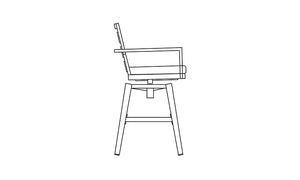
Stool height changes how safe and useful a swivel feels. At counter height, swivels help you turn toward food prep or conversation. Given the lower seat height, you keep better foot contact with the ground. This reduces wobble during movement.
At bar height, swivels demand more control. The higher seat raises fall risk during entry and exit. Consequently, many bar-height setups work better with stationary stools or swivels with a return mechanism that centers the seat.
Space also affects the choice. Swivels need more clearance to rotate. By utilizing stationary stools at bar height, you reduce collisions on smaller patios.
Height vs. movement
|
Height Type |
Safer Choice |
Reason |
|
Counter |
Swivel or stationary |
Lower balance risk |
|
Bar |
Stationary or controlled swivel |
Higher center of gravity |
Why Footrests Are Essential for Bar Height Seating
Bar-height seating makes footrests a requirement, not an option. With seats at 28–30 inches, your feet cannot rest on the ground. Given that dangling legs strain thighs, a footrest supports blood flow and reduces fatigue.
Footrest placement affects posture. A well-placed bar at 7–9 inches below the seat lets you sit upright. This directly influences hip alignment and lowers pressure on the lower back.
Design matters outdoors. Wrapped metal or integrated foot bars resist heat and wear. By utilizing a fixed, non-slip footrest, you improve stability during mounting and dismounting, especially on uneven patio surfaces.
Outdoor-Specific Factors That Affect Height Choice
Outdoor table height affects stability, shade fit, and long-term wear. Your patio layout, weather exposure, and materials all change how bar-height and counter-height sets perform outside.
Wind, Weight, and Center of Gravity for Taller Tables
Bar-height tables raise the center of gravity, which directly affects stability in open outdoor spaces. Given that these tables stand about 40–42 inches tall, wind applies more force to the upper surface. Consequently, lighter frames tip more easily than counter-height tables, which sit closer to the ground at 34–36 inches.
Heavier bases reduce movement because added mass lowers the balance point. This directly influences safety on patios with wind exposure or uneven pavers.
- Weight distribution: Wider legs and weighted bases resist tipping.
- Surface area: Taller tables catch more wind across the tabletop.
- Placement: Bar-height sets perform better near walls or railings.
Umbrellas, Pergolas, and Shade Clearance by Table Height
Table height controls how well shade systems align with seating. Counter-height tables pair easily with standard 9-foot patio umbrellas, since the pole clears the tabletop without raising the canopy too high. As a result, shade covers both the table and seated guests.
Bar-height tables require taller umbrella poles or mounted shade structures. Given that stools place you higher, low canopies block sightlines and headroom.
- Umbrella clearance: Bar height needs extended center poles.
- Pergola beams: Fixed beams may interfere with standing-height tables.
- Sun angle: Taller seating exposes you more during early or late sun.

Materials and Durability for Outdoor Bar and Counter Sets
Material choice matters more as table height increases. Bar-height sets place more stress on joints and legs because leverage increases with height. Consequently, weak connections loosen faster outdoors.
Counter-height sets tolerate lighter materials since forces stay closer to the ground. This directly influences which materials last longer in exposed conditions.
|
Material |
Counter Height Result |
Bar Height Result |
|
Aluminum |
Stable with standard frames |
Needs thicker tubing |
|
Steel |
Durable with rust protection |
Requires heavy-gauge steel |
|
Teak |
Performs well at both heights |
Needs reinforced joinery |
By using weather-rated finishes and reinforced frames, you reduce movement and extend service life.
Common Mistakes When Choosing Bar Height or Counter Height Furniture
Common mistakes when choosing bar height or counter height furniture cause comfort issues and layout problems. You affect seat comfort, leg room, and traffic flow when you ignore height math, cushion depth, or outdoor spacing.
Using Bar Stools with Counter Height Tables (and Vice Versa)
Bar stools paired with counter height tables create poor seat-to-table alignment. Given that counter height tables measure about 34–36 inches tall, you need stools with a 24–26 inch seat height to keep elbows near the surface. Bar stools usually sit at 28–30 inches, which raises your knees too high and reduces leg clearance.
Counter stools used at bar height tables cause the opposite problem. Bar height tables measure about 40–42 inches, so shorter stools force you to reach up, which strains shoulders and wrists.
Correct height matching
|
Table height |
Table size |
Stool seat height |
|
Counter |
34–36 in |
24–26 in |
|
Bar |
40–42 in |
28–30 in |
By matching these ranges, you keep a 10–12 inch gap between the seat and tabletop, which supports relaxed posture.
Ignoring Cushion Thickness and Seat Compression
Cushion thickness changes real seat height after you sit down. Given that outdoor cushions often compress 1–2 inches, a thick cushion lowers your seated position and increases the table-to-seat gap. This directly influences comfort, especially at bar height where small changes feel larger.
Firm cushions compress less but feel higher. Soft foam sinks more and reduces support during long meals. Weather-resistant foam also rebounds slower, which affects seat height over time.
What to check before buying
- Measure seat height with the cushion installed
- Ask for compressed height, not just frame height
- Aim to keep the 10–12 inch clearance after compression
By accounting for compression, you avoid stools that feel too low once you sit.
Underestimating Space in Outdoor Layouts
Outdoor layouts need more space than indoor setups. Given that people move around stools, you need clear paths to avoid bumps and blocked exits. This directly influences safety and ease of use on decks and patios.
You should allow 24–30 inches for walkways behind stools and 36 inches in high-traffic areas. Counter height seating often fits tighter spaces, while bar height needs more clearance due to taller seats and footrests.
Key spacing targets
- 12 inches of knee clearance under the table edge
- 24–30 inches behind seated stools
- 36 inches near doors, grills, or railings
By planning these clearances, you keep your outdoor space usable even when all seats are full.
Quick Checklist: Bar Height vs. Counter Height
Bar height vs. counter height defines how high your outdoor table sits and how you use the space. Given that height controls posture and reach, you should match table height to how long you plan to sit. This directly influences comfort and how relaxed your meals feel.
|
Feature |
Counter Height |
Bar Height |
|
Table height |
34–36 in. |
40–42 in. |
|
Stool seat height |
24–26 in. |
28–30 in. |
|
Leg clearance |
9–12 in. |
9–12 in. |
|
Best use |
Dining, family meals |
Drinks, social talk |
Seating comfort depends on stool height and foot support. Given that your feet need a place to rest, counter height feels steadier for long meals. Consequently, bar height suits short sits and quick drinks.
Space and flow change with table height. By using counter height, you keep sightlines lower, which helps smaller patios feel open. By choosing bar height, you raise eye level, which works well near railings or outdoor bars.
Access and safety matter outdoors. Given that lower seats are easier to get on and off, counter height helps kids and older guests. This directly influences how often everyone uses the table.
Use pattern guides the choice. If you plan meals and games, counter height supports plates and elbows. If you plan mingling, bar height keeps people standing or perched, which speeds conversation.
Related Articles

Collection Spotlight: Who Is the Chamber Collec...
Not every outdoor furniture collection is meant for every backyard. The Chamber Collection — Peakhome's bestselling line — earns that status not by appealing to everyone, but by solving a...
Collection Spotlight: Who Is the Chamber Collec...
Not every outdoor furniture collection is meant for every backyard. The Chamber Collection — Peakhome's bestselling line — earns that status not by appealing to everyone, but by solving a...
Continue Reading
Make Outdoor Cushions Last Longer: Removable Co...
Outdoor cushions take the hardest beating of any patio furniture component. While aluminum frames and HDPE rattan resist years of weather exposure, the cushions sitting on top of them face...
Make Outdoor Cushions Last Longer: Removable Co...
Outdoor cushions take the hardest beating of any patio furniture component. While aluminum frames and HDPE rattan resist years of weather exposure, the cushions sitting on top of them face...
Continue Reading
What Is a Quick-Dry Foam/Seat Board? Best for R...
A homeowner invests in a gorgeous outdoor sofa set, arranges it beside the pool, and then one thunderstorm turns the cushions into soggy sponges that take two days to dry...
What Is a Quick-Dry Foam/Seat Board? Best for R...
A homeowner invests in a gorgeous outdoor sofa set, arranges it beside the pool, and then one thunderstorm turns the cushions into soggy sponges that take two days to dry...
Continue Reading