






First-Time Patio Checklist: The 3 Categories You Should Buy First

Furnishing a patio for the first time can feel overwhelming. Dozens of product types, materials, and price points compete for attention, and without a clear plan, most beginners either overspend on the wrong items or end up with a space that looks busy but barely functions. The truth is, there is a logical purchasing sequence that experienced outdoor designers follow — and it comes down to three essential categories.
This guide walks first-time buyers through the entire process, from initial space assessment to the final checkout, so every dollar goes toward building a patio that actually gets used.
What Should You Figure Out Before Buying Any Patio Furniture?
Before purchasing anything, measure the outdoor space, define how it will be used most often, and set a realistic budget. These three steps prevent the most common first-time buyer mistakes: ordering furniture that does not fit, does not match a household's lifestyle, or exceeds the spending plan.
How Do You Measure a Patio for Furniture Layout?
The single most common regret among first-time buyers is falling in love with a set that does not fit. Grab a tape measure and record the length, width, and any irregular angles of the space. Mark the location of doors, railings, columns, built-in grills, planters, and air conditioning units — anything that limits usable floor area.
Clearance matters just as much as total square footage. Leave at least 36 inches around dining tables so chairs can pull out comfortably and guests can walk behind seated diners. For conversation sets, plan 18 to 24 inches between pieces for walkways. A simple trick used by interior designers works just as well outdoors: sketch the space on graph paper at one square per foot, cut out paper rectangles representing furniture pieces, and move them around the layout before spending a dollar.
How Does Lifestyle Decide What to Buy First?
Before browsing any product page, answer three questions. What activity happens most often on this patio — relaxing, dining, or entertaining groups? How many people will use the space on a typical day? Are there young children or pets that require sturdier, easier-to-clean materials? The answers create a natural priority map. A household that eats outdoors five nights a week may elevate dining above lounge seating, while a couple who mostly reads and relaxes will anchor the space with a deep-cushion sofa first.
How Much Should a First-Time Buyer Budget for Outdoor Furniture?
The following budget tiers give a realistic starting framework for furnishing a complete patio with seating, dining, and shade:
|
Budget Tier |
Approximate Range |
What It Typically Covers |
|
Starter |
$1,200–$2,000 |
A compact loveseat or 2-chair set with a side table, a small bistro dining set, and a market umbrella |
|
Mid-Range |
$1200 – $4,000 |
A full sofa or conversation set with premium cushions, a 4–6 person dining set, and a pergola or cantilever umbrella |
|
Investment |
$4,000+ |
Coordinated collection pieces across seating, dining, a hardtop gazebo, plus accessories like fire tables and furniture covers |
Timing also affects value. Spring typically brings the widest selection and newest styles, while seasonal promotions — such as spring sales and clearance events — can reduce costs by 15–40 percent without sacrificing quality.
Why Is Seating the First Category Every Patio Needs?
Seating defines how an outdoor space is used. A patio without seating is functionally empty regardless of how it looks. Prioritize a conversation set or sofa set first because it establishes the layout anchor around which every other piece is arranged.
Which Type of Outdoor Seating Works Best for Beginners?
Not all seating serves the same purpose. Here is a quick breakdown of the four most popular options for first-time buyers and the scenarios each one fits best:
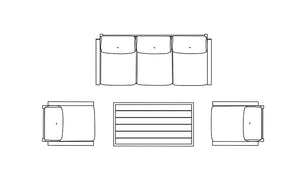
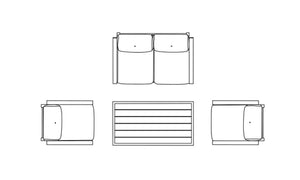
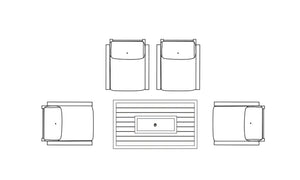
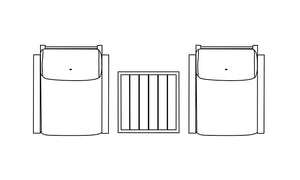
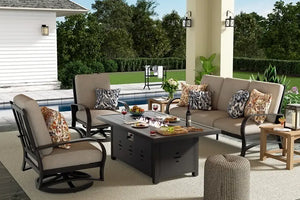
- Conversation sets are the most recommended entry point because they bundle seating pieces — such as chairs, a loveseat, or a sofa — with a coffee table in one coordinated package — ideal for buyers who want a complete look without mixing and matching. → Shop Patio Conversation Sets
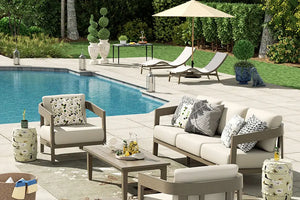
- Sofa sets suit larger patios where deep-cushion relaxation is the primary goal, offering the most comfortable lounging experience for families or frequent entertainers. → Shop Patio Sofa Sets
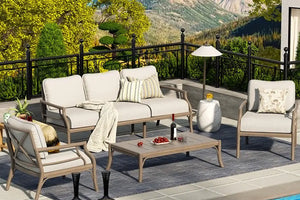
- Loveseat sets are the smart pick for smaller decks, balconies, or covered porches where floor space is limited but comfort cannot be compromised. → Shop Patio Loveseat Sets
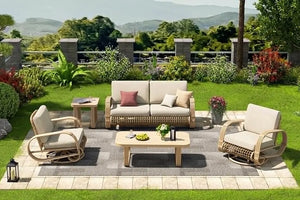
- Swivel club chairs offer maximum flexibility as standalone accent pieces that pair with any combination and allow 360-degree movement for easy conversation. → Shop Outdoor Swivel Chairs

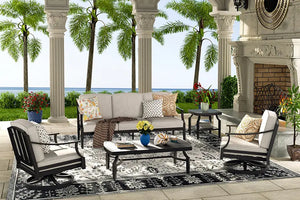
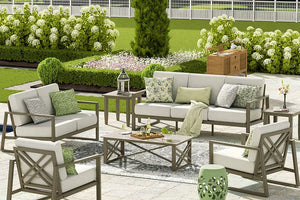
Shop the look: Marindo 4 Piece lounge chairs and Round Coffee table
What Seat Dimensions Should Buyers Check When Shopping Online?
Buying patio furniture online removes the option to sit down and test, so dimensions become critical. Pay attention to seat depth (typically 22–28 inches — standard seating sits around 22 inches while deep-seating designs run 25 inches or more), seat height (17–19 inches makes standing up easier for older users), and arm height (roughly 22–25 inches for a natural resting position). These numbers matter more than photos when judging long-term comfort. For a detailed breakdown of how each dimension affects the sitting experience, Peakhome's Outdoor Sofa Fit Guide covers the topic in depth.
How Do Frame Material and Cushion Fabric Affect Seating Durability?
Frame material determines how long a piece lasts outdoors. Aluminum is the most popular choice for residential patios — it resists rust, stays lightweight for rearranging, and requires only occasional wiping. Powder-coated steel adds weight and stability in windy areas but needs intact coating to prevent corrosion. HDPE wicker over an aluminum skeleton delivers a classic rattan look with modern weather resistance, making it especially popular for egg chairs and covered porches.
Cushion fabric matters equally. Sunbrella® fabric — used across collections like the Tamarin series — resists UV fading, inhibits mildew growth, and maintains color for years. When evaluating cushions online, look for details about venting (for faster drying), removable zippered covers (for washing), and double-stitched seams (for longevity). These small specifications separate a cushion that lasts one season from one that lasts five.
Why Should a Dining Set Be the Second Purchase?
Outdoor dining is the single activity that drives the highest repeat use of a patio. Adding a dining set after seating turns an occasional relaxation spot into a daily-use living space for meals, remote work, and entertaining guests throughout the week.
What Size Dining Set Fits the Space and Guest Count?
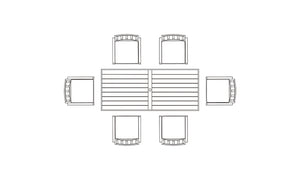
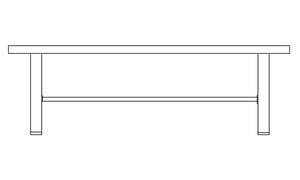
The dining table is the spatial anchor — select it first, then match chairs to it. A round or small square table seats two to four comfortably and fits patios under 120 square feet. A rectangular table, especially one with an extension mechanism handles six to eight guests and suits spaces over 150 square feet. For a more casual, standing-friendly vibe around a grill area, bar-height tables paired with outdoor bar stools create a bistro-style zone without requiring as much floor area.

Should Buyers Choose Swivel Dining Chairs or Fixed Chairs?
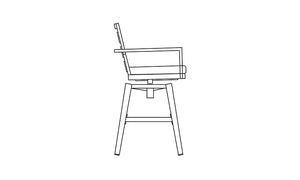
Swivel dining chairs make getting in and out easier, especially around tightly spaced tables, and allow diners to turn toward conversation without dragging the chair. Fixed chairs cost less and sit more stably on uneven surfaces. A practical compromise that many designers use is placing swivel chairs at the heads of the table and fixed chairs along the sides. Browse all options in the Patio Dining Chairs collection.
Does the Dining Table Need an Umbrella Hole?
If the dining area sits in direct sun with no overhead structure, choosing a table with a built-in umbrella hole is a small decision that pays off significantly. It preserves the option to add a patio umbrella later without needing to replace the table — a detail many first-time buyers overlook until their first July lunch outside.
Why Is Shade the Purchase That Makes Everything Else Worth It?
Without shade protection, seating and dining furniture sit unused during peak sun hours, wasting the entire investment. Adding shade extends daily usable hours by three to five and protects furniture fabrics from UV fading, making it the highest-return third purchase for any patio.
What Are the Three Main Shade Options and How Do They Compare?
Three Main Shade Options include:
- Patio umbrellas
- Pergolas
- Gazebos
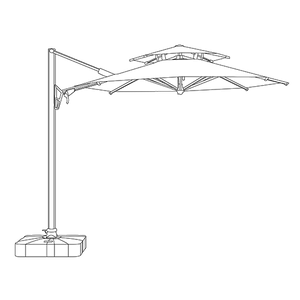
Patio umbrellas are the most accessible entry point. Cantilever models provide offset coverage without a center pole blocking the table, while market umbrellas offer a classic look at a lower price. Both can be repositioned as the sun moves. Browse the full selection in Outdoor Umbrellas.
Pergolas represent a mid-level commitment. Retractable canopy versions allow owners to open up to full sun on mild days and close for protection when heat peaks. They add architectural character to a backyard without the permanence of a full roof. See the range at Pergolas.
Hardtop gazebos are the most protective option — a permanent aluminum-frame structure with a solid roof that shields against sun and rain year-round, effectively creating an outdoor room. Buyers in regions with heavy snowfall should confirm the manufacturer's rated snow load before winter use. For buyers ready for this investment, Gazebos features models with rustproof aluminum frames and integrated ventilation.

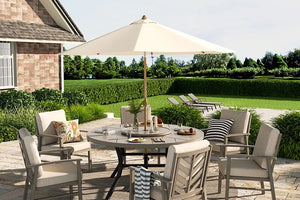
Shop the look: PATIO TREE 11ft Patio Octagon Market Umbrella with Sunbrella® Fabric (Jockey Red)
How Should Shade Size Match the Furniture Layout?
A simple rule: the shade footprint should cover at least the full area of the furniture grouping beneath it, plus 12 inches of buffer on each side. A 7-piece dining set occupying roughly 8×5 feet needs a shade structure of at least 10×7 feet. In windy regions, choose weighted umbrella bases or bolted-down gazebo anchors to ensure stability.
What Are the Most Common Mistakes First-Time Patio Buyers Make?
The five most frequent errors are buying decorative accessories before functional furniture, overspending on a single statement piece, ignoring weather protection, choosing appearance over durability, and forgetting delivery logistics. Avoiding these saves hundreds of dollars and months of frustration.
Accessories like throw pillows, string lights, and outdoor rugs should always come last — they enhance a functional space but cannot substitute for one. Similarly, pouring the entire budget into one eye-catching piece leaves gaps in basic functionality. Weather protection is non-negotiable: a set of quality furniture covers and an outdoor storage solution dramatically extend the lifespan of every piece.
Once the three core categories are in place, the most worthwhile first upgrade is a fire pit table set. It extends patio season from summer-only into cool spring and autumn evenings, adding two to three extra months of comfortable use and significantly increasing the annual return on the entire outdoor furniture investment.
What Does a Complete First-Time Patio Checklist Look Like?
A complete first-time checklist covers space measurement, layout sketching, and budget setting, then purchasing in strict order: seating first, dining second, shade third. After those three categories are in place, add protective covers and plan seasonal upgrades like fire tables or outdoor lighting.
Below is a first-time patio check list:
- ☐ Measure the patio and note all fixed obstacles
- ☐ Sketch a layout on paper with clearance zones
- ☐ Define primary use case and typical guest count
- ☐ Set a budget tier and watch for seasonal sales
- ☐ Purchase seating (conversation, sofa, or loveseat set)
- ☐ Purchase a dining set sized to your space
- ☐ Add a shade solution (umbrella, pergola, or gazebo)
- ☐ Buy furniture covers and plan storage
- ☐ Consider a fire pit table as the first upgrade
Every item on this list links to a specific collection at Peakhome Furnishings. For bulk or commercial projects, the Wholesale Program offers dedicated pricing, and the customer service team is available to help match products to any layout.
FAQs
What is the best time of year to buy patio furniture?
Spring offers the widest selection and newest designs, while late-season clearance sales in early fall deliver the deepest discounts. Holiday promotional events often combine both good selection and reduced prices.
Can outdoor furniture be left outside all year?
Aluminum and HDPE wicker frames withstand year-round exposure, but cushions and fabric elements last significantly longer when covered or stored during extended wet or freezing periods. Furniture covers are a low-cost investment that pays for itself within one season.
How much space do you need for a 6-person patio dining set?
A standard 6-person rectangular dining set requires roughly 10 by 7 feet of floor area, including at least 36 inches of clearance behind chairs for comfortable movement, and 24 inches minimum on sides adjacent to walls or railings.
Is aluminum patio furniture strong enough for daily use?
Yes. Modern powder-coated aluminum is the most widely used frame material in mid-range to premium outdoor furniture. It resists rust, handles daily use without warping, and requires only occasional cleaning with a damp cloth.
Should I buy a patio set or individual pieces?
For first-time buyers, pre-configured sets — such as conversation sets or dining sets — are more cost-effective and visually cohesive than assembling individual pieces. Once the foundational set is in place, individual accent chairs or side tables can be added over time.
Related Articles

How to Create a Backyard Meditation Space with ...
A backyard meditation space is a dedicated outdoor area designed for stillness, breathwork, and mindful relaxation. The right outdoor furniture turns any patio, garden corner, or balcony into a calming...
How to Create a Backyard Meditation Space with ...
A backyard meditation space is a dedicated outdoor area designed for stillness, breathwork, and mindful relaxation. The right outdoor furniture turns any patio, garden corner, or balcony into a calming...
Continue Reading
Aluminum vs. Steel, Wood and Wrought Iron: The ...
Picture this scenario: a homeowner invests a few hundred dollars in a brand-new patio dining set. One rainy season later, the iron legs start flaking with rust, and orange stains...
Aluminum vs. Steel, Wood and Wrought Iron: The ...
Picture this scenario: a homeowner invests a few hundred dollars in a brand-new patio dining set. One rainy season later, the iron legs start flaking with rust, and orange stains...
Continue Reading
Outdoor Furniture Maintenance Calendar: Your Co...
Introduction Did you know that regular cleaning and maintenance can reduce the risk of mold and mildew on patio furniture by up to 70%? Yet most homeowners struggle with the...
Outdoor Furniture Maintenance Calendar: Your Co...
Introduction Did you know that regular cleaning and maintenance can reduce the risk of mold and mildew on patio furniture by up to 70%? Yet most homeowners struggle with the...
Continue Reading