







How to Measure Covers for Sofa Sets: Sectionals, 3-Seat & Modular

Your outdoor sofa is more than just furniture—it's where morning coffee moments happen, where friends gather for evening conversations, and where you unwind after long days. Protecting this investment from rain, UV rays, and debris starts with one crucial step: getting accurate measurements for your sofa cover.
A cover that fits properly shields your furniture completely, preventing moisture buildup, mold growth, and premature wear. A poorly fitted cover, on the other hand, can cause more harm than good—pooling water, flapping in the wind, or leaving sections exposed to the elements.
This guide walks you through exactly how to measure outdoor sofa covers for every configuration, whether you own a standard 3-seat sofa, an L-shaped sectional, or a flexible modular set. By the end, you'll have the knowledge to select a cover that fits like it was made for your furniture. Ready to explore our Patio Furniture Covers collection? Let's start with the basics.
What Are the Different Types of Outdoor Sofa Covers?
Outdoor sofa covers come in three main categories based on sofa configuration: sectional covers, standard sofa covers, and modular covers.
- Sectional sofa covers are designed for L-shaped or U-shaped configurations where multiple seating sections connect at angles. These covers accommodate the unique geometry of corner pieces, chaise extensions, and wraparound designs commonly found in larger outdoor living spaces.
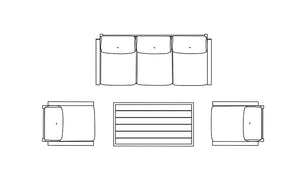
- Standard 3-seat sofa covers fit traditional rectangular sofas with two armrests and a continuous seating surface. These are the most common type and work well for straightforward, single-piece outdoor sofas.
- Modular sofa covers are made for furniture systems composed of individual, rearrangeable pieces. Since modular sets can be configured in countless ways, these covers either protect each module separately or cover the entire assembled arrangement as one unit.
Understanding which category your sofa falls into determines your measuring approach and helps you select the right cover style. Browse our Outdoor Sofa Sets to see dimensions for reference when planning your cover purchase.

What Tools Do You Need to Measure Your Sofa for a Cover?
Accurate sofa cover measurements require just a few simple tools that most homeowners already have at home.
- Flexible tape measure: A retractable metal tape measure works best for outdoor furniture because it stays rigid across long distances and provides precise readings. Avoid cloth measuring tapes, which can stretch and produce inaccurate results.
- Notepad and pen: Write down each measurement immediately after taking it. Relying on memory often leads to errors, especially when measuring multiple dimensions or multiple pieces of furniture.
- Masking tape (optional): Marking your measurement points with small pieces of tape ensures consistency when double-checking your numbers. This is particularly helpful for sectionals and modular sets with multiple sections.
- Helper (recommended for large furniture): For sectional sofas or long 3-seat pieces, having someone hold the other end of the tape measure prevents sagging and produces more accurate readings.
Gather these tools before you begin, and position your furniture in its normal outdoor arrangement with cushions in place if you plan to cover it with cushions on.
How Do You Measure a Standard 3-Seat Outdoor Sofa for a Cover?
Measuring a standard 3-seat sofa requires three key dimensions—width, depth, and height—taken at specific points to ensure complete coverage.
- Width (arm to arm): Place your tape measure at the outer edge of one armrest and extend it horizontally to the outer edge of the opposite armrest. Keep the tape level and straight rather than following any curves in the sofa design. This measurement captures the full horizontal span your cover must accommodate.
- Depth (front to back): Measure from the front edge of the seat cushion straight back to the furthest point of the backrest. If your sofa has a curved or slanted back, measure to the point that extends furthest from the front. Include the cushion thickness in this measurement if you plan to cover the sofa with cushions in place.
- Height (ground to top): Start at the ground and measure vertically to the highest point of the sofa, which is typically the top of the backrest. Note that most quality covers are designed to be 1-2 inches shorter than the furniture height—this gap allows air to circulate underneath, preventing moisture buildup and mold growth.
After recording all three measurements, add 1-2 inches to each dimension. This buffer allows for easy fitting and removal while ensuring complete coverage of any protruding elements like decorative armrest details.
How Do You Measure a Sectional Sofa for a Cover?
Sectional sofas require a more detailed measuring approach because they consist of multiple connected sections arranged at angles.
- Identify all sections first: Before measuring, determine the layout of your sectional. Note which side has the longer extension or chaise, and decide whether you want one large cover for the entire unit or separate covers for each section. Separate covers offer more flexibility, while single-piece covers provide seamless protection.
- Measure each section's width: For the main sofa section, measure from the outer arm to where it meets the corner or connecting piece. For the secondary section (chaise or extension), measure from the corner connection point to the outer edge of that section's arm or end.
- Measure each section's depth: Take depth measurements from the front edge of each section straight back to its backrest. Sectionals often have varying depths, so measure each section individually rather than assuming they match.
- Measure the height: Measure from the ground to the top of the backrest for each section. Also measure the armrest height separately if it differs significantly from the back height, as some covers require this additional dimension.
- Calculate total footprint for single-piece covers: If using one large cover, measure the total width of the assembled L-shape or U-shape at its widest points, the total depth at the deepest point, and use the tallest height measurement.
The Marindo collection offers various sectional configurations—reviewing their listed dimensions can help you understand typical sectional measurements and plan your cover accordingly.
How Do You Measure a Modular Sofa Set for Covers?
Modular sofa sets consist of individual pieces that can be arranged in different configurations, requiring a strategic approach to measurement and cover selection.
- Count and catalog all pieces: Start by identifying every module in your set—individual seats, corner units, armless middle sections, and ottomans. Each piece type may require its own cover or contribute to a larger combined measurement.
- Measure each module separately: Record the width, depth, and height of every individual piece. Even if modules appear identical, small manufacturing variations can affect fit, so measure each one rather than assuming uniformity.
- Decide your coverage strategy: You have two main options. Individual covers for each module provide maximum flexibility—you can rearrange your furniture without worrying about cover fit. A single large cover works better for fixed configurations and offers more complete protection since there are no gaps between pieces.
- Consider connection points: If modules connect with clips or brackets, decide whether to measure with them attached or detached. Covers designed for connected configurations need slightly different dimensions than those for separated pieces.
- Document your preferred arrangement: If you plan to use a single cover over your entire modular set, measure the total footprint in your most common configuration. Sketch the layout and note which pieces go where—this helps when reordering covers or reconfiguring your setup.
What Is the Difference Between Standard and Custom Sofa Covers?
Standard and custom sofa covers serve the same protective purpose but differ significantly in fit precision, cost, availability, flexibility, and best use cases.
- Fit: Standard covers come in pre-set sizes designed to accommodate common sofa dimensions. They may leave small gaps or excess material on furniture that doesn't match these sizes exactly. Custom covers are tailored to your specific measurements, eliminating gaps and providing a precise, snug fit that follows your furniture's exact contours.
- Price: Standard covers are more affordable, typically ranging from budget-friendly options to mid-range prices. Custom covers generally cost two to four times more than standard options due to the personalized manufacturing process.
- Availability: Standard covers ship immediately from existing inventory, meaning you can have protection for your furniture within days. Custom covers require a lead time of several weeks while they're manufactured to your specifications.
- Flexibility: Standard covers can transfer to different furniture pieces if you upgrade or rearrange your patio setup, as long as the new furniture falls within the same size range. Custom covers are made for one specific piece and may not fit replacement furniture.
- Best applications: Standard covers work well for common sofa sizes and rectangular configurations. Custom covers are the better choice for L-shaped sectionals, U-shaped arrangements, modular sets with unique configurations, and any furniture with non-standard dimensions.
What Are the Advantages of a Properly Fitted Sofa Cover?
The following are the advantages of a properly fitted sofa cover:
- Complete weather protection: A well-fitted cover shields every inch of your sofa from rain, snow, UV rays, dust, and airborne debris. No exposed sections means no vulnerable points where damage can occur.
- Prevention of water pooling: When a cover fits correctly, water runs off the surface rather than collecting in sagging areas. Pooled water adds weight stress, promotes mold growth, and can seep through seams over time.
- Reduced wind lift: Covers that fit snugly against furniture resist wind from getting underneath and lifting the cover away. This keeps protection in place during storms and prevents the flapping that causes fabric wear and noise.
- Extended furniture lifespan: By blocking the three main causes of outdoor furniture deterioration—moisture, UV exposure, and physical debris—a proper cover can add years to your sofa's functional and aesthetic life.
- Maintained appearance: Your outdoor space looks neater with fitted covers than with loose, baggy alternatives. A tailored appearance also signals to guests that you care for your outdoor living area.
- Mold and mildew prevention: Proper fit combined with breathable materials and adequate ground clearance allows air circulation that keeps covered furniture dry and prevents the humid conditions where mold thrives.
What Are the Disadvantages of an Ill-Fitting Sofa Cover?
The following are the disadvantages of a properly fitted sofa cover:
- Water pooling (oversized covers): Excess fabric creates low points where rainwater collects. This pooled water adds significant weight, stresses the cover fabric and the furniture beneath, and creates a breeding ground for mold and mosquitoes.
- Wind vulnerability (oversized covers): Loose material acts like a sail, catching wind and either billowing dramatically or pulling the cover off entirely. The flapping motion also causes fabric wear and annoying noise during windy conditions.
- Exposed furniture (undersized covers): A cover that's too small leaves portions of your sofa unprotected. Even small exposed areas allow rain, UV rays, and debris to reach your furniture, defeating the purpose of covering it at all.
- Stressed seams (undersized covers): Forcing a tight cover over furniture strains the stitching and fabric, leading to premature tearing and failure. Seams are typically the first points to give way under stress.
- Accelerated deterioration: The combined effects of water damage, UV exposure to uncovered areas, and physical wear from flapping fabric accelerate your furniture's aging process rather than slowing it.
- Wasted investment: An ill-fitting cover means spending money on protection that doesn't actually protect. You'll likely need to purchase a replacement cover sooner, doubling your expense.
How to Choose the Right Cover Size Based on Your Measurements?
Selecting the correct cover size requires comparing your measurements to available options and applying a few practical principles.
- Match measurements to size charts: Compare your recorded width, depth, and height to the dimensions listed in manufacturer specifications. Look for covers where all three of your measurements fall within the stated range, not just one or two.
- Round up when between sizes: If your measurements fall between two available sizes, always choose the larger option. A slightly roomy cover is far better than one that's too tight—excess material can be secured with straps, but insufficient material cannot be stretched.
- Add 1-2 inches to raw measurements: Before comparing to size charts, add a small buffer to each of your dimensions. This accounts for fitting ease, cushion compression variations, and any measurement imprecision.
- Consider cover features that improve fit: Look for covers with adjustable elements such as drawstrings that cinch around furniture legs, elastic hems that grip the base, buckle straps for wind resistance, and air vents that prevent ballooning while maintaining breathability.
- Verify shape compatibility: Beyond dimensions, confirm that the cover shape matches your furniture. A rectangular cover won't work well on an L-shaped sectional, regardless of whether the total measurements seem compatible.
When Should You Choose a Standard Cover vs. a Custom Cover?
The choice between standard and custom covers depends on your furniture's characteristics, your budget, and your long-term plans.
Choose a standard cover when:
- Your sofa matches common dimensions. If your furniture measurements align closely with available standard sizes, a pre-made cover will provide adequate protection at a lower cost.
- You have a simple rectangular sofa. Standard 3-seat sofas without unusual features fit standard covers well since these are the most common configurations manufacturers design for.
- Budget is a primary concern. Standard covers cost significantly less than custom options, making them the practical choice when price matters more than perfect fit.
- You may change furniture soon. If you're planning to upgrade or rearrange your outdoor space in the near future, a standard cover offers more versatility since it can potentially fit replacement furniture.
Choose a custom cover when:
- You have an L-shaped or U-shaped sectional. These configurations rarely match standard sizes, and gaps in coverage defeat the protective purpose.
- Your modular set has a unique arrangement. Custom configurations of modular furniture need covers designed specifically for that layout.
- Your furniture represents a significant investment. High-quality outdoor sofas deserve protection that matches their value—spending more on a precisely fitted cover makes sense when protecting a premium piece.
- Standard covers don't fit your dimensions. If your measurements don't match any available standard sizes, custom is your only option for proper coverage.
- You live in harsh weather conditions. Extreme rain, snow, or sun exposure makes precise fit more important, justifying the higher investment in custom protection.
What Are Common Mistakes to Avoid When Measuring for Sofa Covers?
Even careful measurers can make errors that lead to poorly fitting covers. Knowing these common mistakes helps you avoid them.
- Forgetting armrests and cushions: Many people measure only the frame, ignoring that armrests extend the width and cushions add to depth and height. Always include every element that will be under the cover in your measurements.
- Measuring curves instead of straight lines: For sofas with curved backs or rounded arms, measure the straight-line distance between the furthest points rather than following the curve. Covers need to span these distances directly.
- Ignoring protruding elements: Decorative scroll arms, angled legs, headrest extensions, and other design features that stick out beyond the main frame affect cover fit. Measure to the outermost point of any protrusion.
- Assuming one cover fits all modules: Each piece in a modular set can have slightly different dimensions. Measure every module individually rather than assuming they're identical.
- Rounding down instead of up: When your measurement falls between numbers, always round up to the next inch. Rounding down risks getting a cover that's too small.
- Measuring only once: Take each measurement at least twice to catch errors. It's common to misread the tape or accidentally start from the wrong point on first attempts.
- Delaying recording measurements: Write down each number immediately after measuring it. Waiting until you've measured everything invites confusion about which number corresponds to which dimension.
- Ignoring furniture shape: A rectangular cover won't properly fit an L-shaped sectional even if the square footage seems similar. Match cover shape to furniture shape, not just dimensions.
Step-by-Step Checklist: Measure Your Sofa Cover Like a Pro
Follow this systematic checklist to ensure accurate measurements every time.
- Gather your tools: Collect a retractable tape measure, notepad, pen, and optional masking tape before starting.
- Position furniture properly: Arrange your sofa in its normal outdoor location with cushions in place if you plan to cover it that way.
- Decide on cushion coverage: Determine whether cushions will remain on the sofa when covered or be stored separately—this affects your depth and height measurements.
- Measure width accurately: Record the distance from the outer edge of one armrest to the outer edge of the other, keeping the tape level.
- Measure depth correctly: Note the distance from the front edge of the seat to the furthest point of the backrest.
- Measure height precisely: Document the distance from the ground to the highest point of the sofa.
- Handle sectionals section by section: For L-shaped or U-shaped sofas, measure each section's width, depth, and height individually.
- Measure modular pieces separately: For modular sets, record dimensions for every individual module.
- Add buffer to each measurement: Increase each dimension by 1-2 inches to allow for fitting ease.
- Double-check all numbers: Remeasure each dimension to confirm accuracy before finalizing.
- Compare to manufacturer specifications: Match your adjusted measurements to available cover sizes.
- Select appropriate cover size: Choose the cover that meets or slightly exceeds all your dimensions.
- Conclusion

Accurate measurements are the foundation of effective outdoor furniture protection. By taking the time to measure your sofa correctly—whether it's a standard 3-seat, an L-shaped sectional, or a flexible modular set—you ensure that your cover fits properly, shields completely, and lasts longer.
Remember the key principles: measure width, depth, and height at their maximum points; add 1-2 inches for fitting ease; round up when between sizes; and match cover shape to furniture configuration. Avoid common mistakes like forgetting armrests, measuring curves instead of straight lines, and assuming all modules are identical.
Your outdoor sofa is an investment in comfort and lifestyle. Protecting it with the right cover means more years of enjoyment without the frustration of weather damage, fading, or premature wear.
Ready to find the perfect protection for your patio furniture? Explore our Patio Furniture Covers collection, designed for durability and weather resistance. Browse our Outdoor Sofa Sets, including the Marindo collections to see furniture dimensions that can guide your cover selection. Proper measurement ensures your investment stays protected season after season.
Related Articles

Rust-Proof vs Corrosion-Resistant: What You Nee...
Rust-proof and corrosion-resistant do not mean the same thing, and choosing the wrong one can lead to early metal corrosion outdoors. Rust-proof metals, such as aluminum, do not contain iron...
Rust-Proof vs Corrosion-Resistant: What You Nee...
Rust-proof and corrosion-resistant do not mean the same thing, and choosing the wrong one can lead to early metal corrosion outdoors. Rust-proof metals, such as aluminum, do not contain iron...
Continue Reading
Coastal Outdoor Furniture Checklist: Materials ...
Coastal outdoor furniture lasts when it uses rust-resistant frames, fade-resistant fabrics, and marine-grade hardware built for salt air and strong sun. The right checklist includes powder-coated aluminum or Grade‑A teak...
Coastal Outdoor Furniture Checklist: Materials ...
Coastal outdoor furniture lasts when it uses rust-resistant frames, fade-resistant fabrics, and marine-grade hardware built for salt air and strong sun. The right checklist includes powder-coated aluminum or Grade‑A teak...
Continue Reading
Aluminum Finish Guide: Choosing Between Powder ...
Choosing the right aluminum finish for outdoor use comes down to climate, maintenance, and design goals. Standard powder coating on aluminum offers a baseline lifespan of 5–10 years in harsh...
Aluminum Finish Guide: Choosing Between Powder ...
Choosing the right aluminum finish for outdoor use comes down to climate, maintenance, and design goals. Standard powder coating on aluminum offers a baseline lifespan of 5–10 years in harsh...
Continue Reading