






Patio Dining Sets for Families Who Host: Choose 6, 8 or 10 Seats Without Crowding
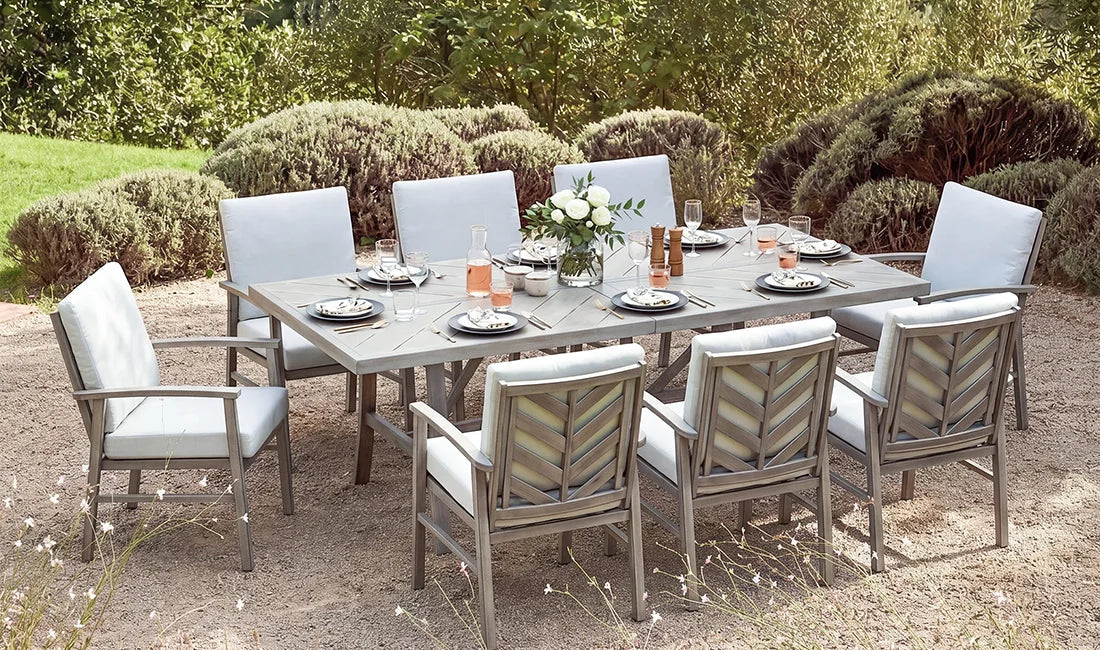
Choosing the right patio dining set requires balancing tabletop capacity with open walkway space. Many families buy a compact table for daily meals, only to run out of room during weekend gatherings. Others select an oversized set that blocks patio doors, crowds the grill, and traps seated guests.
A functional outdoor layout gives every diner enough elbow room while keeping traffic lanes clear. To choose between 6, 8, and 10 seats, start with the space available for dining. Then check how much room guests will have to pull out their chairs and walk past the table.
The Host’s Dilemma: Sizing for Everyday Meals vs. Weekend Gatherings
Homeowners should size their patio dining set based on how often they entertain rather than their largest annual party. Buying a fixed 10-person table for a once-a-year holiday dinner wastes valuable deck space for the other 364 days. On the other hand, squeezing eight adults around a small four-person table creates a cramped meal.
The 80/20 hosting rule solves this sizing problem. A family should choose a fixed table size that supports their routine 80% of the time, and rely on flexible furniture features for the remaining 20%.
• Weekly Hosts: Families who invite guests over two or more times a month benefit from a dedicated 8-seat table. This permanent footprint matches their regular hosting routine.
• Monthly or Seasonal Hosts: Households that dine as a group of four on weeknights but host 8 to 10 guests on holidays need adaptable setups. Extendable tables, stackable chairs, and dining benches add seating capacity only when guests arrive.
The 3 Golden Rules to Prevent Patio Crowding (Measure First)
Three spatial measurements prevent patio crowding: usable dining zone dimensions, perimeter chair clearance, and per-person place setting width. Taking these measurements before browsing furniture ensures the dining set fits the physical layout.
Map Your "Usable Dining Zone," Not Total Patio Size
The usable dining zone is the open floor area left after subtracting fixed obstacles from total patio dimensions. A concrete patio might measure 16 feet by 20 feet, but the actual space available for a table and chairs is much smaller.
Homeowners and layout planners must subtract hazard zones, building fixtures, and existing furniture footprints from their total square footage.
• Cooking Appliances: Follow the clearance instructions for the grill, smoker, or pizza oven. Leave room for the cook to move as well.
• Architectural Elements: Subtract the swing radius of hinged patio doors, the bottom landing of deck stairs, and structural posts.
• Patio Accessories: Account for permanent obstacles (e.g., planter boxes, storage deck boxes, and umbrella bases) that shrink the usable perimeter.

The 36-Inch Clearance Rule (And Where You Can Cheat It)
A patio dining table needs 36 inches of open space between the table edge and any wall, railing, or obstacle. This 36-inch zone lets a guest pull out a dining chair, sit down, and stand up without scraping the frame against a barrier.
Different sides of the table get different levels of foot traffic, so hosts can adjust this measurement based on the layout:
• Primary Walkways (42 to 48 inches): The side of the table facing the kitchen door, pool deck, or grill serves as a main traffic lane. Leaving 42 to 48 inches here lets a person carrying a food tray walk safely behind a seated guest.
• Standard Seating Sides (36 inches): Open patio sides with normal foot traffic require the standard 36-inch clearance.
• Low-Traffic Borders (24 to 30 inches): One side of the table may sit next to a low garden bed, a deck railing, or a wall. Where nobody walks behind the chairs, 24 to 30 inches provides enough room for a guest to slide into their seat.
The 24-to-30-Inch Elbow Room Standard
Each seated adult requires 24 to 30 inches of linear table edge to dine without bumping elbows. The exact width depends on the chair profile included in the dining set.
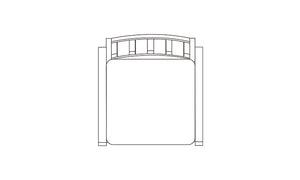
Standard armless side chairs measure 18 to 20 inches wide and need 24 inches of table space per person. Outdoor dining armchairs and swivel rockers feature wider frames and curved armrests, measuring 23 to 26 inches across. When pairing armchairs with a dining table, manufacturers allocate 28 to 30 inches of table length per seat. This extra margin lets the chairs slide in side-by-side without colliding.
6, 8, or 10 Seats? Comparing Table Sizes & Required Patio Footprints
Choosing between a 6-seat, 8-seat, and 10-seat patio dining set depends on matching table dimensions to the usable dining zone. The reference chart below outlines standard furniture measurements and minimum space requirements, including a 36-inch clearance zone on all sides.
|
Seating Capacity |
Table Shape |
Standard Table Dimensions |
Minimum Usable Patio Space |
Ideal Hosting Scenario |
|
6 Seats |
Rectangular |
60"–72" L × 36"–40" W |
11' × 9' to 12' × 9.5' |
Daily family meals plus two weekend guests |
|
6 Seats |
Round |
60"–61.5" Diameter |
11' × 11' |
Equal sightlines and group conversation |
|
8 Seats |
Rectangular |
84"–96" L × 40"–42" W |
13' × 9.5' to 14' × 9.5' |
Two-family dinners and regular entertaining |
|
8 Seats |
Square |
60" L × 60" W |
11' × 11' |
Wide, square patios with balanced seating |
|
10 Seats |
Rectangular |
108"–120" L × 40"–44" W |
15' × 9.5' to 16' × 10' |
Multi-generational holidays and block parties |
6-Seat Patio Dining Sets: The Versatile Family Sweet Spot
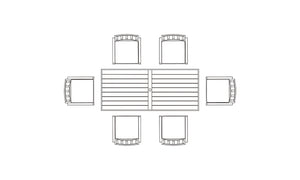
A 6-seat patio dining set fits mid-sized decks and serves families of four who often invite two extra guests, such as grandparents or neighbors. In a rectangular layout, a 60-to-72-inch table seats two people on each long side and one person at each end.
For square patios or open backyards, a 60-inch round table removes projecting corners and lets all six diners face the center for conversation. Check the space behind each chair, especially along the main walkway. If large serving dishes crowd the tabletop or are hard to reach, a nearby side table can hold them between servings.
8-Seat Patio Dining Sets: Built for Regular Entertainers
An 8-seat outdoor dining set requires a rectangular table measuring 84 to 96 inches long or a square table measuring 60 by 60 inches. Rectangular 8-person sets place three chairs along each long side and one head chair at each end.
For example, Peak Home’s Amario 9-Piece Outdoor Dining Set with Rectangular Table and Aluminum Chairs pairs an 84-inch rectangular table with eight aluminum-frame dining chairs. The table has a powder-coated aluminum top and steel legs, while the chairs include Sunbrella cushion covers. Plan space for all eight chairs in use, including room for guests to step away from the table.
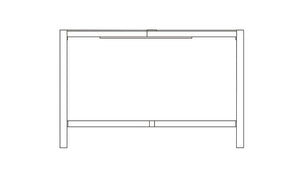
When shopping for an 8-seat rectangular table, buyers must check the "clear leg span"—the open distance between the inside edges of the table legs. Three standard armchairs need 75 to 80 inches of clear space between the table legs to push in flush. If the table legs sit too close together, the middle chair will hit the outer chairs and force them into the walkway.
10-Seat Patio Dining Sets: Maximum Capacity for Big Gatherings
A 10-seat patio dining set requires a table length of 108 to 120 inches (9 to 10 feet) and a minimum usable patio zone of 15 by 10 feet. This configuration places four chairs on each long side and one chair at each end.
Fixed 10-foot tables dominate an outdoor space and limit layout options on medium patios. For occasional dinners for 10, consider an extendable table or a table with benches. Check the layout with all 10 seats in use.
Beyond Seat Count: Hidden Factors That Cause "Table Crowding"
Even when a table fits the patio footprint, structural details like table shape, tabletop width, and base geometry can cause crowding during a meal. Evaluating these attributes ensures physical comfort for every guest.
Table Shape vs. Patio Geometry
Matching the table shape to the patio perimeter maximizes open floor space and keeps walkways clear.
• Rectangular and Oval Tables: Long, straight-edged tables suit narrow decks, covered porches, and rectangular paver patios. They align with the house wall and leave a parallel lane for foot traffic. Oval tables share the same linear footprint as rectangular models, but their rounded corners ease movement around tight turns.
• Round and Square Tables: Symmetrical tables fit square courtyards, gazebo floors, and open lawn areas. They distribute chair clearance evenly in all four directions.
The "Center Zone" for Family-Style Serving
Tabletop width determines whether a family-style meal feels organized or cluttered. Each diner needs a 12-to-14-inch deep zone in front of their chair for dinner plates, silverware, napkins, and glassware.
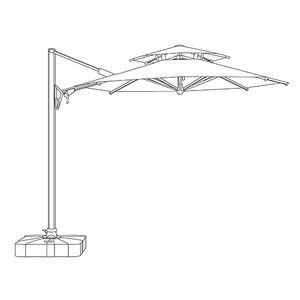
On a 34-inch-wide table, two 14-inch place settings leave just 6 inches in the middle. Few serving platters or salad bowls will fit in that strip. With the same place settings, a table 38 to 42 inches wide leaves 10 to 14 inches for shared dishes. If the table has an umbrella, allow for the pole, too.
Table Base & Leg Placement (Protecting Knee Room)
The under-table support frame controls legroom and chair storage. Outdoor dining tables use three main base configurations (e.g., four-corner legs, trestle X-bases, and center pedestals).
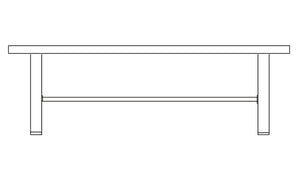
• Four-Corner Legs: Tables with legs set at the outer corners maximize the span along the long sides, making it easy to slide three or four chairs underneath.
• Inset Trestle and X-Bases: Reinforced X-leg frames prevent wobbling on uneven patio stones. However, buyers should verify that the crossbars sit far enough inward so guests at the table ends have at least 12 inches of knee clearance.
• Center Pedestals: Used mostly on round and square tables, center bases remove outer leg obstacles and allow flexible chair spacing around the edge.
Smart Space-Saving Strategies to Fit More Guests Comfortably
Homeowners with compact or mid-sized patios can make room for guests by matching table size to their usual head count and choosing chairs that fit the layout. Spare-chair storage, mixed seating, and swivel seats can help keep the dining area usable between gatherings. Check each arrangement with the chairs occupied and the main walkway clear.
Choose a Fixed Table That Fits Your Regular Guest Count
A fixed table can suit families whose usual guest count stays within the same range. Choose its size around those regular meals, then store spare chairs elsewhere between gatherings. This keeps unused chairs out of the dining area without needing a larger table for every occasion.
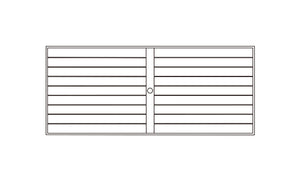
For example, the Alcudia 83-inch Aluminum Patio Dining Table has a fixed tabletop measuring 82.6 by 41.3 inches. Peak Home lists it for six to eight diners. It is made of powder-coated aluminum with a hand-brushed oak-look finish and a central umbrella hole. For an eight-person layout, check chair widths and table-leg positions before adding seats, and keep enough clearance behind the occupied chairs.
Mix Armchairs, Armless Side Chairs, and Benches
Replacing bulky armchairs with slimmer seating options increases capacity along a fixed table length.
• Armless Side Chairs: Using armless chairs along the long sides of a table and keeping armchairs at the two head positions saves 4 to 6 inches per side chair. Over an 84-inch span, this setup prevents chair frames from rubbing together.
• Outdoor Dining Benches: A dining bench creates flexible space for families with children. While three single chairs hold three adults, a 60-to-70-inch aluminum bench seats three adults or four kids side-by-side. After the meal, the bench slides completely under the table apron, freeing up 18 to 24 inches of walkway space.
• Stackable Chairs: Storing two or four lightweight, stackable aluminum or sling chairs in a shed lets hosts convert an 8-seat table into a 10-seat setup in minutes.
Swap Standard Chairs for 360° Swivel Chairs in Tight Spots
Standard fixed dining chairs require guests to push the chair backward by 18 to 24 inches to stand up. Near a deck railing, pool edge, or sliding glass door, that backward movement creates bottlenecks.
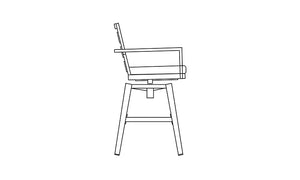
Outdoor swivel dining chairs feature a 360-degree rotating base. Instead of pushing the chair frame backward into the walkway, a guest can turn the seat 90 degrees to the side and step out. This rotating motion cuts the required pull-out space by 6 to 8 inches, making swivel sets ideal for narrower decks and busy patio borders.
The 5-Minute "Painter’s Tape Test" Before You Buy
Before ordering a patio dining set, homeowners can test the fit on their physical patio using painter’s tape. This three-step ground check reveals tight corners and blocked pathways before heavy boxes arrive.
1. Outline the Table Footprint: Use blue painter’s tape to mark the exact length and width of the dining table on the patio floor. When testing an extendable table, tape out both the closed length and the fully extended length.
2.Mark the 36-Inch Clearance Perimeter: Measure 36 inches outward from all four edges of the table tape and place a second ring of tape. Set existing indoor or outdoor chairs inside this zone to check the seating layout.
3.Walk the Service Paths: Carry a tray from the kitchen to the table. With someone seated, walk behind the chairs and on to the grill. Check that the door opens fully and that planters leave a clear path. If space is tight, test a smaller table, an extendable model, or a layout with a bench.

Frequently Asked Questions (FAQ)
Can you squeeze 8 people around a 6-person patio table?
Some 72-inch rectangular tables can seat 8 for an occasional meal. Allow three places along each long side and one at each end. Try armless chairs or a bench, and check that the table legs leave room for all eight. However, a 60-inch round table cannot hold 8 adults comfortably because its perimeter does not provide 24 inches of elbow room per person. For regular 8-person meals, an 84-to-96-inch rectangular table or an extendable model provides proper spacing.
What is the best patio dining set material for low-maintenance hosting?
Powder-coated aluminum and steel frames paired with solution-dyed fabrics (e.g., Sunbrella® and Olefin) offer the lowest maintenance for hosting families. Slatted aluminum tabletops resist rust, do not splinter like untreated wood, and wipe clean with mild soap and water after food spills. Sunbrella® and Olefin cushions resist UV fading, moisture, and food stains, and include removable covers for washing.
How much space do I need for an 8-person vs. 10-person outdoor dining set?
An 8-person rectangular dining set (84 to 96 inches long) requires a minimum usable patio area of 13 by 9.5 feet to 14 by 9.5 feet. A 10-person rectangular dining set (108 to 120 inches long) requires at least 15 by 9.5 feet to 16 by 10 feet. Both measurements include a 36-inch clearance zone on all four sides for pulling out chairs and walking behind seated guests.
Conclusion: Build a Patio Layout That Welcomes Every Guest
Selecting the right 6-seat, 8-seat, or 10-seat patio dining set comes down to balancing tabletop surface area with surrounding walkway clearance. Measure the dining area first. Start with 36 inches around the table for pulling out chairs and 24 to 30 inches of table edge per person. Allow more room on the side used for serving. An extendable table or a bench that tucks under it can free up space between meals. A swivel chair may help a guest leave the table from the side.
Ready to upgrade your outdoor dining area for your next family gathering? Explore Peak Home Furnishings’ patio dining sets to compare table sizes and chair options for your space.
Related Articles

How to Measure Covers for Sofa Sets: Sectionals...
Your outdoor sofa is more than just furniture—it's where morning coffee moments happen, where friends gather for evening conversations, and where you unwind after long days. Protecting this investment from...
How to Measure Covers for Sofa Sets: Sectionals...
Your outdoor sofa is more than just furniture—it's where morning coffee moments happen, where friends gather for evening conversations, and where you unwind after long days. Protecting this investment from...
Continue Reading
The Truth About Cheap Wicker: How to Identify U...
A homeowner spends several hundred dollars on a "wicker" outdoor furniture set. It looks great on arrival — the weave is tight, the color is rich, and the listing promised...
The Truth About Cheap Wicker: How to Identify U...
A homeowner spends several hundred dollars on a "wicker" outdoor furniture set. It looks great on arrival — the weave is tight, the color is rich, and the listing promised...
Continue Reading
How to Create a Backyard Meditation Space with ...
A backyard meditation space is a dedicated outdoor area designed for stillness, breathwork, and mindful relaxation. The right outdoor furniture turns any patio, garden corner, or balcony into a calming...
How to Create a Backyard Meditation Space with ...
A backyard meditation space is a dedicated outdoor area designed for stillness, breathwork, and mindful relaxation. The right outdoor furniture turns any patio, garden corner, or balcony into a calming...
Continue Reading