






The Truth About Cheap Wicker: How to Identify UV-Resistant HDPE Rattan

A homeowner spends several hundred dollars on a "wicker" outdoor furniture set. It looks great on arrival — the weave is tight, the color is rich, and the listing promised "all-weather" performance. Two summers later, the strands are cracking, the color has faded to a chalky gray, and the weave is unraveling at the joints. This story plays out in backyards across America every year, and it is almost entirely preventable.
The core problem is simple: most furniture sold as "wicker" at lower price points is not made from genuinely weather-resistant material. The issue is invisible at the point of purchase — cheap wicker and premium HDPE wicker can look nearly identical in a product photo or a showroom.
This article breaks down the material science behind different types of synthetic wicker, explains why UV-resistant HDPE rattan is the only reliable choice for outdoor use, and provides a practical five-point method for identifying genuine HDPE before buying. By the end, readers will know exactly how to tell a cheap wicker from the real thing — and stop paying for furniture that will not last.
Why Most "Wicker" Outdoor Furniture Fails Within 2 Years
A widespread misconception drives most bad purchases in this category: consumers assume "wicker" refers to a material. It does not. Wicker is a weaving technique, not a material. A wicker weave can be made from natural rattan vine, PVC, LDPE, HDPE, or other plastics. When shoppers see the word "wicker" on a product listing, they associate it with quality and durability — a knowledge gap that parts of the industry have little incentive to close.
Cheap "wicker" outdoor furniture typically fails for one of three reasons. The first is PVC strands. PVC contains plasticizers that leach out under UV exposure. Within two to three seasons, the material becomes brittle, cracks, and unravels. PVC is not recyclable and releases chlorine gas when heated. It also tends to feel rough to the touch and carries a distinctly shiny, plasticky appearance that differs from natural rattan.
The second cause is Low-Density Polyethylene (LDPE). LDPE has a lower density (917–930 kg/m³), more molecular chain branching, and weaker intermolecular forces than HDPE. These properties mean it fades faster under direct sunlight and is more prone to surface damage from routine use and environmental exposure.
The third — and often overlooked — factor is poor frame quality. Many budget sets use untreated steel frames that rust quickly in outdoor conditions. Once the frame corrodes, the entire piece loses structural integrity, regardless of what material the weave is made from.
The real difference between furniture that lasts a decade and furniture that ends up at the curb after two years is not the weave pattern. It is the material the weave is made from.
The Material Comparison – HDPE vs. LDPE vs. PVC vs. Natural Rattan
To understand what separates lasting outdoor wicker from disposable wicker, it helps to compare the four most common materials across a few headline metrics first, then look at each one in detail.
|
Material |
UV Resistance |
Expected Outdoor Lifespan |
Typical Sofa Set Price |
|
HDPE |
Excellent (permanent) |
10–15 years |
$1,500–$3,000 |
|
LDPE |
Moderate |
3–5 years |
$300–$800 |
|
PVC |
Poor |
1–3 years |
$200–$500 |
|
Natural Rattan |
Very poor |
1–2 years (outdoor) |
Indoor use only |
HDPE (High-Density Polyethylene) is the clear performance leader. With a density of ≥ 940 kg/m³ and UV stabilizers blended directly into the polymer during extrusion, its protection is permanent and cannot wear off — rated for 10–15 years of outdoor exposure, with premium products documented at 18–25 years. HDPE is completely waterproof and non-porous, eliminating the conditions for mold and mildew. Its tensile elongation of 500%–1,000% means strands flex under stress rather than snap. It tolerates temperatures up to 110 °C (230 °F), carries a smooth, matte surface that closely mimics natural rattan, and is classified as #2 recyclable plastic — non-toxic and odorless.
LDPE (Low-Density Polyethylene) is waterproof and recyclable, but its lower density (917–930 kg/m³), greater molecular chain branching, and lower melting point (~115 °C / 239 °F) mean it fades noticeably under prolonged sun and wears down faster. Surface quality is acceptable, yet it lacks the refined texture and long-term color stability of HDPE. A realistic outdoor lifespan is 3–5 years.
PVC sits at the bottom of the synthetic spectrum. Plasticizers leach out under UV, causing brittleness and cracking within 2–3 seasons. The surface tends to be rough, sometimes thorny, and traps dirt easily. PVC contains chlorine and releases harmful gas when heated — a sharp, acrid smell is detectable in a simple burn test. It is not recyclable. Tensile elongation is only 250%–350%, and heat tolerance is lower than both HDPE and LDPE.

Natural Rattan offers a beautiful aesthetic, but it absorbs moisture, swells, warps, and eventually rots outdoors. Fibers become brittle in direct sun and snap under stress. Plantation farming also raises environmental concerns. Natural rattan belongs indoors only.
The conclusion is clear. For outdoor use, HDPE is the only synthetic wicker material that qualifies as truly "all-weather." LDPE and PVC may cost less upfront, but their shorter lifespans make them more expensive per year of use. Natural rattan, while beautiful, is entirely unsuitable for outdoor settings — full stop.
Why UV-Resistant HDPE Rattan Is Better for Outdoor Furniture
The UV-resistance mechanism of HDPE deserves a closer look, because it is fundamentally different from coatings or spray treatments that some manufacturers apply to cheaper materials. During manufacturing, HDPE pellets are blended with UV inhibitors, antioxidants, and light stabilizers before being extruded into strands. Because these additives are integrated into the polymer matrix at the molecular level, they cannot be washed off, scraped away, or worn down over time. The protection is permanent and structural, not superficial.
This manufacturing process produces several practical advantages that matter in real outdoor conditions. HDPE strands are solution-dyed, meaning the color runs through the entire cross-section of the material — if the surface is scratched, no different color is revealed underneath, and the furniture maintains a consistent appearance for years. Because HDPE is non-porous, it does not absorb water or moisture, which eliminates the conditions that allow mold and mildew to grow. This makes it especially well-suited for poolside settings, humid climates, and regions with heavy rainfall.
Temperature resilience is another practical strength. HDPE withstands a wide range of conditions, from freezing winters to temperatures as high as 230 °F (110 °C), making it safe to leave outside year-round in virtually any American climate. Unlike metal furniture, HDPE does not become scorching hot under summer sun or painfully cold in winter — it remains comfortable to the touch across seasons. HDPE is also classified as #2 plastic, which means it is fully recyclable and represents one of the more environmentally responsible synthetic material choices available for outdoor furniture.
How to Identify Genuine UV-Resistant HDPE Rattan
Understanding why HDPE is the superior outdoor wicker material is only half the equation. The other half is knowing how to verify whether a specific product actually uses genuine HDPE rattan before making a purchase. The following five methods provide a practical framework for doing exactly that.
Read the Material Spec
If a product listing says only "wicker," "rattan," "resin wicker," or "all-weather" without explicitly stating "HDPE" or "High-Density Polyethylene," that omission is a red flag. Brands that use genuine HDPE are proud to say so. One important nuance: "PE rattan" is not necessarily HDPE — it could be cheaper LDPE. Buyers should look for the specific term "HDPE" or "High-Density Polyethylene" and contact the seller for written confirmation if the spec is unclear.
Examine the Weave
Quality HDPE weaving shows a tight, uniform pattern with no visible gaps, smooth transitions at joints, no loose ends or fraying, and consistent texture across all surfaces. Red flags include irregular patterns, visible gaps, rough or thorny edges, and inconsistent strand direction. A useful visual cue: if the wicker has a shiny, plasticky appearance, it is very likely PVC rather than HDPE. Quality HDPE rattan has a matte, natural-looking finish.
Inspect the Frame
The frame determines the structural lifespan of the furniture. Quality outdoor wicker furniture should use a powder-coated aluminum frame — aluminum does not rust, is lightweight yet strong, and maintains integrity over years of outdoor exposure. If the frame is untreated steel, the furniture will likely fail within a few years regardless of the wicker quality. A quick test: pick up the piece and evaluate the weight. Aluminum with HDPE wicker feels "light but solid" — not "heavy and clunky" (steel) or "light and hollow" (cheap plastic).
Flex the Strand and Feel the Weight
A quick tactile test reveals a great deal. Gently bending a single strand with two fingers provides immediate feedback — HDPE strands flex with moderate resistance and spring back to shape. They feel smooth, and flat strands should measure at least 1.2 mm thick. PVC strands, by contrast, feel stiff and brittle when flexed and are more likely to snap, leaving a rough, sharp edge. HDPE strands should also display uniform color with no patches, streaks, or discoloration.
Verify the Warranty
The warranty is the single most practical indicator of genuine HDPE. Manufacturers that use real HDPE wicker typically offer a minimum 3–5 year warranty; premium producers often guarantee 10 years or more. If an "all-weather wicker" set carries only a 1-year warranty or none at all, it is almost certainly not HDPE. Buyers should confirm that warranty coverage specifically includes fading, cracking, and peeling — the exact failure modes of inferior materials.
How to Match UV-Resistant HDPE Rattan Furniture to Your Space
Once a buyer has confirmed genuine HDPE rattan, the next step is matching the right pieces to the right outdoor setting.
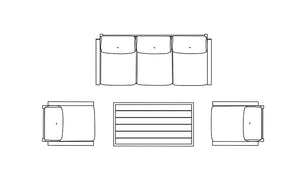
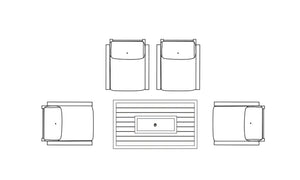
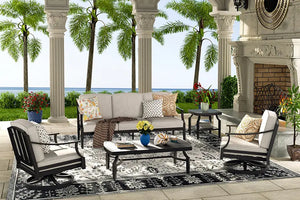
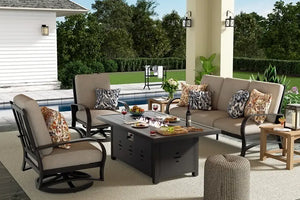
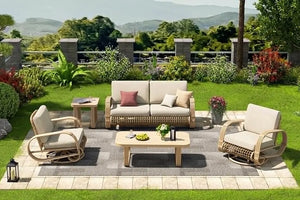
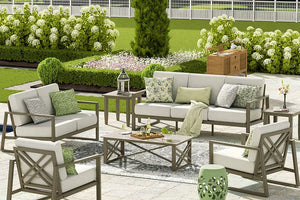
For a patio or deck, conversation sets and modular sofa configurations are a natural fit, especially when paired with UV-resistant cushions in performance fabrics such as Sunbrella or Olefin. A set like the Peakhome Arcadia 5-Piece Patio Furniture Set, which combines an aluminum frame with HDPE rattan weaving and 360-degree swivel chairs, demonstrates how this material translates into comfortable everyday outdoor living.
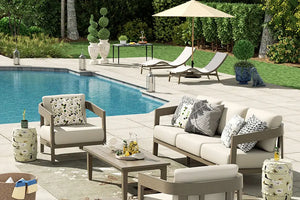
For poolside use, chaise lounges are the strongest recommendation. HDPE's waterproof, quick-drying properties mean splashes, sunscreen, and chlorinated water cause no damage.
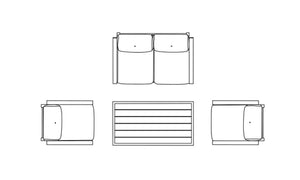
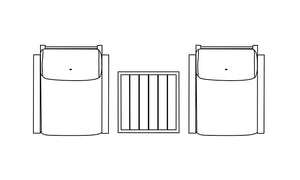
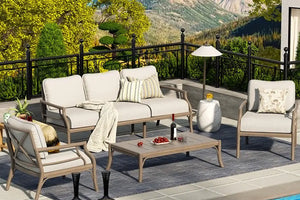
A porch or balcony calls for smaller-scale pieces — a loveseat with a side table, or a pair of club chairs — delivering the same weather resistance without overwhelming the space.
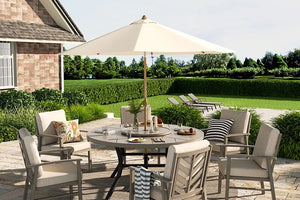
For an outdoor dining area, HDPE wicker dining chairs paired with an aluminum-frame table handle food spills, moisture, and direct sun without the degradation that would compromise PVC or LDPE alternatives.
HDPE rattan is also available in a wide range of colors and weave textures — flat, half-moon, round, and seagrass-style — making it adaptable to modern, coastal, bohemian, farmhouse, and traditional design aesthetics.
Why UV-Resistant HDPE Rattan Furniture Costs More — And Why It's Worth It
HDPE rattan furniture carries a higher price tag than PVC or LDPE alternatives. That is a fact, and it is worth addressing directly rather than sidestepping. The more useful comparison, however, is not the purchase price — it is the Total Cost of Ownership (TCO) over the realistic lifespan of the furniture.
Consider a concrete example. A PVC wicker sofa set costs roughly $300–$500 and typically needs replacing every two years. Over a 10-year period, that amounts to $1,500–$2,500 spent on replacements alone — not counting the time, hassle, and environmental cost of repeated disposal. An HDPE wicker sofa set costs roughly $1,500–$2,500 and lasts 10–15 years. Over the same 10-year window, the total cost is the initial purchase price. The annual cost of ownership for HDPE is actually lower.
The higher upfront cost reflects real differences at the manufacturing level. HDPE resin blended with UV stabilizers, antioxidants, and light stabilizers costs significantly more than basic PVC resin. Premium producers hand-weave each piece, often working only four rows at a time to maintain a level, consistent surface across the entire frame. The frames themselves — typically powder-coated aluminum — cost more than the untreated steel commonly found in budget sets. Each of these choices adds cost, and each directly extends the product's functional lifespan.
The real expense with cheap wicker is not the number on the price tag. It is the hidden cost of frequent replacement, the hassle of disposal, and the frustration of watching outdoor furniture deteriorate season after season.

What Peakhome Does Differently
Peakhome puts the material standards discussed throughout this article into everyday manufacturing practice. The brand uses HDPE premium rattan material paired with powder-coated, rust-proof aluminum frames — a combination engineered for long-term outdoor durability without sacrificing visual refinement.
On the comfort side, Peakhome cushions are made with Olefin fabric or Sunbrella fabric, both of which are fade-resistant, water-repellent, and feature removable, machine-washable covers. Select products, such as those in the Patio Conversation Sets collection, feature 7-inch ultra-thick, dense sponge cushions designed for firm support and long-term shape retention.
Ergonomic details further distinguish Peakhome's design approach. Intentionally lowered seat heights and subtle recline angles promote full-body comfort during extended use, and several chair models offer a 360-degree swivel function for added flexibility. On the service side, the brand offers next-day shipping on in-stock items, a secure delivery guarantee, and dedicated customer support throughout the ownership experience.
These are specific, verifiable details — not marketing superlatives. Buyers can evaluate them directly against the five-point identification method outlined above.
FAQs
How long does HDPE rattan furniture typically last outdoors?
Quality HDPE rattan furniture typically lasts 10–15 years under full outdoor, all-weather exposure. Some premium HDPE products with advanced UV-stabilized finishes have documented lifespans of 18–25 years. The key factors that influence actual lifespan include strand quality (pure HDPE with UV stabilizers versus blended or unmarked PE), frame material (aluminum outlasts steel), weave density (tighter weaves are more durable), and basic ongoing maintenance. Even HDPE benefits from periodic cleaning and the use of a breathable cover during extended periods of non-use to maximize its full potential lifespan.
How to clean and maintain HDPE rattan furniture?
Extremely low maintenance is one of HDPE's most practical advantages. For routine care, wiping down with a soft cloth or using a vacuum with a brush attachment removes dust from weave crevices. For deeper cleaning, mixing mild dish soap with warm water, scrubbing gently with a soft brush, rinsing thoroughly with a garden hose, and allowing the furniture to air dry completely is all that is needed. Abrasive cleaners, steel wool, and pressure washers should be avoided — these can damage the strand surface. During the off-season, covering furniture with a breathable, UV-resistant furniture cover is recommended. Airtight covers should be avoided, as they can trap moisture and encourage mold growth underneath.
Conclusion
Not all "wicker" is created equal. UV-resistant HDPE rattan is the only outdoor wicker material engineered to resist UV damage, moisture, and temperature extremes for a decade or more. Learning to identify genuine HDPE — by checking the material spec, examining the weave, inspecting the frame, testing the strand, and verifying the warranty — protects buyers from wasting money on furniture that will not survive its second summer.
Peakhome's outdoor furniture collection is built on genuine HDPE wicker and rust-proof aluminum frames — the exact material combination this article identifies as the standard for lasting outdoor performance. Explore the full range and see the difference real HDPE makes.
Related Articles

Outdoor Color Guide: Black vs White vs Woodgrai...
Finish color is the first visual variable that shapes an outdoor space. Before a single cushion is placed or a planter positioned, the frame color of patio furniture sets the...
Outdoor Color Guide: Black vs White vs Woodgrai...
Finish color is the first visual variable that shapes an outdoor space. Before a single cushion is placed or a planter positioned, the frame color of patio furniture sets the...
Continue Reading
Patio Budget Strategy: Should You Invest in Fra...
Introduction Every patio furniture buyer faces the same frustrating question: with a limited budget, should you spend more on a quality frame or premium cushions? It's the outdoor furniture equivalent...
Patio Budget Strategy: Should You Invest in Fra...
Introduction Every patio furniture buyer faces the same frustrating question: with a limited budget, should you spend more on a quality frame or premium cushions? It's the outdoor furniture equivalent...
Continue Reading
First-Time Patio Checklist: The 3 Categories Yo...
Furnishing a patio for the first time can feel overwhelming. Dozens of product types, materials, and price points compete for attention, and without a clear plan, most beginners either overspend...
First-Time Patio Checklist: The 3 Categories Yo...
Furnishing a patio for the first time can feel overwhelming. Dozens of product types, materials, and price points compete for attention, and without a clear plan, most beginners either overspend...
Continue Reading