






Round Dining Tables: Best For Who? 4-Seat vs 6-Seat Space Planning Guide

Round dining tables work best for small groups, conversation-focused meals, and compact dining spaces. A 4-seat round dining table suits small families and tight layouts, while a 6-seat round table fits larger rooms and homes that host guests often. The right choice depends on the number of users, the dining room layout, and how much space people leave for traffic flow.
This guide explains how to compare 4-seat vs 6-seat round dining tables using clear space planning rules. It breaks down seating capacity, room size, clearance needs, and common sizing mistakes so the table fits the space and supports daily use.
What is 4-Seat Round Dining Table?
A 4-seat round dining table is a circular dining table designed to comfortably seat four people around its perimeter. Because of its compact size and equal seating arrangement, it is commonly used in small dining rooms, kitchens, apartments, or breakfast nooks.
Advantages
- Space-efficient – Works well in small dining rooms, kitchens, and apartments.
- Easier traffic flow – The smaller footprint leaves more walking space around the table.
- More intimate seating – Everyone sits closer together, which encourages conversation.
- Lower cost – Usually requires fewer chairs and a smaller table surface.
Disadvantages
- Limited seating capacity – Not ideal for larger families or frequent guests.
- Less surface area – Space for dishes, serving trays, or decorations is more limited.
- May feel cramped during gatherings – Four people plus shared dishes can fill the table quickly.
What is 6-Seat Round Dining Table?
A 6-seat round dining table is a circular dining table designed to seat six people comfortably. It is larger than a 4-seat table and provides more surface area for place settings, serving dishes, and centerpieces.
Advantages
- More seating capacity – Suitable for families or hosting guests.
- Larger tabletop – Provides more room for serving dishes, centerpieces, and place settings.
- Balanced social interaction – Round shape still allows everyone to face each other easily.
- Better for gatherings – Works well for casual entertaining or holiday meals.
Disadvantages
- Requires more space – Needs a larger dining area to maintain comfortable clearance.
- Higher cost – Bigger table and more chairs increase the total price.
- Heavier and harder to move – Large round tables can be difficult to reposition.
- Not ideal for small rooms – May make compact spaces feel crowded.

4-Seat vs 6-Seat Round Dining Tables: What are the Key Differences?
A 4-seat round dining table and a 6-seat version differ mainly in table diameter, room clearance, and daily use. The right dining table size depends on measured space, chair width, and how often extra guests join the table.
Space Requirements for Each Size
A round dining table needs clearance on all sides, not just enough room for the tabletop. Most dining table size guides recommend at least 36 inches of open space between the table edge and walls or furniture. This space allows chairs to pull out and people to walk behind seated guests.
A 42–48 inch table diameter (4-seat) works well in small dining rooms or open-plan apartments. With 36 inches of clearance, the total space needed is about 9 to 10 feet wide. In practice, this fits many compact layouts without blocking traffic flow.
A 54–60 inch table diameter (6-seat) needs more floor area. With proper clearance, the room should measure at least 10 to 12 feet wide. Because the diameter increases by 12 inches, the walking zone also shifts outward. That extra foot affects tight rooms more than many expect.
These rules change when:
- Chairs have wide arms that add 2–4 inches per seat
- The dining room is narrow or shares space with a living area
- The table must hold serving dishes in the center
In those cases, the larger table may feel crowded even if measurements appear correct.
Typical Table Dimensions and Seating Capacity
The main difference between 4-seat and 6-seat models is table diameter, not table length or table width, since round tables use a single measurement.
|
Seating Capacity |
Standard Table Diameter |
Seats per Person (Approx.) |
Best For |
|
4 people |
42–48 inches |
24 inches of arc space |
Small families, apartments |
|
6 people |
54–60 inches |
24 inches of arc space |
Larger families, frequent guests |
Each diner typically needs ~24 inches of table edge for comfort; wider chairs may reduce capacity. Because a circle spreads seating evenly, increasing the diameter directly increases usable edge space.
A 48-inch table seats four comfortably because its circumference provides enough personal space. A 60-inch table seats six because the larger circumference adds nearly 38 more inches of edge room. For the user, this means elbows do not overlap during meals.
If chairs are wider than ~20 inches, seating capacity may decrease by one person.
Functionality and Use Cases
A 4-seat round dining table suits daily meals, homework, and compact dining areas. Its smaller diameter keeps items within easy reach. In other words, people can pass food without standing up.
A 6-seat round table supports hosting and larger households. The added surface area allows space for serving bowls in the center. Because the tabletop is wider, diners sit slightly farther apart, which improves comfort during longer meals.
However, a larger diameter also increases the distance across the table. Conversation may feel less direct compared to a 42-inch table.
Choose a 4-seat model when floor space is limited and daily use involves four or fewer people. Choose a 6-seat version when entertaining happens often and the room supports the required clearance.

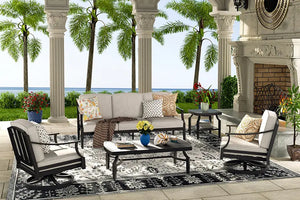
Shop the look: Azur Aluminum Patio Round Dining Table
How to Assess Room Size for Optimal Table Selection?
Start by measuring the room width and length in inches. Use a tape measure and record the shortest wall-to-wall distance, because table placement must fit the tightest span.
Next, apply the clearance rule: leave 36–48 inches between the table edge and walls or other furniture. This space allows chairs to pull out and people to walk behind them without blocking traffic. For the user, this means guests can sit and stand without moving other chairs.
A simple formula helps:
Room width – 72 inches (36" clearance on each side) = maximum table diameter
For example:
|
Room Width |
Minus 72" Clearance |
Max Round Table Diameter |
|
10 ft (120") |
120" – 72" |
48" table |
|
12 ft (144") |
144" – 72" |
72" table |
This formula works because standard dining table dimensions for round tables range from 36" (4 seats) to 48" (6 seats) and 60" (8 seats). Matching your calculated diameter to common dining table dimensions prevents overcrowding.
Also check ceiling height and nearby furniture. A large chandelier centered over a 48-inch table looks balanced, while a small light over a 60-inch table may feel out of scale.
By measuring first and comparing the result to standard table dimensions, they can choose a 4-seat or 6-seat round dining table that fits the room and supports daily use.
When to Choose 4-Seat Round Dining Tables?
Choose 4-seat round dining tables when the household has two to four people and limited floor space. A round top with a 42–48 inch diameter usually seats four without crowding. Because the shape has no corners, it allows smoother traffic flow in small dining rooms, apartments, and breakfast nooks.
Occasions that 4-seat round dining table suits:
- Space is limited: Ideal for small kitchens, apartments, or breakfast nooks where floor space is tight.
- Small household: Perfect for couples or a family of up to 4 people.
- Casual dining: Works well for everyday meals, coffee, or quick breakfasts.
- Conversation focus: Smaller diameter allows everyone to easily see and talk to each other.
- Flexibility: Easier to move or reposition compared to a larger table.
Example scenario: A 2-bedroom apartment with an open kitchen and limited dining area; a 4-seat round table keeps the space open while providing enough seating for guests.
When to Choose 6-Seat Round Dining Tables?
Choose a 6-seat round dining table when a household seats five to six people on most days or hosts guests often. A larger round top keeps everyone at equal distance, which supports group conversation better than a long rectangular table.
Occasions that 6-seat round dining table suits:
- Medium to large dining rooms: A 6-seat table fits well without overcrowding the room.
- Larger households or frequent guests: Suitable for 4–6 people, or occasional hosting.
- Family meals & gatherings: More space for serving dishes, dinnerware, and centerpieces.
- Balanced social interaction: Everyone can still see each other while enjoying more surface area.
- Formal or semi-formal dining: Provides a more substantial presence in the room.
Example scenario: A family with four children or a medium-sized living/dining space; a 6-seat round table accommodates regular family meals and occasional visitors comfortably.

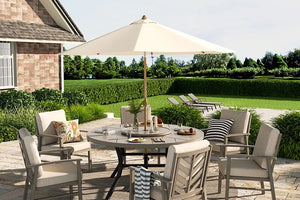
Shop the look: Azur Patio Round 60" Dining Set With Removable Lazy Susan And Sunbrella® Cushions
What are Common Round Dining Table Size Mistakes to Avoid?
Many people choose a round dining table based only on seat count. This often leads to space planning problems that affect comfort and movement.
1. Choosing a table that is too large for the room
A 60-inch table can seat up to 6 people comfortably; seating 8 may feel cramped, but it also needs at least 36 inches of clearance around it. That clearance allows chairs to slide out and people to walk behind them. In practice, this means a small dining room can feel crowded even if the table technically fits.
2. Forgetting chair clearance
Each place setting needs about 24 inches of width along the table edge. This spacing matters more than the chair width because it defines elbow room. If the table diameter is too small, guests will bump arms during meals.
3. Ignoring chair arm width
Armchairs often measure 22–25 inches wide. If a 48-inch round dining table is planned for 6 seats, wide arms can reduce the usable space. Because the chair arms take up more room, the table may only seat 4 comfortably.
4. Blocking main walkways
A round table placed near a doorway or kitchen path can block traffic flow. Designers often allow 36–42 inches for main walkways. For the user, this means people can pass through without squeezing between chairs.
5. Overlooking dining table height
Standard dining table height measures 28–30 inches. A counter height table measures about 34–36 inches. If chair seat height does not match the table height, guests will sit too high or too low, which causes discomfort during long meals.
FAQs
Are round tables better for conversation?
Yes. A round dining table places every person at an equal distance from the center because it has no head position.
A 36–48 inch round table that seats 4 keeps each person within about 2 feet of the center. This shorter distance supports eye contact and normal speaking volume. In practice, this means people do not need to lean forward or raise their voices to join the discussion.
A 54–60 inch round table that seats 6 still keeps sightlines open. Because there are no corners, no one sits at the end, which helps group talk flow more evenly.
Is a round table good for small dining rooms?
Yes, if the diameter matches the room size. A 36–42 inch round dining table fits well in rooms roughly 8 × 8 feet or larger to allow comfortable chair clearance.
The circular shape removes sharp corners. Because of this design, people can walk around it without hitting edges. For the user, this means smoother movement in tight layouts, especially in apartments or combined living-dining spaces.
However, a 54–60 inch round table for 6 needs a room 10 × 10 feet or larger to maintain proper clearance. In smaller rooms, it will limit chair pull-out space.
How much space do you need around a round dining table?
People need 36 inches of clearance on all sides. This measurement allows chairs to slide out and people to walk behind seated guests.
For example, a 48 inch round table requires a room width of at least 10 feet (48 inches for the table plus 72 inches for total clearance). In other words, the table diameter plus 6 feet equals the minimum room size.
If space is tight, some layouts reduce clearance to 30 inches. This tighter spacing works in low-traffic areas, but it limits easy movement during meals.
Related Articles

How to Create a Backyard Meditation Space with ...
A backyard meditation space is a dedicated outdoor area designed for stillness, breathwork, and mindful relaxation. The right outdoor furniture turns any patio, garden corner, or balcony into a calming...
How to Create a Backyard Meditation Space with ...
A backyard meditation space is a dedicated outdoor area designed for stillness, breathwork, and mindful relaxation. The right outdoor furniture turns any patio, garden corner, or balcony into a calming...
Continue Reading
Aluminum vs. Steel, Wood and Wrought Iron: The ...
Picture this scenario: a homeowner invests a few hundred dollars in a brand-new patio dining set. One rainy season later, the iron legs start flaking with rust, and orange stains...
Aluminum vs. Steel, Wood and Wrought Iron: The ...
Picture this scenario: a homeowner invests a few hundred dollars in a brand-new patio dining set. One rainy season later, the iron legs start flaking with rust, and orange stains...
Continue Reading
Outdoor Furniture Maintenance Calendar: Your Co...
Introduction Did you know that regular cleaning and maintenance can reduce the risk of mold and mildew on patio furniture by up to 70%? Yet most homeowners struggle with the...
Outdoor Furniture Maintenance Calendar: Your Co...
Introduction Did you know that regular cleaning and maintenance can reduce the risk of mold and mildew on patio furniture by up to 70%? Yet most homeowners struggle with the...
Continue Reading