







Aluminum vs. Steel, Wood and Wrought Iron: The Ultimate Rust-Proof Choice for Outdoor Furniture

Picture this scenario: a homeowner invests a few hundred dollars in a brand-new patio dining set. One rainy season later, the iron legs start flaking with rust, and orange stains bleed onto the concrete below.Or perhaps the wooden chairs begin to split along the grain after a single winter, and every spring brings an exhausting ritual of sanding, sealing, and repainting. These are not rare complaints — they are everyday realities for millions of outdoor-furniture owners across North America.
The root of the problem is simple: the material determines whether outdoor furniture lasts two years or twenty. The frame material shapes everything — how often a set needs maintenance, how it looks after a few seasons of sun and rain, and whether it stays safe to use over time.
This article offers a side-by-side comparison of the four most common outdoor furniture materials — steel, wood, wrought iron, and aluminum — drawing on industry data and materials-science fundamentals to show why aluminum stands out as the best rust-proof option.
At the end, readers will also discover how Peakhome’s hand-painted Wood-Look Alloy technology takes aluminum a step further, combining the warm aesthetic of real wood with the zero-maintenance durability of aluminum alloy.
Why Rust-Proof Material Matters for Outdoor Furniture
Outdoor furniture faces a punishing list of environmental threats every single day: ultraviolet radiation that degrades coatings and polymers, rain and humidity that accelerate corrosion, salt spray in coastal regions that eats through unprotected metal, and sudden temperature swings that cause materials to expand and contract.No indoor piece of furniture endures anything close to this level of abuse.
The numbers paint a clear picture. Under the ASTM B117 salt spray test standard — widely used to evaluate corrosion resistance — uncoated carbon steel can develop visible surface rust in as few as 48 hours of continuous salt-fog exposure.
Industry surveys indicate that American homeowners replace budget outdoor furniture every 3 to 5 years on average. For those who choose wood sets, annual upkeep involving sanding and re-oiling typically costs between $50 and $150 per set, not counting the hours of labor involved.
Rust and corrosion trigger a chain reaction of problems. First, the structural integrity of frames weakens, creating safety hazards — a corroded chair leg can buckle under weight.Second, rust runoff stains decks, patios, and pool surrounds with marks that are expensive and difficult to remove.Third, the furniture’s appearance deteriorates rapidly, dragging down the look of the entire outdoor living space.
Facing these challenges, the performance gap between different materials is enormous. The following section compares the four most popular options one by one.

Common Outdoor Furniture Materials Compared
The sections below evaluate steel, wood, wrought iron, and aluminum across five key dimensions: rust resistance, durability, maintenance requirements, weight and portability, and price.
Steel Outdoor Furniture: Pros and Cons
Steel is one of the most widely available outdoor-furniture materials, and its popularity starts with price. Entry-level steel patio sets can be found for as little as $200 to $400, making them attractive for budget-conscious shoppers.Steel also delivers high structural strength, and manufacturers offer a wide variety of styles — from sleek modern to ornate traditional.
The trade-offs, however, are significant. Most affordable steel furniture uses carbon steel with a galvanized or powder-coated finish. Once that surface coating is scratched — by a chair leg dragging across pavement or a falling branch — rust spreads rapidly from the exposed area.
The protective coating on budget pieces typically lasts only about 2 to 5 years under normal outdoor conditions.Stainless steel grades such as 304 and 316 resist corrosion far better, but stainless-steel outdoor furniture is extremely heavy and costs several times more than carbon-steel equivalents. Steel sets are also difficult to move for seasonal rearrangement or storage, which is a practical drawback many buyers overlook.
Wood Outdoor Furniture: Pros and Cons
Nothing quite replicates the natural warmth of wood. High-end hardwoods such as teak, ipe, and cedar have inherent oils that provide moderate resistance to rot and insects, and a scratched surface can often be restored by sanding and re-oiling.For many homeowners, the visual and tactile appeal of real wood is irreplaceable.
That beauty, though, comes with strings attached. Even premium teak will develop a silver-gray patina if left untreated — structurally harmless, but a cosmetic deal-breaker for many.Softwoods like pine are far more vulnerable, prone to rot, splitting, and a noticeably short outdoor lifespan.
Annual maintenance — sanding plus oiling or sealing — is non-negotiable for anyone who wants to preserve the original look, and the yearly expense of $50 to $150 per set adds up over the furniture’s life.
High-end hardwood dining sets easily surpass $2,000, and even at that price point, the wood remains susceptible to termite damage and mold in humid climates. The “hidden cost” of wood furniture lies in this ongoing maintenance investment that continues long after the purchase.
Wrought Iron Outdoor Furniture: Pros and Cons
Wrought iron brings a classic, elegant aesthetic that suits traditional and Mediterranean-style homes. Its sheer weight — a single dining chair can tip the scale at 30 to 40 pounds — makes it extremely stable, even in windy conditions.The material’s high plasticity also allows for intricate scrollwork and decorative patterns that are hard to achieve with other metals.
On the downside, iron’s nature means it will inevitably rust without a protective barrier. Once the paint or powder-coat finish chips, corrosion spreads quickly, and the owner must sand and repaint the affected areas — sometimes every season.
That heavy weight also makes rearranging the patio a chore. Iron surfaces become extremely hot under direct summer sun and ice-cold in winter, creating comfort issues that aluminum and wood do not share to the same degree.Repair is more difficult than with other materials because welding cast iron or wrought iron requires specialized tools and skills.
For homeowners who want permanently placed decorative patio pieces and do not mind annual touch-up painting, wrought iron can be a charming choice — but it is not a low-maintenance one.
Aluminum Outdoor Furniture: Pros and Cons
Aluminum stands apart from the other three materials thanks to a single, fundamental advantage: it is naturally rust-proof.
When exposed to air, aluminum automatically forms a thin, dense layer of aluminum oxide on its surface. This oxide film acts as a self-repairing shield — even if the surface is scratched, the layer regenerates on contact with oxygen. Steel and iron simply cannot match this built-in corrosion defense.
Beyond rust resistance, aluminum is remarkably lightweight. Its density is roughly one-third that of steel, making it easy to reposition for a backyard barbecue or to move under cover before a storm. This is especially helpful for elderly users or families that frequently rearrange their outdoor layout.
With a powder-coated or anodized finish, high-quality aluminum furniture can serve outdoors for 15 to 30 years. Day-to-day maintenance requires nothing more than a wipe with soapy water.Whether the climate brings coastal salt spray, desert heat, or northern freeze-thaw cycles, aluminum handles it all.
In the interest of balance, aluminum does carry a higher price tag than carbon steel — though it remains more affordable than teak or stainless steel. Its lightweight nature, while mostly an advantage, means that in extreme wind events, securing or storing the pieces is advisable.Some low-cost aluminum products also cut corners with ultra-thin frame walls, which compromises sturdiness. The next section explains how to avoid that pitfall.
Why Aluminum Is the Best Rust-Proof Material for Outdoor Furniture
Naturally Corrosion-Resistant
Aluminum’s oxide film does more than just sit on the surface — it self-repairs. Scratch it, and the exposed metal instantly reacts with atmospheric oxygen to rebuild the protective barrier.Compare that to steel, where a single scratch through the paint invites a rust bloom that only spreads over time.
This self-healing mechanism is an intrinsic property of the element itself, not a coating that wears off. It is the single biggest reason rust-proof outdoor furniture buyers should look at aluminum first.
Lightweight yet Durable
Modern aluminum alloys — such as the widely used 6061-T6 grade — deliver an impressive strength-to-weight ratio.A well-made aluminum frame with a wall thickness of 1.5 mm to 2.0 mm or above is anything but flimsy; it comfortably supports daily use while remaining light enough for one person to rearrange.
Families that host gatherings or change their patio layout seasonally will appreciate the ease of handling.
Low Maintenance for Year-Round Use
Wood demands annual sanding and oiling. Steel and iron require periodic touch-up painting. Aluminum demands virtually nothing.
A quick rinse with a garden hose or a wipe with mild soap keeps it looking fresh season after season. That translates to hundreds of dollars saved in supplies and countless hours reclaimed over the life of the furniture.
Versatile in Style and Finish
Powder coating gives aluminum access to virtually any color. Anodizing creates a sleek metallic finish with exceptional hardness.And for those who love the look of natural wood but not its upkeep, hand-painted wood-grain techniques — like the process Peakhome uses — can produce a remarkably realistic timber appearance on an aluminum surface.
This design versatility makes aluminum the foundation for outdoor furniture that fits any aesthetic, from coastal casual to contemporary minimalist.
At-a-Glance Material Comparison
|
Feature |
Steel |
Wood |
Wrought Iron |
Aluminum |
|
Rust Resistance |
Low (coating-dependent) |
N/A (rots instead) |
Low (iron rusts) |
Excellent (natural oxide) |
|
Typical Lifespan |
3–10 years |
5–25 years (with care) |
5–15 years |
15–30 years |
|
Annual Maintenance |
Touch-up paint |
Sand + oil ($50–$150) |
Sand + repaint |
Soap-and-water wipe |
|
Weight |
Heavy |
Moderate to heavy |
Very heavy |
Light (~1/3 of steel) |
|
Price Range (dining set) |
$200–$800 |
$500–$3,000+ |
$400–$1,500 |
$600–$2,500 |
How to Choose the Right Aluminum Outdoor Furniture
Establishing that aluminum is the top material choice is only half the job. Not all aluminum furniture is created equal. Frame thickness, coating process, and cushion fabric all directly influence how long a set lasts and how it feels to use.
Check Frame Thickness and Construction Quality
Aluminum tube wall thickness is the single most important quality indicator. On a well-built outdoor piece, the frame wall should measure at least 1.5 mm (approximately 0.06 inches), with premium products reaching 2.0 mm.Welding quality matters, too: a fully welded frame is stronger and more resistant to loosening than one assembled with bolts alone.
Buyers should be cautious around ultra-low-price aluminum furniture, which often uses thin-walled tubes under 1.0 mm — these frames flex noticeably when sat upon and tend to have a shorter useful life.Before purchasing, it pays to check the product specifications or contact the seller directly to confirm frame thickness.
Compare Coating Types: Powder Coating vs. Anodizing
Powder coating is the most common surface treatment on aluminum furniture today. A high-quality polyester powder coat is typically 60 to 120 microns thick and offers strong UV resistance and scratch protection.The biggest advantage is color variety — nearly any shade is available. The trade-off is that prolonged sun exposure can cause gradual fading, and touch-up repairs on a powder-coated surface are difficult.
Anodizing uses an electrochemical process to thicken aluminum’s natural oxide layer, producing an extremely hard surface that approaches the hardness of sapphire.Color options are more limited — mostly natural silver, black, and antique bronze — but the finish is extraordinarily durable and will not peel.
For buyers who prioritize color and decorative variety, powder coating is the way to go. For those who value maximum longevity above all else, anodizing is the better pick.
Match Cushion Fabrics to Your Climate
The frame is only half the equation; the cushion fabric is equally important for long-term satisfaction.
Sunbrella® or equivalent solution-dyed acrylic fabric is the gold standard for outdoor cushions. It resists UV fading, mold, mildew, and water penetration, while maintaining excellent color fastness.Olefin (polypropylene) is a cost-effective alternative with good waterproof and mold-resistant properties, though its UV resistance falls slightly short of Sunbrella.Polyester is the most affordable option but the least durable outdoors, best suited for shaded areas or seasonal use only.
Homeowners in coastal regions should pay extra attention to salt-spray resistance and quick-dry performance. Regardless of the fabric grade, covering cushions with a protective furniture cover when the set is not in use will extend its lifespan considerably.

Peakhome’s Wood-Look Alloy: The Best of Aluminum Meets the Beauty of Wood
As the comparison above shows, aluminum’s only perceived “shortcoming” is that it does not look like natural wood. Many homeowners love the warm texture and organic feel of timber.
Peakhome’s Wood-Look Alloy technology was developed to solve exactly that problem.
What Is Peakhome’s Wood-Look Alloy Technology?
At its core, the process starts with a high-strength aluminum alloy frame finished with a powder-coated primer. On top of that base, skilled artisans hand-paint realistic wood-grain patterns, making the texture of every piece unique.A protective clear coat seals the outermost surface to guard against scratches and UV exposure.
This approach is fundamentally different from mass-produced wood-grain heat-transfer printing, which tends to create repetitive patterns and unnatural seam lines.Hand-painting delivers organic variation — subtle knots, grain shifts, and tonal depth that closely mimic the character of genuine hardwood. It represents a genuine breakthrough in aluminum-furniture aesthetics, freeing consumers from the old trade-off between “good-looking” and “durable.”
Real Wood Aesthetics, Zero Wood Maintenance
The core selling point can be summed up in a single comparison:
- Looks like teak, walnut, or oak — but never needs sanding or oiling.
- Delivers the warm visual feel of natural wood — but will not rot, crack, mold, or attract termites.
- 100% aluminum alloy at the core — rust-proof, lightweight, and suitable for all climates.
In short: all the beauty of wood, none of the headaches.
Featured Collections of Peakhome’s Outdoor Furniture
Peakhome offers several collections that showcase the Wood-Look Alloy process alongside other signature design approaches:
Azur Collection
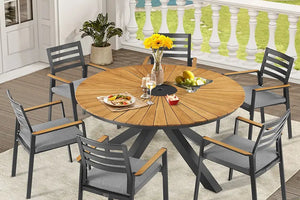
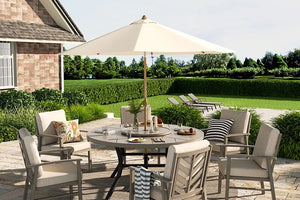
This dining-focused line features hand-brushed, powder-coated aluminum frames that replicate the look of weathered teak. Sets range from intimate 4-person round tables to spacious 9-piece extendable configurations, all paired with Sunbrella® cushions.It is an ideal choice for homeowners who want a natural-wood dining atmosphere without any of the upkeep. Explore the full Azur lineup at peakhomefurnishings.com/collections/azur.
Harmonti Collection
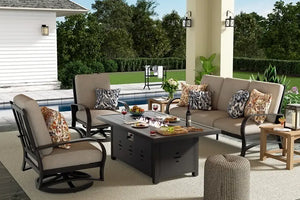
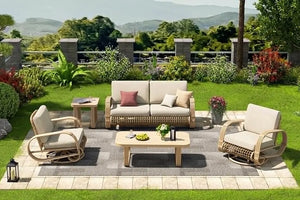
Harmonti takes a modern, minimalist approach with organic curved silhouettes and oversized cushions filled with high-quality flexible foam. The masterfully hand-painted aluminum frames come in a warm barley tone that complements virtually any patio palette.
Available in conversation sets, club chairs, and modular sofa arrangements, Harmonti proves that rust-proof outdoor furniture can feel as inviting as any living-room suite.Browse the Harmonti series at peakhomefurnishings.com/collections/harmonti.
FAQs
Why Is Aluminum Patio Furniture More Expensive?
Aluminum alloy raw materials cost more than carbon steel, and surface treatments like powder coating or anodizing add to the manufacturing expense.
However, from a total cost of ownership perspective, aluminum furniture typically costs less over a 10-year period than steel or wood alternatives — because it eliminates recurring maintenance bills and the need for premature replacement.
Can You Leave Aluminum Furniture Outside Year-Round?
Yes. Aluminum is naturally rust-proof and can handle rain, snow, ultraviolet rays, and salt spray without structural damage.
That said, it is wise to move furniture indoors or use fitted covers before extreme weather events such as hurricanes or heavy snowstorms — mainly to protect cushions and coatings, not the aluminum itself.
How Long Does Powder-Coated Aluminum Furniture Last?
A high-quality powder-coated finish can maintain its appearance for 10 to 15 years under normal outdoor conditions without significant fading or peeling.
Premium formulations that include UV-stabilizer additives can extend that lifespan even further. Regular cleaning with mild soap and water helps preserve the coating over time.
Is Aluminum Furniture Too Hot to Sit on in Summer?
All metal furniture absorbs heat under direct sunlight, and aluminum is no exception. However, aluminum dissipates heat faster than steel or cast iron because of its higher thermal conductivity.
Practical solutions include choosing light-colored coatings that reflect sunlight, pairing chairs with cushions, and positioning furniture in shaded areas during peak afternoon hours.
Upgrade Your Outdoor Space with Rust-Free Aluminum Furniture
Among all mainstream outdoor furniture materials — steel, wood, wrought iron, and aluminum — aluminum stands out with its natural rust resistance, lightweight build, near-zero maintenance, and all-climate adaptability.
It is the one material that checks every practical box a homeowner cares about.
For those who also want the warmth and beauty of natural wood, Peakhome’s Wood-Look Alloy technology delivers the best of both worlds — no compromises between aesthetics and durability.
Every piece is hand-painted for a one-of-a-kind finish, built on a rust-proof aluminum core, and paired with premium weather-resistant fabrics.
Ready to make the switch? Browse Peakhome's full collection of rust-proof outdoor furniture at peakhomefurnishings.com and find the perfect set for your patio, deck, or garden.
Related Articles

Outdoor Bench vs Chairs: Space Saver or Comfort...
Outdoor bench vs chairs comes down to this: benches save space and fit more people, while chairs give better personal comfort and flexible layout options. If space is tight, a...
Outdoor Bench vs Chairs: Space Saver or Comfort...
Outdoor bench vs chairs comes down to this: benches save space and fit more people, while chairs give better personal comfort and flexible layout options. If space is tight, a...
Continue Reading
Small Balcony Dining: How to Choose Bistro & Co...
Small balcony dining works best when the furniture fits the space, seating height, and daily use without blocking movement. A well-chosen bistro or compact dining set depends on three factors:...
Small Balcony Dining: How to Choose Bistro & Co...
Small balcony dining works best when the furniture fits the space, seating height, and daily use without blocking movement. A well-chosen bistro or compact dining set depends on three factors:...
Continue Reading
Do You Need a Lazy Susan Outdoor Table? Practic...
A Lazy Susan outdoor table makes it easier for multiple people to share food and keeps dishes within reach, but it is not necessary for every patio setup. If a...
Do You Need a Lazy Susan Outdoor Table? Practic...
A Lazy Susan outdoor table makes it easier for multiple people to share food and keeps dishes within reach, but it is not necessary for every patio setup. If a...
Continue Reading