






Small Balcony Dining: How to Choose Bistro & Compact Sets Like a Pro

Small balcony dining works best when the furniture fits the space, seating height, and daily use without blocking movement. A well-chosen bistro or compact dining set depends on three factors: balcony size and layout, dining versus casual use, and outdoor durability with storage needs. Unlike indoor dining rooms, balconies must handle narrow walkways, wind exposure, and uneven flooring.
This guide explains how to measure a balcony correctly, what standard table sizes and shapes work best, and how layout limits can change the ideal choice. It also covers common small balcony dining mistakes and answers key questions about space planning, comfort, and long-term use. With the right compact patio furniture, even a tight apartment balcony can support daily meals, coffee breaks, and relaxed evenings outdoors.
How to Measure Balcony Before Buying a Bistro or Compact Dining Set?
Before choosing a bistro set or compact dining set, measure three key areas:
- Balcony width
- Balcony depth
- Door clearance
Measure the space before buying any small balcony dining furniture. Accurate numbers prevent blocked doors, cramped seating, and returns. Use a steel tape measure for accuracy. Record measurements in inches. Measure wall to railing for width and from the door to the railing for depth.
Because chairs must move without blocking entry, door swing clearance matters. If the door swings outward, measure the full arc. For the user, this means they avoid placing a table where it stops the door from opening fully.
Simple Layout Rule
A functional small balcony dining layout needs table size + chair space + walkway.
Chairs typically need 18–24 inches of pull-back space. A safe walkway needs at least 24 inches, while 30–36 inches provides more comfortable movement.
Quick Formula
Minimum balcony depth ≈ table depth + chair clearance + walkway space
For example, a 24-inch-deep bistro table needs about 60–66 inches total depth. This extra space allows chairs to slide out and leaves room to pass.
The following examples show typical layouts. Actual fit depends on chair size, door swing, and walkway clearance.
Example layouts of table sizes for typical small balconies:
|
Balcony Size |
Recommended Table |
|
4' x 6' |
24" round bistro (2 chairs) |
|
5' x 8' |
28–30" round or square table |
|
6' x 10' |
30–36" compact dining set |
Measure once, then sketch the layout to scale. This step helps them see how the balcony furniture will fit before they buy.
What are Standard Bistro & Compact Table Sizes?
Standard bistro and compact table sizes for small balcony dining range from 24 to 36 inches in diameter or width. These dimensions balance usable surface space with safe movement on tight balconies.
The most common options include:
|
Table Type |
Diameter / Width |
Best For |
|
Bistro table |
24–30 inches |
Coffee, drinks, light meals |
|
Compact dining table |
30–36 inches |
Two-person dining |
|
Small 3-piece square table |
28–32 inches |
Corners or narrow balconies |
Because the smaller top limits clutter and keeps chairs close for conversation, a 24–30 inch round bistro table works for morning coffee or casual drinks. For two people who plan to eat full meals, a 30–36 inch compact dining table provides more elbow room.
These sizes allow two chairs to fit comfortably, provide 20–24 inches of seating width per person, and maintain at least one narrow walking path. In practice, this means residents can pull chairs out without blocking the balcony door.
Balcony depth also matters. If the space measures under 5 feet deep, a table 28 inches or smaller prevents crowding. If the balcony serves mainly as a dining area, a 30–36 inch table supports plates and serving dishes.
If chairs must tuck fully underneath, avoid wide pedestal bases that reduce leg clearance. Straight legs at the corners often allow better chair storage, which keeps the layout efficient.
What are Standard Bistro & Compact Table Shapes?
Small balcony dining usually uses five standard shapes: round bistro tables, square tables, rectangular compact tables, bar-height sets, and classic 2-seat bistro sets. Each shape changes how people move, sit, and use space.
Round Bistro Tables
A round bistro table often measures 24–30 inches in diameter with a standard height of 28–30 inches. Because it has no corners, it allows smoother traffic flow in tight areas.
This shape supports flexible seating since chairs can shift around the edge. For the user, this means it fits narrow balconies without blocking the walking path.

Best for:
- Narrow balconies
- Flexible seating
- Smoother traffic flow
Square Tables
Square compact tables often range from 24x24 to 30x30 inches. Their straight edges align flush against walls or railings.
Because each side matches in length, they create symmetrical layouts. In practice, this helps define a neat dining zone in corners.
Best for:
- Corners
- Symmetrical layouts
Rectangular Compact Tables
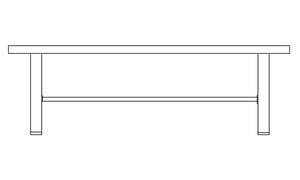
Rectangular tables typically measure 24x36 to 30x48 inches. The longer edge increases seating capacity along one side.
However, they require more chair clearance—at least 24 inches per seat plus 36 inches behind chairs. This means they suit longer balconies but need careful measurement.
Best for:
- Longer balconies
- Railing-side placement
Bar-Height Sets
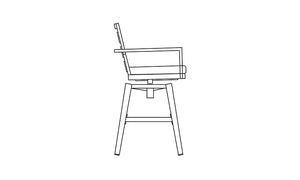
Bar-height tables typically stand 40–42 inches tall, noticeably higher than standard dining tables. The extra height improves sightlines over balcony railings, making them popular in apartment balconies where views might otherwise be blocked.
However, taller seating requires bar stools or high chairs, and users need stable footing space. For comfort, allow at least 18–24 inches of leg clearance around the stools.
Best for:
- Apartments with solid balcony railings
- Residents who want better outward views
- Balconies used for drinks or casual seating
Bistro Sets
A classic bistro set includes a small table and two chairs. Its compact footprint supports everyday dining without crowding limited floor space, usually measuring 24–30 inches in diameter.
Because the set is designed for two people, it works well for everyday meals or morning coffee without crowding limited floor space. Many bistro chairs are also foldable or lightweight, which helps with storage on small balconies.
Best for:
- Small balconies or narrow spaces
- Couples or two-person households
- Casual coffee or light meals
How Balcony Constraints Can Change the Best Bistro or Compact Dining Set?
Because space, wind, and floor type limit your options, small balconies change which bistro set or compact dining set works best. A table that fits on paper may block the door or shift in strong wind. The right choice depends on these fixed conditions.
Traffic flow comes first. Most designers suggest 18–24 inches of walkway clearance around a balcony dining set. In practice, this means people can sit and stand without turning sideways or hitting the railing.
If space is tight, adjust the layout:
- Because the curved edge improves movement around corners, choose round or 24–30 inch bistro tables.
- Use armless chairs so they slide fully under the table.
- Place the set against a wall or railing to free up walking space.
Wind exposure also changes the best option. High-rise balconies often face steady gusts. Because the added mass lowers its center of gravity, a table with a powder-coated steel frame and a 30+ lb base resists tipping. For the user, this means fewer shifts and less risk of spills. Non-folding frames with cross-bracing add rigidity, which reduces wobble.
Floor surfaces affect stability. Tile, wood decking, and concrete may slope slightly for drainage. Tables with adjustable feet correct small height differences. Wider pedestal or four-leg bases spread weight more evenly, which improves balance on outdoor rugs or uneven boards.
What are the Best Materials for Small Balcony Dining Furniture?
Aluminum – lightweight, rust-resistant, powder-coated
Aluminum is a lightweight metal commonly used for balcony tables and chairs. Powder-coated finishes protect it from rust and sun damage.
Pros:
- easy to move
- rust-resistant
- low maintenance
- durable in various weather conditions
Best For
- small balconies
- renters
- spaces where furniture needs to be rearranged frequently.

Shop the look: Marindo 3 Pieces Aluminum Patio Bistro Set with Sunbrella® Cushions
PE Rattan – weatherproof, UV-resistant, dries quickly
PE rattan is a synthetic woven material over a steel frame, designed to mimic natural wicker while resisting weather.
Pros:
- weatherproof
- UV-resistant
- quick-drying
- stylish textured look
- stable and sturdy
Best For:
- compact balcony dining areas
- casual outdoor seating
- spaces exposed to sun and rain
Wood – FSC-certified, needs sealing, classic look
Wood, like FSC-certified acacia, offers a traditional, natural aesthetic for balcony furniture.
Pros:
- strong
- durable
- visually warm and classic
- can be shaped into various designs
Best For:
- covered balconies or areas with minimal rain exposure
- homeowners who don’t mind occasional maintenance
How to Choose the Right Bistro or Compact Set for Balcony Dining Style?
Choose a bistro or compact set based on how the balcony dining space will be used. Table size, frame material, and chair design all affect comfort, storage, and daily function.
For coffee and casual drinks, select a 24–28 inch round table with two lightweight chairs. Because it reduces the table’s footprint, a smaller diameter keeps walkways clear. In practice, this means more room to move on a narrow balcony.
For everyday dining, use a 30–34 inch table. A square steel-frame table often provides good stability, especially when supported by four evenly spaced legs. This matters when placing full plates or heavier dishes.
For work or laptop use, look for a 28–32 inch table with a flat, solid surface such as tempered glass or powder-coated steel. Because heat treatment strengthens the material, tempered glass improves impact resistance. It also provides a smooth surface that works well for laptops or writing. For the user, this means a smoother writing and typing surface.
For occasional entertaining, choose a 32–36 inch round table with stackable or folding chairs. because the hinges allow vertical storage against a wall, folding steel frames save space.
Common Small Balcony Dining Mistakes to Avoid
Many small balcony dining problems come from scale, clearance, and material choices. A compact bistro set or folding dining set must fit the space, allow movement, and handle outdoor exposure.
Choosing furniture that is too large is the most common mistake. A 36-inch round table may suit a patio, a 4-foot-wide balcony leaves less than 30 inches for walking, so it blocks movement. Designers often recommend at least 30 inches of clear walkway. This width lets a person pass safely without turning sideways. For the user, this means fewer bumps and easier access to the railing.
Ignoring chair dimensions also creates crowding. Some dining chairs measure 22–24 inches wide with arms. When two sit side by side, they can exceed the table width. Armless chairs at 16–18 inches wide or foldable metal chairs reduce the footprint.
Forgetting door clearance leads to daily frustration. A hinged balcony door needs a clear swing path, often 28–32 inches wide. If a table blocks that arc, residents must move furniture each time they step outside.
Using indoor furniture outdoors causes early damage. Untreated steel rusts when exposed to rain, and cotton cushions absorb moisture, which can lead to mildew. Powder-coated aluminum frames and solution-dyed acrylic fabrics resist corrosion and fading. In practice, this means fewer replacements and lower long-term cost.
Overcrowding the balcony with extra stools, planters, or storage boxes shrinks usable space. Because open floor area makes the balcony feel larger and easier to use, many small-space planners keep at least one-third of the floor visible,.
FAQs
How much space do you need for balcony dining?
You need about 48–60 inches of balcony depth for a small bistro table and chairs, and about 36–48 inches of depth for comfortable movement.
A round table that measures 23 to 28 inches in diameter fits most small balconies. In practice, this size seats two people and still leaves space to slide chairs back.
Allow 24 inches of width per person for seating. Because chairs usually need 18–24 inches of pull-back space, a balcony under 4 feet deep may require folding chairs or stackable seating. For the user, this means measuring the clear walking path first, not just the table size.
Should balcony dining chairs have armrests?
No, not on very small balconies under 4 feet deep.
Armrests add 2–4 inches of extra width per chair, which reduces usable floor space. On tight layouts, armless chairs slide fully under the table, which keeps walkways clear.
Yes, on balconies wider than 5 feet where space allows.
Armrests support forearms and reduce shoulder strain during longer meals. For the user, this means better comfort if they plan to sit for 30 minutes or more at a time.
Related Articles

Coffee Table vs Side Table: Height Rules & Spac...
Outdoor coffee tables and side tables need to match your sofa height and allow enough space for a comfortable, balanced layout. An outdoor coffee table should sit about 1–2 inches...
Coffee Table vs Side Table: Height Rules & Spac...
Outdoor coffee tables and side tables need to match your sofa height and allow enough space for a comfortable, balanced layout. An outdoor coffee table should sit about 1–2 inches...
Continue Reading
Outdoor Dining Chair Comfort Guide: Angles, Arm...
Comfort in outdoor dining chairs comes down to seat angle, arm height, and seat width. The most comfortable outdoor dining chairs usually have a slight backrest angle of about 10–15...
Outdoor Dining Chair Comfort Guide: Angles, Arm...
Comfort in outdoor dining chairs comes down to seat angle, arm height, and seat width. The most comfortable outdoor dining chairs usually have a slight backrest angle of about 10–15...
Continue Reading
Do You Need a Storage Side Table? Best Patio Sc...
A storage side table solves two common patio problems: clutter and lack of surface space. You need a storage side table when your patio lacks built-in storage and everyday items...
Do You Need a Storage Side Table? Best Patio Sc...
A storage side table solves two common patio problems: clutter and lack of surface space. You need a storage side table when your patio lacks built-in storage and everyday items...
Continue Reading