







Pool Furniture Layout Ideas for a Stylish and Functional Outdoor Space That Maximize Comfort and Flow

Pool furniture layout ideas define how an outdoor space functions and feels, given that placement controls circulation, comfort, and safety around the water. A strong layout balances clear walkways, activity zones, and shade so seating supports how the pool area is actually used. Consequently, a thoughtful arrangement reduces congestion while increasing usable square footage.
A layout succeeds when it follows basic spatial rules and measurable constraints, such as deck dimensions, furniture footprints, and recommended clearance paths of 36–48 inches. By utilizing layout templates and usage-based planning, it adapts seating, dining, and lounging zones to socializing versus lap swimming. This directly influences whether the space feels organized or cluttered.
Material choices and shade placement further shape performance, given that sun exposure and moisture affect durability and comfort. Comparing umbrellas to pergolas, or resin wicker to aluminum frames, shows how layout decisions intersect with maintenance and longevity. These factors also explain why common layout mistakes undermine both style and function before the space ever gets used.
4 Pool Furniture Layout Templates You Can Copy
Pool furniture layout templates define spacing, circulation, and furniture zones with measurable rules. By applying scale-based layouts, outdoor spaces gain clear traffic flow, safer clearances, and consistent sightlines across different pool sizes.

1.Small Pool Patio Layout
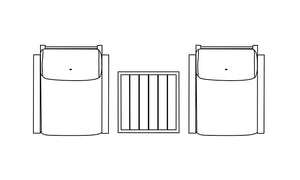
This layout places 1–2 slim-profile chaise lounges parallel to the pool edge, keeps the entry/steps zone open, and uses a compact café table in the far corner (away from circulation).
Small pool patio layouts prioritize clearance and dual-purpose furniture because deck width often stays under 10–12 feet. Given that tight decks restrict movement, the layout places slim-profile chaise lounges parallel to the pool edge, maintaining a minimum 36-inch walking path for safe circulation.
Compact café tables replace full dining sets. Consequently, users gain a social surface without blocking entry points or steps. Wall-mounted umbrellas or cantilever shades anchor at corners to avoid base clutter.
Key placement rules
- 2 chaises max per side to prevent congestion
- Side tables under 16 inches wide
- Furniture offset from coping by 18–24 inches to reduce splash exposure

2.Medium Backyard Pool Layout
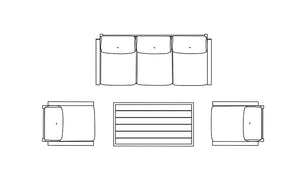
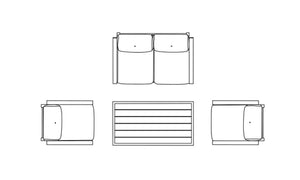
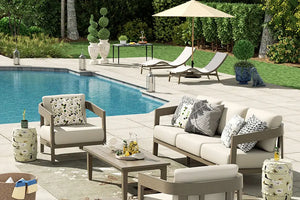
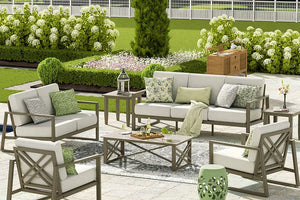
This layout splits the deck into two zones: chaise lounges near the pool for drying off, and a social zone set 6–10 feet back where an L-shaped sectional faces the pool around a low coffee table or fire pit, with a clear circulation lane connecting both zones.
Medium backyard pool layouts balance lounging and conversation because deck depth usually supports multiple zones. Given that users alternate between swimming and socializing, the layout splits the deck into wet-adjacent lounge space and a dry social cluster set 6–10 feet back.
Sectional seating forms an L-shape facing the pool. This directly influences visibility and supervision, especially for families. A low-profile fire pit or coffee table anchors the seating without obstructing sightlines.
Recommended zone breakdown
- Lounge zone: 60% of deck area
- Social zone: 40% with 42-inch circulation paths
- Shade coverage: at least one fixed or semi-fixed structure

3.Large Pool Deck Layout (Resort Style Zones)
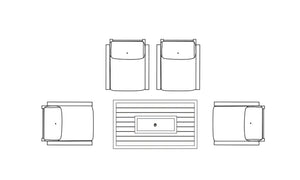
This layout organizes the deck into resort-style zones by lining sun loungers in symmetrical rows along one side, placing sun-shelf loungers near shallow entries, orienting conversation sets inward around a central table, and moving dining + bar-height seating farther from the water to separate wet and dry activities.
Large pool deck layouts operate as multi-zone systems because excess space can dilute functionality without structure. By utilizing defined activity zones, the layout assigns clear purposes to each area, improving wayfinding and comfort.
Sun loungers line one side in symmetrical rows with 48-inch spacing, supporting staff access and towel service if needed. Dining and bar-height seating move farther from the pool to reduce slip risk. Consequently, wet and dry activities stay separated.
Typical resort-style zones
- Sun shelf loungers near shallow entries
- Conversation sets oriented inward, not toward traffic paths
- Dining zone positioned downwind of grills or bars

4.Long/Narrow Pool Layout
This layout keeps furniture on one side only and aligns everything lengthwise with the pool, using chaises in a straight line with small movable stools instead of bulky side tables, while leaving all entry/exit points completely clear to protect the lap lane and access.
Long and narrow pool layouts emphasize linear alignment because widths often fall below 8 feet. Given that lateral space stays limited, furniture stays on one side only, preserving uninterrupted lap paths and emergency access.
Chaises align lengthwise with the pool to mirror the geometry. This directly influences visual order and prevents cross-traffic. Small movable stools replace bulky side tables, allowing quick reconfiguration.
Spacing standards
- 30–36 inches between furniture and pool edge
- 48 inches clear at entry and exit points
- Furniture depth under 32 inches to protect walk lanes
5 Poolside Layout Ideas By How You Use Your Pool Area
Pool use dictates furniture spacing, orientation, and circulation paths. These layouts align seating types with activity zones to improve comfort, safety, and daily usability while keeping sightlines and traffic flow clear.
1.For Sunbathing: Chaise Lounge Rows, Pairs, And “Hotel Style” Symmetry
Sunbathing zones prioritize direct exposure and consistent spacing, given that loungers need clearance for recline and safe walkways. Rows work best on long decks, with 36–48 inches between chairs to allow access and towel placement; consequently, traffic avoids crossing wet zones.
Pairs support shared use because they enable conversation without blocking views. This directly influences placement parallel to the pool edge rather than angled, which reduces glare and uneven shade.
“Hotel style” symmetry uses mirrored rows and matching umbrellas to create visual order. By utilizing uniform furniture dimensions and 8–10 foot umbrella spacing, the layout maintains balance while preventing canopy overlap.
2.For Entertaining: Conversation Sets That Face Each Other
Entertaining areas require face-to-face seating, given that conversation depends on eye contact and audible distance. Arranging sofas and lounge chairs inward—U- or square-shaped—keeps guests engaged; consequently, the pool becomes a backdrop, not a barrier.
Placing sets 5–8 feet from the waterline reduces splash exposure while preserving proximity. This directly influences material choice, favoring quick-dry cushions over mesh when seating sits closer.
Side tables at arm’s reach support drinks without clutter. By utilizing consistent table heights (18–22 inches), hosts avoid spills and keep circulation paths open.
3.For Family/Kids: Flexible Seating + Clear Supervision Sightlines
Family layouts emphasize visibility, given that supervision requires unobstructed views across the pool. Low-profile seating and movable pieces prevent visual blocks; consequently, adults can monitor swimmers from multiple angles.
Flexible seating—stackable chairs or lightweight loungers—adapts to changing group sizes. This directly influences safety because furniture can shift to widen deck paths during play.
A clear perimeter path of 42 inches supports strollers and foot traffic. By utilizing benches against walls instead of freestanding sofas, the layout preserves open sightlines and reduces trip hazards.
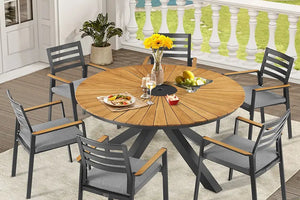
4.For Dining: Placing A Dining Set Near The Kitchen/BBQ
Dining zones function best near food prep, given that shorter carry distances reduce spills and heat loss. Positioning tables 10–15 feet from the pool edge keeps diners dry; consequently, splash and chlorine exposure stay minimal.
Rectangular tables suit narrow decks, while round tables improve circulation in compact patios. This directly influences chair clearance, which should allow 24–30 inches per seat.
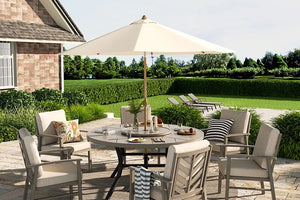
Shade coverage matters because meals extend time seated. By utilizing pergolas or offset umbrellas instead of center poles, the layout keeps legroom clear and improves stability in wind.
5.For Spa/Hot Tub: A Cozy, Towel-Friendly Corner
Spa areas need containment and warmth, given that users transition between water and seating. Placing the spa in a corner reduces exposure to wind; consequently, towels stay dry longer.
Nearby storage—hooks, benches, or towel cabinets—supports frequent use. This directly influences material selection, favoring teak or polymer slats for moisture resistance.
Clearance of 24–36 inches around the spa allows safe entry. By utilizing compact accent tables instead of large loungers, the corner stays intimate without restricting movement.

Where To Put Shade: Umbrellas, Pergolas, And Gazebos In Pool Layouts
Shade placement in pool layouts determines comfort, circulation, and how long each area stays usable during peak sun hours. Given that pools combine wet traffic, dining, and rest zones, each shade type must align with a specific function and clearance need.
Shade For Loungers Vs Shade For Dining (Different Priorities)
Shade for loungers targets heat reduction and glare control, given that users remain stationary for extended periods. Consequently, umbrellas or overhead structures should cover the upper torso and head while allowing sun exposure at the legs for warmth and drying.
Dining shade prioritizes consistent coverage across the table surface. Given that meals extend over time and involve seated movement, the shade must remain stable and centered. This directly influences furniture spacing, requiring wider canopies or fixed structures to prevent shifting shadows.
Lounger zones tolerate partial shade and movable solutions. Dining zones perform better with anchored shade that resists wind and tracks predictable sun angles.
Offset Umbrellas Vs Center Umbrellas: When Each Works Best
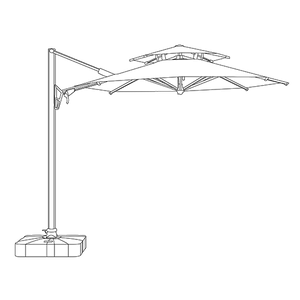
Offset umbrellas place the pole outside the seating footprint. By utilizing a cantilevered arm, they keep walk paths clear and reduce trip hazards near wet pool decks. This directly influences circulation efficiency, especially in narrow layouts.
Center umbrellas anchor through the table or between loungers. Given that the pole occupies usable space, they work best where furniture remains fixed and symmetry matters.
Pergola/Gazebo Placement: Define A “Room” Without Blocking Movement
Pergolas and gazebos create spatial structure through posts and overhead beams. Given that fixed supports affect movement, placement should align with existing hardscape edges rather than cutting across primary walkways.
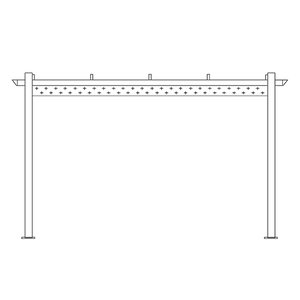
A pergola over a dining pad defines an outdoor room. Consequently, it signals purpose while maintaining visual openness through slatted roofs or retractable canopies. This directly influences airflow and sightlines to the pool.
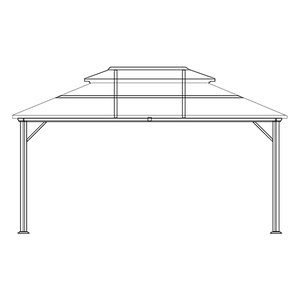
Gazebos provide full canopy coverage and require larger footprints. By positioning them slightly offset from the pool edge, layouts preserve rescue access, maintain deck flow, and prevent shadow dominance over the water.
The 5 Rules Of A Great Pool Furniture Layout
Below are the 5 rules to create a great pool furniture layout:
- Create Zones
- Keep a clear traffic around the pool
- Anchor the layout with main pieces
- Add Shade where people stay
- Measure your space before you move furniture
Create Zones (Lounging + Social + Dining)
Zoning separates activities so each uses functions without interference. Given that lounging involves minimal movement while dining and conversation require circulation, distinct zones reduce overlap and congestion. This directly influences comfort and safety.
A practical layout places loungers closest to the pool edge, conversation seating slightly farther back, and dining at the perimeter. Typical spacing places social seating 6–10 feet from the pool to avoid splashing while maintaining visual connection.
By utilizing zone separation instead of a single clustered layout, guests move naturally between areas. Consequently, the space supports simultaneous activities without forcing compromises in comfort or access.
Keep A Clear Traffic Path Around The Pool (The “Wet Zone”)
The wet zone defines the primary circulation path around the pool perimeter. Given that swimmers move barefoot with reduced traction, clear pathways reduce slip risk and collisions. This directly influences safety and flow.
A functional layout maintains a minimum 4-foot clearance around pool edges. Chairs, chaise backs, and umbrella bases should never intrude into this path, even when fully reclined.
By prioritizing circulation first and seating second, movement remains predictable. Consequently, furniture placement supports both casual walking and emergency access without constant rearranging.
Anchor The Layout With 1–2 “Main Pieces” (Sectional / Chaise Pair / Dining Set)
Anchor pieces establish visual hierarchy and spatial order. Given that people orient themselves toward large, fixed elements, anchors prevent layouts from feeling scattered. This directly influences perceived organization.
A sectional defines the social zone, while a chaise pair frames a sunning area. In contrast, too many small pieces create visual noise and reduce usable space.
By utilizing one or two anchors instead of multiple competing focal points, the layout reads clearly at a glance. Consequently, secondary items like side chairs and tables fall into logical positions around them.
Effective anchors include:
- Outdoor sectional (L or U shape)
- Symmetrical chaise pair with shared table
- Dining table sized to the household, not maximum capacity
Add Shade Where People Stay The Longest (Loungers + Conversation Area)
Shade placement must follow dwell time, not aesthetics. Given that people remain longest in loungers and conversation seating, shade improves usability during peak sun hours. This directly influences how long spaces stay occupied.
Umbrellas work for flexible coverage, while pergolas and cantilever shades suit fixed zones. A common error places shade over walkways instead of seating, which provides minimal benefit.
By utilizing shade where people sit for 20–60 minutes, exposure drops and comfort increases. Consequently, shaded zones remain functional throughout the day instead of only in early morning or evening.
Never Forget Surfaces (Side Tables, Drink Spots, Towel Drop Zones)
Surface availability determines convenience. Given that swimmers carry drinks, phones, and towels, accessible surfaces prevent clutter and tripping hazards. This directly influences order and usability.
Every seating cluster benefits from one surface per two seats, with table heights matched to chair arms. Low tables suit loungers, while arm-height tables support conversation seating.
By utilizing designated towel and drink zones instead of improvised solutions, wet items stay contained. Consequently, seating remains dry, walkways stay clear, and furniture lasts longer.
Measure Your Space Before You Move Anything
Measuring the pool area sets the limits for traffic flow, safety clearances, and usable seating zones. Accurate dimensions reduce rework, prevent blocked access points, and keep furniture aligned with daily use and occasional gatherings.
Doors, Steps, Gates, Grill/BBQ, Outdoor Shower: Mark Fixed Points
Fixed features define non-negotiable boundaries that furniture must respect. Given that doors and gates require swing clearance, layouts must preserve 36–48 inches of open path to prevent bottlenecks. Steps and pool ladders demand clear landing zones; otherwise, wet traffic creates slip risks.
By mapping these elements first, furniture placement supports safe circulation instead of competing with it. This directly influences chair spacing, table size, and orientation.
Key fixed-point clearances
|
Element |
Minimum Clearance |
Reason |
|
Doors & gates |
36–48 in |
Unobstructed entry/exit |
|
Pool steps/ladders |
48 in |
Safe wet-foot traffic |
|
Grill/BBQ |
36 in sides, 48 in front |
Heat and movement safety |
|
Outdoor shower |
30–36 in |
Drainage and privacy |
Sun Path & Windy Corners: Note The “Shade Problem Areas”
Sun exposure controls comfort more than furniture style. Given that west-facing decks receive intense afternoon sun, loungers placed there become underused without shade. Conversely, morning sun zones suit breakfast seating and cooler materials.
Wind patterns also alter usability. By observing flags, umbrellas, or prevailing weather data, planners can identify corners that disrupt light furniture. This directly influences whether to anchor seating with heavier frames or relocate dining sets.
Practical comparisons
- Full sun vs partial shade: loungers tolerate heat better than dining chairs.
- Windward vs leeward sides: sectionals perform better than lightweight café sets.
How Many Seats You Actually Need (Daily Vs Party Mode)
Seating count must match behavior patterns, not maximum capacity. Given that daily use often involves 2–4 people, oversized sets waste space and restrict circulation. Consequently, flexible pieces outperform fixed layouts.
By calculating two scenarios, planners balance comfort and adaptability. Daily mode favors loungers and side tables with 24–30 inches per seat. Party mode relies on stackable chairs, benches, or ottomans stored nearby, expanding capacity to 8–12 seats without permanent clutter.
Seat planning logic
- Daily use: prioritize circulation and personal space.
- Entertaining: add temporary seating near social zones, not pool edges.
Poolside Durability: Materials, Fabrics, And Easy-Care Choices
Poolside durability depends on how materials, fabrics, and maintenance strategies respond to water chemistry, UV exposure, and daily use. Smart choices reduce surface breakdown, color fading, and upkeep time while preserving comfort and layout flexibility.
What Pool Water (Chlorine/Salt) And Sun Do To Outdoor Furniture
Pool water chemistry affects furniture at a material level. Chlorine accelerates oxidation in metals, given that it breaks down protective coatings, which directly influences rust formation on untreated steel or low-grade aluminum. Saltwater systems create a similar risk through salt creep, which settles on surfaces and pulls moisture into joints and fasteners.
Sun exposure compounds this damage. UV radiation degrades polymers, causing plastic resins to become brittle and wicker fibers to crack. Consequently, HDPE lumber outperforms PVC because it resists UV breakdown and retains structural stability over time. Fabrics face pigment loss and fiber weakening, which explains why solution-dyed acrylic holds color longer than printed polyester under direct sunlight.
What To Look For: Rust Resistance, UV Resistance, Quick-Dry Cushions
Material selection determines long-term performance. Aluminum with a powder-coated finish resists corrosion because the coating seals the metal from moisture and pool chemicals. Marine-grade stainless steel (316) offers higher chromium content than 304 steel, which directly improves resistance to rust near saltwater pools.
Fabric and cushion construction matter as much as frames. UV-resistant fabrics such as solution-dyed acrylic or olefin maintain colorfastness because pigment embeds at the fiber level. Quick-dry cushions rely on open-cell foam wrapped in mesh, allowing water to drain instead of trapping moisture.
Covers & Storage: Making Your Layout Easier To Maintain
Protective covers and storage solutions extend furniture lifespan by limiting exposure during downtime. Breathable covers reduce condensation buildup, given that trapped moisture accelerates mold growth and frame corrosion. This directly influences how often cushions require cleaning or replacement.
Storage design also affects layout efficiency. Deck boxes with resin construction resist UV and moisture, which prevents warping compared to wood storage chests. By utilizing stackable or modular furniture, homeowners simplify off-season storage and reduce handling stress on joints and welds.
Placement strategy matters. Storing cushions indoors during peak chemical use, such as shock treatments, lowers fabric degradation. Consequently, layouts that allow quick removal of soft goods remain easier to maintain without disrupting the overall poolside arrangement.
Common Pool Furniture Layout Mistakes
Common pool furniture layout mistakes reduce safety, comfort, and usability when spacing, circulation, shade, and storage fail to match how people actually move and relax. These issues usually stem from ignoring deck dimensions, traffic patterns, and day-to-day pool habits.
Blocking The Main Walking Loop Around The Pool
Blocking the main walking loop around the pool disrupts circulation and increases slip risk. Given that wet decks require stable footing, furniture that narrows paths forces guests to step closer to the water edge, consequently raising fall probability.
Design standards favor a clear loop of 36–48 inches around the pool perimeter. This directly influences accessibility because two people should pass without turning sideways or stepping onto drains.
Common blockers include chaise backs set perpendicular to the pool and sectional corners protruding into paths. By rotating loungers parallel to the waterline and grouping seating into zones, the layout preserves flow while keeping sightlines open.
Not Enough Tables (No Place For Drinks/Phones)
Not enough tables leaves guests placing items on the deck, which creates clutter and trip hazards. Given that swimmers frequently set down drinks, phones, and towels, the absence of surfaces results in spills and damaged electronics.
A practical ratio uses one small table for every two seats. This directly influences behavior by keeping items off walking paths and away from splash zones.
Table types by function
- Side tables: drinks and phones within arm’s reach
- C-table styles: slide under chaises to save space
- Low coffee tables: shared items in conversation areas
By distributing tables evenly, the layout supports real use instead of decorative intent.
Too Much Furniture For The Deck Size
Too much furniture for the deck size compresses movement and limits flexibility. Given that each piece requires clearance for entry and exit, excess seating reduces usable square footage rather than increasing capacity.
A helpful rule allocates 60–65% of deck area to open space and the remainder to furniture. This directly influences comfort during peak use when guests stand, walk, and adjust chairs.
Oversized sectionals often cause the problem on small decks, while modular pieces adapt better. By choosing fewer items with multi-use functions, such as ottomans that serve as seating and tables, the deck stays functional without feeling empty.

Shade Only In The “Wrong” Place
Shade only in the wrong place leaves primary seating exposed during peak sun hours. Given that sun angles shift throughout the day, fixed umbrellas placed without time-of-day planning fail to cover loungers when they are most used.
Effective layouts place shade over high-duration zones, not just dining areas. This directly influences comfort because loungers and shallow ledges host longer stays than tables.
Better shade alignment
- Umbrellas offset to the west for afternoon coverage
- Cantilever styles to avoid pole conflicts
- Pergolas over conversation clusters
By matching shade to use patterns, the deck supports longer, safer occupancy.
Forgetting Storage For Towels/Floaties/Cushions
Forgetting storage for towels, floaties, and cushions creates visual clutter and accelerates wear. Given that wet textiles degrade faster in direct sun, leaving items exposed shortens material lifespan.
Integrated storage, such as bench seating with sealed compartments or weather-rated deck boxes, directly influences maintenance cycles and daily cleanup time.
Placement matters as much as capacity. By positioning storage within 10–15 feet of the pool entry, users return items promptly, which keeps walkways clear and cushions dry without interrupting activity.
Quick Checklist: Build Your Poolside Layout In 10 Minutes
Poolside layout planning starts with circulation width because movement safety drives comfort. Given that wet surfaces increase slip risk, designers allocate 36–48 inches for main walkways. This directly influences chair spacing and reduces congestion near pool entries.
Seating zones require clear purpose to avoid clutter. By utilizing lounge chairs for sun exposure and upright seating for conversation, the layout supports mixed use. Consequently, guests transition easily between relaxing and socializing.
Furniture scale must match deck size to preserve proportion. Given that oversized sectionals overwhelm small patios, compact loungers and armless chairs improve flow. This directly influences visual balance and usable square footage.
Shade placement affects dwell time and material longevity. By positioning umbrellas or pergolas over seating—not pool edges—users gain UV protection without blocking sightlines. Consequently, cushions fade less and seating stays occupied longer.
Surface alignment controls stability and wear. Given that adjustable feet perform better on pavers than fixed legs, furniture selection should match deck material. This directly influences wobble reduction and maintenance needs.
Quick reference checklist
- Walkways: 36–48 in clearance
- Loungers: 1–2 ft from pool edge
- Side tables: Within arm’s reach (12–18 in)
- Dining sets: 60 in clearance for chair pullback
|
Area Type |
Compact Deck |
Large Deck |
|
Seating count |
2–4 pieces |
6–10 pieces |
|
Layout style |
Linear |
Zoned |
|
Shade solution |
Umbrella |
Pergola or cabana |
Related Articles

How to keep your outdoor teak furniture beautif...
There’s nothing quite like the rich, warm tones of teak furniture to transform an outdoor space into a luxurious retreat. Known for its durability, natural oils, and resistance to rot,...
How to keep your outdoor teak furniture beautif...
There’s nothing quite like the rich, warm tones of teak furniture to transform an outdoor space into a luxurious retreat. Known for its durability, natural oils, and resistance to rot,...
Continue Reading
Bar Height vs. Counter Height: How to Choose th...
Bar height vs. counter height outdoor tables shape how you sit, talk, and move outside. Choose counter height (about 34–36 inches tall with 24–26 inch stools) for relaxed meals and...
Bar Height vs. Counter Height: How to Choose th...
Bar height vs. counter height outdoor tables shape how you sit, talk, and move outside. Choose counter height (about 34–36 inches tall with 24–26 inch stools) for relaxed meals and...
Continue Reading
Counter-Height vs. Bar-Height Patio Chairs: Cho...
The difference between counter-height and bar-height patio chairs comes down to their height and how they fit with your space. Counter-height chairs usually measure about 24 to 26 inches from...
Counter-Height vs. Bar-Height Patio Chairs: Cho...
The difference between counter-height and bar-height patio chairs comes down to their height and how they fit with your space. Counter-height chairs usually measure about 24 to 26 inches from...
Continue Reading