







Cantilever vs Market Umbrellas: Best for Dining vs Lounge Areas

Picture a homeowner standing on the patio, squinting into the afternoon sun, wondering why the outdoor furniture feels unusable half the day. The missing piece is almost always overhead shade, and the two most popular solutions are market umbrellas and cantilever umbrellas.
But here's the thing most buyers overlook: the best umbrella depends less on personal taste and more on how the outdoor space is actually used. A dining setup and a lounge area have very different shade needs.
This guide walks through the structural differences, ideal use cases, and how to match the right umbrella to any outdoor furniture arrangement so every seat stays comfortable from morning coffee to evening cocktails.
What Is a Market Umbrella?
A market umbrella is a traditional center-pole patio shade featuring a single vertical pole that runs straight up through the middle, supporting a canopy that spreads outward via a rib framework. Also known as a center-pole umbrella, this design originated in outdoor marketplaces and café terraces, and remains the most widely used residential umbrella today.
What are the Anatomy and Mechanisms of a Market Umbrella?
The pole is typically aluminum (lightweight, rust-resistant) or powder-coated steel, though some premium models use hardwood for a traditional aesthetic. The canopy attaches to main ribs extending from the hub, with secondary support ribs adding stability. Most market umbrellas operate with a crank-lift system, and many include a tilt mechanism (push-button or auto-tilt) that allows the canopy angle to follow the sun throughout the day.
What are the Sizes, Shapes, and Table Compatibility of a Market Umbrella?
Market umbrellas range from compact 6-foot canopies for bistro tables up to 11-foot models for large dining groups. Canopy shapes include round (the most common), octagonal, square (efficient edge-to-edge coverage), and rectangular (ideal for long banquet tables). One practical advantage: the center pole slides neatly through the standard umbrella hole built into most patio dining tables, creating a clean, integrated look. If the table hole is slightly larger than the pole diameter, a simple reducer ring solves the fit.

Shop the look: Patio Tree 9ft Tilting Umbrellas Patio Market Umbrella with Crank Handle and Sunbrella® Fabric (Heather Beige)
What Is a Cantilever Umbrella?
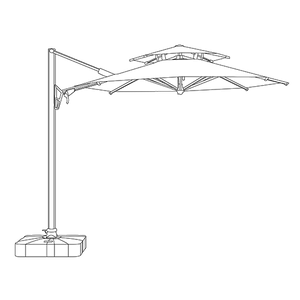
A cantilever umbrella is a modern offset patio shade featuring a side-mounted pole and curved arm that suspends the canopy overhead without center support. Also known as an offset umbrella, this design forms an inverted "L" shape — the base and pole occupy space beside the furniture while the canopy floats freely above.
How the Offset Design Works?
This side-mounted architecture is a game-changer for furniture arrangement. There is no pole in the middle stealing a seat or blocking sightlines. Most cantilever models offer 360-degree rotation and multi-directional tilt, meaning homeowners can reposition the shade throughout the day without moving a single chair. Some designs can even be wall-mounted, eliminating the floor base entirely — a smart option for narrow balconies or compact patios, though this option is less common in residential settings.
What are the Sizes, Bases, and Multi-Zone Coverage of a Cantilever Umbrella?
Cantilever umbrellas typically range from 8 to 13 feet across, with square, round, and rectangular canopy options. Because the canopy is offset from the base, these umbrellas require a substantial counterweight — typically 100 to 250 pounds for residential models, and 400 pounds or more for larger commercial setups — to stay stable. Base options include cross-bases with weight plates, sand-filled bases, and in-ground mounts. One underappreciated advantage: a single cantilever umbrella with 360-degree rotation can shade two or three adjacent areas (say, a sofa zone and a side table nook) simply by swinging the canopy throughout the day.

Shop the look: PATIO TREE Double Top 11ft Round Patio Cantilever Umbrella for Deck, Pool, Backyard
How to Open and Operate Each Type?
Both types are straightforward to operate. For a market umbrella, the pole is inserted into the table hole or freestanding base, the locking pin is released, the handle is cranked to open, the tilt is adjusted, and the pin is locked in place.
For a cantilever, the base must be properly weighted first. The arm's locking mechanism is released, the mast is cranked outward, the canopy is opened, and then tilt and rotation are adjusted to position shade where needed. Despite common assumptions, modern cantilever umbrellas are easy to operate — gas-spring and hydraulic-assist mechanisms make adjustment smooth, even for one person.
Cantilever vs Market Umbrellas: What are the Key Differences?
Shade Coverage and Flexibility
Cantilever umbrellas win on adjustability. The ability to rotate, tilt, and reposition the canopy without a fixed center point means shade can be chased all day. Market umbrellas provide reliable, symmetrical coverage centered on the pole — ideal when the shade zone is fixed, like directly over a dining table.
Space Requirements
Market umbrellas are more compact. The center pole tucks into a table hole or a modest base, requiring minimal floor space. Cantilever umbrellas need room for the offset base and arm, which can extend two to three feet from the canopy's edge.
Wind Resistance and Stability
Market umbrellas are generally more stable in moderate wind thanks to the central support. Cantilever umbrellas, with their overhanging canopy, can catch gusts — which is why a heavy base and vented canopy are essential. Both types should be closed during storms.
Budget
Market umbrellas are more affordable. Entry-level models start around $40–$150, with quality mid-range options from $150–$500. Cantilever umbrellas typically begin around $200–$800, with premium models exceeding $1,000. The price difference reflects the more complex engineering and heavier base requirements.
UV Protection and Light Rain
Both types provide excellent sun protection. Umbrellas with Sunbrella® fabric carry a UPF 50+ rating, blocking up to 98% of harmful UV radiation, and the canopy vent promotes airflow to keep guests cool. Both also handle light rain, though neither is designed as a primary rain shelter.
Design Aesthetic
Market umbrellas project a classic, traditional feel that suits bistro setups, garden terraces, and timeless patio themes. Cantilever umbrellas lean modern and resort-style, complementing contemporary sectionals and minimalist outdoor designs.
What is the Best Umbrella Type for Outdoor Dining Areas?
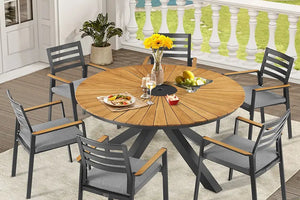
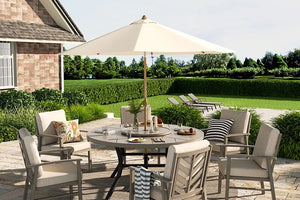
For most dining setups, a market umbrella is the natural choice. The center pole aligns with the table's umbrella hole, the canopy distributes shade evenly across all seats, and the visual profile stays clean. When guests gather around a patio dining set, an offset pole intruding on the walkway is the last thing any host wants.

How to Size a Dining Umbrella?
The rule of thumb: the umbrella canopy should extend about 2 to 2.5 feet beyond the edge of the table on all sides. Here's a quick reference:
- 30-inch bistro table → 6–7 ft umbrella
- 48-inch round table → 8–9 ft umbrella
- 60-inch round table → 9–10 ft umbrella
- 72-inch rectangular table → 10–11 ft umbrella
- 96-inch banquet table → 12–13 ft umbrella
For shape, matching the canopy to the table works best:
- round canopies for round tables
- rectangular canopies for long dining tables and bench setups
- square canopies for modern squared furniture.
When Cantilever Makes Sense for Dining?
A cantilever can work for dining if the table lacks an umbrella hole, if the table shape is irregular, or if the seating arrangement is very large and needs oversized coverage. It's also a smart choice for bar-height dining setups, where some bar tables lack an umbrella hole and the center pole may interfere with standing guests.
What is the Best Umbrella Type for Lounge and Conversation Areas?
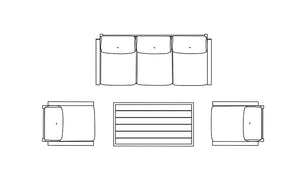
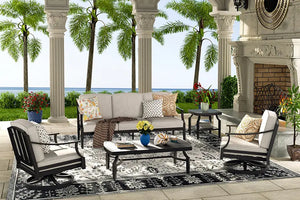
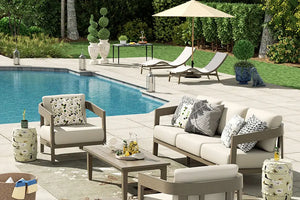
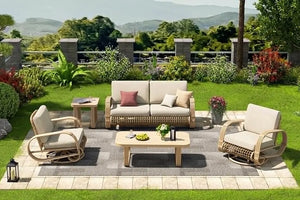
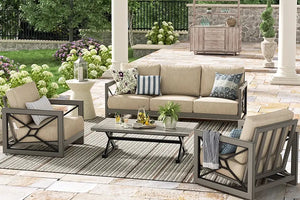
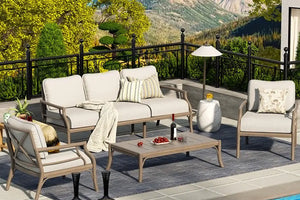
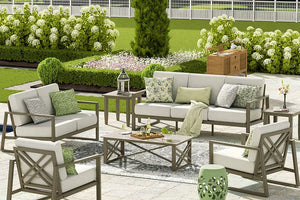
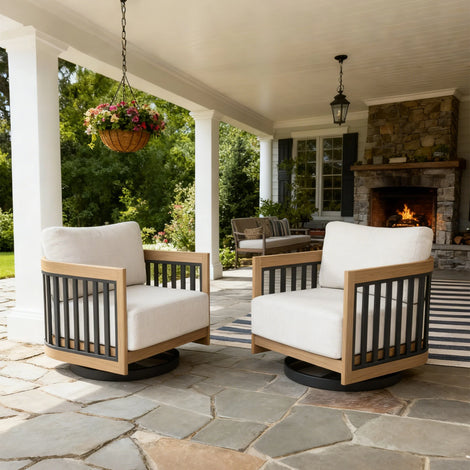
This is where cantilever umbrellas truly shine. Lounge spaces — deep-seat patio sofa sets, conversation sets, chaise lounges by the pool — are freeform by nature. There is no center table with an umbrella hole to anchor a pole, and a center-pole umbrella in the middle of a sectional sofa ruins the layout entirely.
A cantilever umbrella solves this by keeping the support structure behind or beside the furniture. The floating canopy creates a resort-like atmosphere, providing unobstructed shade across wide seating areas. The base can be positioned behind the sofa, the canopy rotated to cover the coffee table and ottoman zone, and the tilt adjusted as the sun moves. For poolside shade over rows of loungers, a rectangular cantilever canopy offers the best linear coverage.
When a Market Umbrella Works for Lounging?
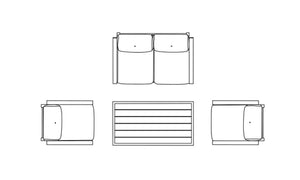
On a small balcony with a single swivel chair, or next to a porch swing, a compact market umbrella on a freestanding base can do the job. It's also the more budget-friendly route for shading a loveseat set on a modest patio.
Layered Shade for Multi-Zone Patios
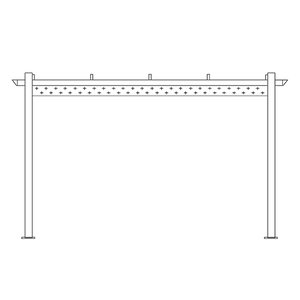
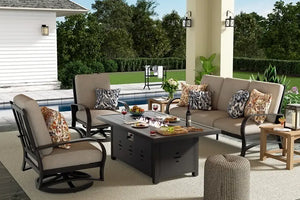
For larger outdoor spaces with both dining and lounge zones, homeowners can use both types together — a market umbrella centered over the dining table and a cantilever covering the conversation area. Umbrella shade can also be layered with permanent structures like pergolas or gazebos for all-day protection. A fire pit table set positioned just beyond the cantilever's arc creates a perfect transition zone for evening entertaining.
Material and Fabric Considerations
Regardless of type, material quality determines how long an umbrella lasts and how well it performs.
For frames, aluminum is the most popular — lightweight, rust-proof, and strong. Powder-coated steel adds heft and affordability. Wood (teak or eucalyptus) delivers a classic aesthetic but requires more maintenance. Fiberglass ribs flex in the wind rather than snapping.
For canopy fabric, Sunbrella® is the gold standard: solution-dyed acrylic that resists UV fading, repels water, and fights mildew. Olefin is a solid mid-range alternative. Standard polyester works for budget models but fades faster. A vented canopy is always worth seeking out — that opening at the top allows wind to pass through, reducing lift.
Modern umbrellas also increasingly feature built-in LED lighting strips along the ribs, and some models power these lights with built-in solar panels — adding evening ambiance without extra wiring.
Common Misconceptions About Cantilever Umbrellas
Several myths keep buyers from considering cantilever models. Many assume they cannot tilt — they absolutely can, and most offer more tilt range than market umbrellas. Others worry they are difficult to open; modern crank and gas-spring systems make operation easy, even for one person. There is also a belief they must be stored indoors every winter — with a quality protective cover and proper care, many can safely overwinter outdoors. Finally, the "tipping" concern: a properly weighted base combined with a vented canopy makes a well-engineered cantilever extremely stable in normal wind.

Care, Storage, and Lifespan
Both umbrella types benefit from the same basic care. Closing the umbrella when not in use — even on calm days — reduces UV wear on the fabric. The canopy should be cleaned a few times per season with mild soap and a soft brush, and always allowed to dry completely before closing to prevent mildew. The crank, tilt joints, and locking pins should be inspected annually.
For off-season storage, a dedicated umbrella cover protects against winter moisture and debris. For those with extra space, outdoor storage solutions keep the umbrella safely tucked away.
With proper care, a basic polyester umbrella lasts 3–5 years, while a mid-range to premium model with aluminum frame and Sunbrella fabric can serve well for 10–15 years.
FAQs
Can a cantilever umbrella be used with a dining table?
Yes, especially if the table doesn't have an umbrella hole or the homeowner wants to keep the table surface completely clear.
Are market umbrellas more wind-resistant?
Generally, yes. The central support structure offers inherent stability. Cantilever umbrellas need a heavier base and vented canopy to match.
What size umbrella is needed for a 6-person dining table?
For a typical 60-inch round or 72-inch rectangular table, a 9–11 ft umbrella provides comfortable coverage.
Final Thoughts
The decision framework is simple: for dining, a market umbrella is the go-to — the center pole integrates naturally with the table and keeps shade symmetrical. For lounging, a cantilever is the superior choice — the offset design keeps seating open, flexible, and resort-worthy. For multi-zone patios, combining both delivers the best of both worlds.
Whatever the choice, investing in quality materials — rust-proof aluminum, Sunbrella fabric, solid mechanisms — makes all the difference. The right umbrella isn't just shade. It's the difference between furniture that looks great and furniture that actually gets used. Explore Peakhome's full range of outdoor umbrellas and shade solutions, all with free shipping, 30-day returns, and dedicated support.
Related Articles

Poolside Mold Prevention: Cushion Drying & Vent...
Poolside mold prevention starts with two rules: keep cushions dry and keep air moving. You prevent poolside mold by drying cushions for 30–60 minutes after use, letting them fully air-dry...
Poolside Mold Prevention: Cushion Drying & Vent...
Poolside mold prevention starts with two rules: keep cushions dry and keep air moving. You prevent poolside mold by drying cushions for 30–60 minutes after use, letting them fully air-dry...
Continue Reading
Pool Chaise Lounge Features: Are Adjustable Bac...
Pool chaise lounge features like adjustable backs and wheels really shape comfort, mobility, and how long these chairs last. Adjustable backs almost always make the experience better, while wheels are...
Pool Chaise Lounge Features: Are Adjustable Bac...
Pool chaise lounge features like adjustable backs and wheels really shape comfort, mobility, and how long these chairs last. Adjustable backs almost always make the experience better, while wheels are...
Continue Reading
Outdoor Dining Chair Materials Compared: What A...
Outdoor dining chair materials shape comfort, durability, maintenance, and how well your chairs age outside. Metal brings strength and low upkeep, wicker gives you texture and style, cushioned seats boost...
Outdoor Dining Chair Materials Compared: What A...
Outdoor dining chair materials shape comfort, durability, maintenance, and how well your chairs age outside. Metal brings strength and low upkeep, wicker gives you texture and style, cushioned seats boost...
Continue Reading