







Are Waterproof Cushions a Myth? Why Sunbrella® & Phifertex® Win

A brand-new set of patio cushions survives exactly one summer storm before it starts smelling like a basement. The fabric feels clammy. Dark spots appear along the seams. The listing said "waterproof," so what went wrong?
Most outdoor cushions sold as waterproof are not waterproof at all — and the ones that truly are often create worse problems than they solve.
This article breaks down the science behind outdoor cushion fabrics and reveals how Sunbrella® and Phifertex® address moisture in fundamentally smarter ways.
What Does "Waterproof" Actually Mean for Outdoor Cushions?
Most outdoor cushions marketed as "waterproof" are actually water-resistant. True waterproofing requires a sealed plastic coating that blocks all moisture but also traps heat and breeds mold. The industry uses three distinct terms that consumers should understand before buying.
What Is the Difference Between Waterproof, Water-Resistant, and Water-Repellent?
A waterproof cushion features a plastic barrier laminated to the fabric's underside that prevents any water from penetrating. A water-resistant cushion handles light moisture for a limited time but absorbs water in prolonged rain. A water-repellent cushion uses surface-tension technology to make droplets bead up and roll off while still allowing air circulation. The distinction matters because waterproof coatings block moisture effectively but eliminate breathability, while water-repellent treatments preserve comfort — the approach premium outdoor fabrics now favor.
Why Do Fully Sealed Waterproof Cushions Cause Mold and Discomfort?
A sealed plastic coating blocks rain from entering but also blocks trapped moisture from escaping. Body heat and humidity accumulate against the surface, creating a sticky experience. Condensation forming inside the sealed envelope has nowhere to go, becoming a breeding ground for mold and bacteria over weeks. The core insight is counterintuitive: outdoor cushions do not need to keep water out entirely — they need to let water move through and dry rapidly.
How Can You Test Whether Your Cushions Are Really Waterproof?
Drip a tablespoon of water onto the fabric surface. If it beads and rolls off within seconds, the fabric is water-repellent. If it sits without absorbing for several minutes but eventually soaks in, the cushion is water-resistant. If absorbed immediately, the cushion has no meaningful protection. Terms like "weather-resistant" and "all-weather" on labels carry no standardized definition and often indicate basic splash resistance at best.
Can You Leave Outdoor Cushions in the Rain?
Cushions made with premium fabrics like Sunbrella® can handle light rain without damage. However, prolonged heavy rain causes moisture to penetrate fillings, leading to mold growth. Tilting cushions upright after rain accelerates drying and prevents water pooling.

What Happens to Cushion Fillings When They Get Soaked?
Open-cell foam allows water to pass through and drain out, drying within hours in sunlight. Closed-cell foam absorbs water like a sponge — becoming heavy, soggy, and slow to dry. Polyester fiberfill does not absorb water itself but can trap moisture if the outer fabric is saturated. Peakhome pairs high-resilience foam fills with premium fabric covers across its sofa sets, ensuring cushions recover their shape quickly and resist moisture retention after exposure.
Can Outdoor Cushions Stay Outside Overnight?
High-quality solution-dyed acrylic fabrics handle morning dew and overnight humidity without degradation. However, lower-grade fabrics — especially those sewn with cotton thread — weaken over repeated overnight exposure. Polyester thread resists weather; cotton thread absorbs moisture and can degrade significantly within one to two seasons of outdoor exposure.
How Do You Dry Outdoor Cushions After Heavy Rain?
If cushions are thoroughly soaked, following a structured rescue protocol prevents long-term damage:
- Pour off pooled water — tilt each cushion to drain standing water from the surface and seams.
- Remove the cushion covers — unzip and separate the fabric from the foam core for airflow on all surfaces.
- Stand foam cores upright — position them vertically in direct sunlight so water drains by gravity.
- Allow two to three full days — complete internal drying requires sustained airflow and sun, not just a surface wipe.
- Inspect for mold — clean any visible mildew immediately with a mild soap solution before re-covering.
For homeowners who cannot always bring cushions indoors, Peakhome's furniture covers provide an additional protective layer against unexpected storms.
What Makes an Outdoor Fabric Truly Weather-Resistant?
True outdoor fabric performance depends on four properties: UV resistance, moisture management, colorfastness through solution-dyeing, and tensile strength. The dyeing method — not the coating — determines long-term durability.
Why Does the Dyeing Method Matter More Than the Coating?
Solution-dyed fabrics have color saturated into every fiber before weaving. The color cannot be stripped away by sun, rain, or bleach because it exists throughout the fiber, not just on its surface. Piece-dyed fabrics apply color after weaving; UV light breaks down these surface pigments within one to two seasons, producing the faded appearance common on budget cushions.
How Do Thread and Stitching Quality Affect Cushion Longevity?
Even premium fabric fails if sewn with inferior thread. Polyester thread withstands sun, moisture, and temperature swings. Cotton thread absorbs water, swells, and snaps — turning seams into entry points for moisture that bypass the fabric's protection entirely.
What New Fabric Technologies Are Changing Outdoor Furniture?
Nano-coatings apply ultra-thin protective layers that enhance water repellency without altering texture or breathability. Industry observers have noted that certain premium coatings may actually improve over time as moderate UV exposure causes the coating molecules to cross-link, forming a tighter protective matrix. This suggests that well-engineered outdoor cushions can potentially perform better after an initial break-in period than on the day of purchase.
Why Is Sunbrella® Considered the Best Outdoor Cushion Fabric?
Sunbrella® uses 100% solution-dyed acrylic fiber where color saturates the entire strand. This makes it resistant to fading, mildew, and staining while remaining breathable. It can be cleaned with bleach without losing color — a capability most outdoor fabrics lack.
How Does Solution-Dyed Acrylic Perform Differently From Regular Polyester?
Sunbrella's acrylic fibers have extremely low moisture absorption — significantly less than polyester or cotton. Combined with a fluorocarbon finish, rain passes across the surface and through the weave rather than being held inside the yarn, allowing the fabric to dry significantly faster than conventional alternatives. Built-in mold-inhibiting treatment is backed by a five-year warranty against color loss or fabric strength degradation.
Can You Clean Sunbrella Fabric With Bleach?
Yes. Because color penetrates the entire fiber, diluted bleach removes stubborn stains and mildew without fading. Most competing fabrics would be destroyed by bleach contact. Sunbrella cushions can be restored to near-original condition season after season with basic household supplies. Peakhome's Chamber Collection features Sunbrella® fabric specifically because this durability aligns with a zero-maintenance philosophy.
What Is Phifertex® and Why Is It Ideal for Poolside Furniture?
Phifertex® is a PVC-coated woven polyester sling fabric engineered for high-exposure environments. Its open-weave structure allows water to pass through instantly. Built-in Microban® antimicrobial protection prevents bacteria and mold growth, making it the preferred choice for pool and coastal settings.
How Does Phifertex's Open-Weave Structure Handle Water Differently?
Unlike cushion fabrics that sit on foam, Phifertex sling material is tensioned across the frame with no filling underneath. Water passes through the mesh and evaporates from both sides simultaneously. The concept of "soggy cushions" simply does not apply. Peakhome selects Phifertex for its chaise lounge collection where poolside exposure to water, chlorine, and sunscreen is constant.
Shop the look: Chambray Outdoor Aluminum Armrest Chaise Lounge Chairs With Phifertex® Sling Fabric (Set of 2)
What Is Microban® and Why Does It Matter for Outdoor Furniture?
Microban is engineered directly into Phifertex fibers during manufacturing — not a surface spray that washes off. It inhibits bacteria, mold, and mildew growth for the entire product lifespan. All Phifertex fabrics carry GREENGUARD Gold certification — the stricter standard for low chemical emissions and indoor air quality — making them a safer choice for families with children and pets who spend extended time on outdoor furniture.
Does Phifertex Resist Chlorine and Sunscreen Better Than Other Fabrics?
Chlorinated water, SPF lotions, and tanning oils degrade most fabrics within a single season. Phifertex's PVC-coated construction resists chemical breakdown from these substances, maintaining structural integrity and appearance far longer than untreated alternatives.
Should You Choose Sunbrella® or Phifertex® for Your Patio?
Choose Sunbrella for cushioned seating that needs UV resistance and soft texture. Choose Phifertex for sling-style furniture exposed to water and chemicals. The best outdoor furniture brands use both fabrics strategically.
|
Attribute |
Sunbrella® |
Phifertex® |
|
Material base |
100% solution-dyed acrylic |
PVC-coated woven polyester |
|
Water handling |
Repels on surface; passes through weave |
Drains instantly through open mesh |
|
UV resistance |
Exceptional (1,500 hrs fade-ometer tested) |
Very good |
|
Mold protection |
Built-in mildew inhibitor |
Microban® antimicrobial (permanent) |
|
Chemical resistance |
Bleach-cleanable |
Chlorine, sunscreen, salt-resistant |
|
Comfort feel |
Soft, fabric-like texture |
Firm, supportive mesh |
|
Best product fit |
Sofas, dining chairs, conversation sets |
Chaise lounges, sling chairs, poolside seating |
|
Eco certification |
— |
GREENGUARD Gold certified (low VOC) |
Which Fabric Works Best in Hot, Dry Climates vs. Humid, Rainy Regions?
In sun-intense, dry climates, Sunbrella's UV resistance and colorfastness make it ideal for conversation sets and dining sets under direct exposure. In humid coastal environments where mold pressure is high, Phifertex's Microban protection and instant-drain weave provide advantages cushion fabrics cannot replicate.
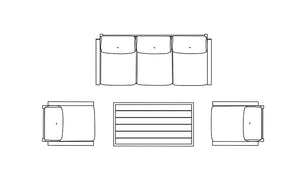
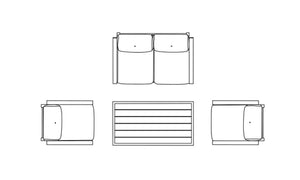
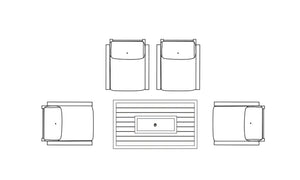
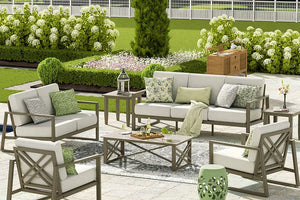
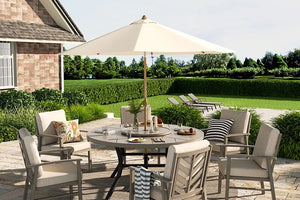
Shop the look: Chamber 4 Pieces Aluminum Patio Deep Seating Sets with Sunbrella® Cushions
How Does Peakhome Match the Right Fabric to Each Product Type?
Peakhome applies a "right material for the right application" strategy. Sunbrella appears on cushioned seating — the Chamber sofa series and outdoor sofa sets. Phifertex is deployed on sling-based products — chaise lounges and poolside seating. This dual-fabric approach eliminates the compromise single-material brands force on consumers.

Does Cushion Fabric Alone Determine Outdoor Furniture Durability?
No. Fabric is one layer of a multi-component system. Frame material, cushion filling, drainage design, and protective accessories all contribute. A Sunbrella cushion on a rusting steel frame will still fail.
Why Do Frame Materials Like Powder-Coated Aluminum Matter?
Aluminum naturally resists oxidation. Combined with powder coating, it forms a barrier that blocks moisture and eliminates rust entirely. Peakhome uses powder-coated aluminum frames across its full outdoor range, along with HDPE resin rattan weaving that is waterproof, mold-proof, and UV-stable.
Do You Need a Furniture Cover Even With Premium Fabrics?
Protective covers extend product life during off-season storage by shielding against pollen, bird droppings, and UV exposure. Peakhome's hardtop gazebos and retractable pergolas also function as permanent overhead protection that reduces direct fabric exposure year-round.
Do Outdoor Cushions Need Waterproof Spray Re-Treatment?
Sunbrella and Phifertex do not require re-spraying under normal conditions. Budget water-resistant fabrics benefit from annual re-treatment with products like 3M Scotchgard. Sprays restore surface beading but cannot fix degraded thread, collapsed foam, or compromised stitching.
What Is the Real Answer to the "Waterproof Cushion" Question?
The right question is not whether cushions are waterproof, but how they manage moisture. The best outdoor cushions repel light rain on the surface, allow heavy water to drain through, dry rapidly, and resist mold through antimicrobial fiber technology — not sealed plastic coatings.
Sunbrella® achieves this through solution-dyed acrylic with extremely low moisture absorption and a fluorocarbon finish that moves water through the weave rather than trapping it. Phifertex® achieves this through open-weave sling construction with Microban protection. They solve the same problem through different engineering — and Peakhome deploys both where each performs best.
FAQ
Are outdoor cushions really waterproof?
Most are not. The majority labeled "waterproof" are water-resistant, handling light moisture but absorbing water under prolonged exposure. True waterproofing uses plastic coatings that compromise breathability and trap mold-causing condensation.
What is the difference between Sunbrella and Phifertex?
Sunbrella is a solution-dyed acrylic cushion fabric prized for UV resistance and bleach-cleanability. Phifertex is a PVC-coated woven polyester sling fabric engineered for rapid drainage, chemical resistance, and built-in Microban antimicrobial protection.
Can you leave Sunbrella cushions out in the rain?
Light rain beads up and rolls off without damage. In heavy downpours, water may penetrate to foam filling. After heavy rain, removing covers and standing foam cores in sunlight for two to three days ensures complete drying.
What is Microban in Phifertex fabric?
Microban is antimicrobial technology engineered into Phifertex fibers during manufacturing. It prevents bacteria, mold, and mildew growth for the product's entire lifespan and does not wash off.
How do you prevent mold on patio cushions?
Use fabrics with built-in mold resistance like Sunbrella or Phifertex. Choose quick-dry foam fillings that resist moisture retention. Tilt cushions upright after rain and clean every six to eight weeks during active use.
Do outdoor cushions need waterproof spray?
Sunbrella and Phifertex do not require spray re-treatment. Budget fabrics benefit from annual 3M Scotchgard application. Sprays restore surface beading but cannot compensate for poor foam, thread, or stitching.
How long do Sunbrella cushions last outdoors?
With proper care, Sunbrella furniture-grade fabrics are designed to perform well beyond their five-year warranty period. The manufacturer's warranty covers loss of color and fabric strength under normal outdoor exposure conditions — one of the most comprehensive guarantees in the outdoor fabric industry.
Related Articles

Patio Budget Strategy: Should You Invest in Fra...
Introduction Every patio furniture buyer faces the same frustrating question: with a limited budget, should you spend more on a quality frame or premium cushions? It's the outdoor furniture equivalent...
Patio Budget Strategy: Should You Invest in Fra...
Introduction Every patio furniture buyer faces the same frustrating question: with a limited budget, should you spend more on a quality frame or premium cushions? It's the outdoor furniture equivalent...
Continue Reading
First-Time Patio Checklist: The 3 Categories Yo...
Furnishing a patio for the first time can feel overwhelming. Dozens of product types, materials, and price points compete for attention, and without a clear plan, most beginners either overspend...
First-Time Patio Checklist: The 3 Categories Yo...
Furnishing a patio for the first time can feel overwhelming. Dozens of product types, materials, and price points compete for attention, and without a clear plan, most beginners either overspend...
Continue Reading
How to Build a Year-Round Outdoor Lounge: The C...
Introduction There's something magical about gathering outdoors as the sun sets and the temperature drops. While summer patios buzz with activity, the true secret to maximizing your outdoor living investment...
How to Build a Year-Round Outdoor Lounge: The C...
Introduction There's something magical about gathering outdoors as the sun sets and the temperature drops. While summer patios buzz with activity, the true secret to maximizing your outdoor living investment...
Continue Reading