


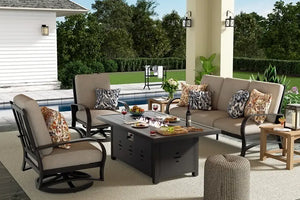
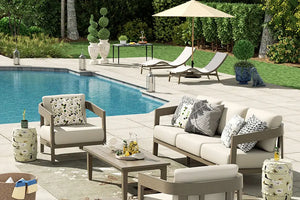
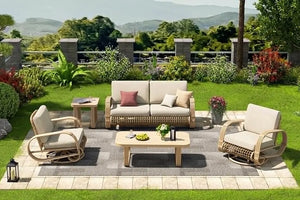
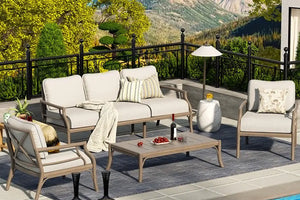




Coffee Table vs Side Table: Height Rules & Spacing Guide for Outdoor Sofas and Smart Patio Layout Planning

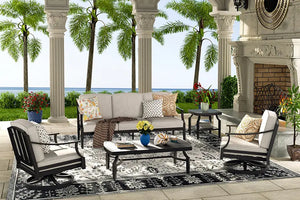
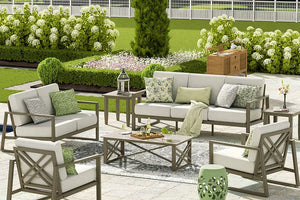
Outdoor coffee tables and side tables need to match your sofa height and allow enough space for a comfortable, balanced layout. An outdoor coffee table should sit about 1–2 inches lower than the sofa seat, while a side table should align with or sit just below the sofa arm, with 14–18 inches of space between the sofa and table for easy movement.
If you get the height or spacing wrong, it throws off legroom and reach, making even a beautiful patio feel awkward and cramped. A coffee table anchors the seating area and serves everyone, while a side table supports one seat with quick access to drinks or maybe a lamp.
Because of these differences, their size, placement, and function aren’t the same. Designers and furniture makers usually stick to standard height ranges—typically 16–18 inches for coffee tables and 18–24 inches for side tables—since these fit natural arm reach and posture when you’re sitting down.
This guide digs into how height rules, spacing guidelines, and material choices affect comfort and durability outdoors. It compares coffee tables and side tables, weighs their pros and cons, and helps you pick the right one for a patio sofa setup—including some durable options from Peak Home's Marindo collection.
What Is An Outdoor Coffee Table?
An outdoor coffee table sits right in front of an outdoor sofa and anchors the seating area. Designers center it because it’s meant for everyone to use.
It becomes the main spot for drinks, snacks, and a little decor. Its height is usually 16–18 inches, or about 1–2 inches lower than the sofa seat.
When you’re sitting, this lower profile lets you reach easily and keeps sightlines open. That makes conversation and comfort flow more naturally.
It’s bigger than a side table, too. A typical coffee table runs from 36 to 48 inches long, depending on your sofa width.
The wider top means more people can use it at once, which works well for group seating. Materials focus on weather resistance and structural stability.
Common choices include powder-coated aluminum, teak, and HDPE wicker. Peak Home Furnishings uses these weather-resistant materials across their coffee and side table collections. Outdoor spaces get hit by sun, rain, and temperature swings, so these materials resist rust, warping, and fading.
Shape matters, too. Rectangular tops work for long sofas, while round or oval tables make sense in tight patios.
This affects spacing, since most layouts leave 12–18 inches between the sofa edge and the table so people can move around easily.
What Is An Outdoor Side Table?
An outdoor side table is a small table you place next to a sofa or chair to keep things within arm’s reach. Its main job is convenience, so you can set down drinks, your phone, or a book without getting up.
Since it sits beside seating, it’s really for personal use, not for sharing. Height is key here. Most outdoor side tables are within 2 inches of the chair’s armrest, usually between 18 and 24 inches tall.
This keeps things comfortable when you reach over. If the table matches the arm height, it feels right. Too low or too high? It just feels off.
Size and footprint make a difference, too. Side tables are usually 12–24 inches wide, keeping them compact for smaller patios.
Coffee tables, by comparison, are lower and larger for serving more seats at once. This size difference also means smaller tables leave more walkway around your outdoor sofa.
Outdoor models use weather-resistant materials like powder-coated aluminum, teak, resin wicker, or poly lumber. These stand up to moisture and sun.
The table keeps its structure and surface even with changing weather. Designs can be simple slabs or include shelves and storage tiers. Extra storage really helps in small patios where space is tight.
What Is The Ideal Height For Outdoor Coffee Tables Vs. Side Tables?
Outdoor coffee tables and side tables have different height rules because they do different jobs next to a sofa. Coffee tables line up with seat cushions, while side tables match up with armrests. That’s what controls comfort and reach.
Outdoor Coffee Table Height Rules
Outdoor coffee table height usually falls between 16–20 inches (40–50 cm). This matches the average outdoor sofa seat height, which is often 17–19 inches.
The big rule: the table surface should be level with the seat cushion or 1–2 inches lower. When you rest drinks or plates, a slightly lower table means you don’t have to lift your shoulder.
You can just reach forward without raising your arms. If the table is higher than the cushions, your knees might bump the edge. That’s not great for comfort or leg clearance.
Most standard models, like a rectangular outdoor coffee table, stick to the 16–18 inch range. Some lounge setups go a bit higher if the cushions are thick—18–20 inches. Matching the table height to cushion height keeps your posture natural and makes it easy to set down drinks, books, or trays.
Outdoor Side Table Height Rules
Outdoor side table height is usually 22–26 inches (56–66 cm). This lines up with the average sofa armrest, not the seat.
The rule here is the tabletop should be level with the armrest or just a bit lower. You want to be able to set down a drink with a straight arm, not have to lean or twist.
If a side table is too low, you end up bending down. Too high, and it blocks your arm movement.
A small round side table is usually around 24 inches high, which works for most outdoor sofas. By matching arm height, the side table gives you quick access and keeps the seating area looking balanced.

How Much Space Should You Leave Between Your Outdoor Sofa And Tables?
Outdoor sofa spacing controls comfort, reach, and how easily people can move around. The right gap between the sofa and table keeps things from feeling crowded but still lets you reach your stuff.
Spacing Rules For Coffee Tables
Outdoor coffee table distance should be 18–24 inches (45–60 cm) from the sofa seat edge. This gives enough legroom but keeps the table within reach.
If the gap is less than 18 inches, there’s not enough knee space. Guests feel cramped and have to twist to stand up. Tight spacing also blocks foot traffic around the seating area.
If the gap is more than 24 inches, reaching the table gets tricky. Most adults can reach about 20 inches comfortably while seated, so more than that means you’re leaning forward. That’s not great for comfort or stability, especially with low outdoor cushions.
Table length matters, too. Designers often size the coffee table at about two-thirds the sofa length to keep things balanced and avoid crowding the edges.
Spacing Rules For Side Tables
Outdoor side tables should be close enough to reach without leaning forward. Usually, you want the table just a few inches from the sofa arm.
If the table’s too far away, you have to twist or stretch. That makes drinks and phones feel unstable when you set them down. Keeping the tabletop near arm height helps prevent spills and just makes things easier.
Here’s a practical rule:
- 1 side table for every 2–3 seats
- Position beside the armrest or between two seats
- Keep height within 1–2 inches of the sofa arm
Since outdoor sofas often have wide frames, measure from the cushion edge, not the back. That way, you get the reach right, since seat depth changes how far away the table feels.
In small patios, narrow side tables keep things accessible without blocking walkways.
Walkway Clearance Tips
Walkway clearance should be at least 36 inches (90 cm) between furniture pieces. That’s enough for one person to walk through without turning sideways.
If you go under 30 inches, movement feels tight. People bump into table corners or sofa arms. Narrow paths also make serving and cleaning a pain.
In high-traffic areas, like paths to doors or grills, wider spacing makes everything flow better. Outdoor gatherings often mean people are standing, walking, mingling, so circulation space is even more important than indoors.
Some benchmarks:
- Primary walkways: 36 inches minimum
- Secondary paths: 30–36 inches
- Between seating clusters: Wide enough for people to enter and exit easily
Keeping walkways clear supports both comfort and safety.
What Are The Advantages And Disadvantages Of Coffee Tables Vs Side Tables?
Outdoor coffee tables and side tables differ in surface area, height, mobility, and how they look in your space. These differences affect how you use your patio, how much space you need, and how flexible the setup feels.
Advantages Of Outdoor Coffee Tables
The following are advantages of outdoor coffee tables:
-
Large Surface Area: There’s plenty of space for drinks, plates, and serving trays. When you’ve got a group on the sofa, everyone can use it without crowding.
-
Entertaining Support: With the table in the middle, you get a shared spot for snacks or games. Hosts can serve several people at once without needing extra tables.
-
Visual Anchor: The table sits at the center of the seating area. This shapes how you arrange your chairs and sofas, since everything faces inward toward it.
-
Multi-Function Use: The flat top is great for decor, lanterns, or board games. Some models even have shelves or lower tiers for storing cushions or outdoor accessories.
Disadvantages Of Outdoor Coffee Tables
Here are the disadvantages of outdoor coffee tables
-
Space Consumption: A typical coffee table runs about 36–48 inches long. Patios need at least 18 inches of walking room around furniture, so small balconies can get cramped fast.
-
Limited Suitability for Small Areas: Compact decks or tiny patios just can't handle a big table in the middle. Sometimes, you have to remove the table to make space for safe walkways.
-
Fixed Position: Heavy frames made from wood, metal, or stone make these tables hard to move. Shifting them for cleaning or rearranging takes real effort.
-
Less Personal Access: Guests sitting at the far ends of long sofas have to lean forward to reach the table. That’s just less convenient than having a table right at your side.
Advantages Of Outdoor Side Tables
The following are the advantages of outdoor side tables:
-
Compact Footprint: Narrow tops slip easily between chairs. Their small size fits tight balconies and patios without hogging space.
-
Lightweight Mobility: Most side tables use aluminum or resin frames. You can move them around fast—super handy when guests show up.
-
Personal Convenience: Each seat can have its own table within reach. No one has to stretch or lean to set down a drink.
-
Decor Flexibility: Pairing two matching tables can frame a sofa nicely. Mixing up shapes or finishes adds a bit of contrast, and you won’t block walkways.
Disadvantages Of Outdoor Side Tables
Here are the disadvantages of outdoor side tables:
-
Limited Surface Area: You can usually fit just one or two drinks on top. Serving trays or big platters? Not really going to fit.
-
Not Ideal for Large Gatherings: If you have a bunch of people over, everyone needs their own table. You might need several just to do what a single coffee table does.
-
Reduced Visual Impact: Since side tables sit off to the side, they don’t anchor the seating area. Sometimes the layout feels like it’s missing a centerpiece.
-
Lower Storage Capacity: Most side tables don’t have shelves or extra tiers. Storing outdoor stuff? Not really an option here.
How To Choose Between A Coffee Table And A Side Table For Your Outdoor Space?
Your outdoor table choice really depends on space size, seating layout, and how you use the sofa. A coffee table works for shared use in the center, while a side table is for more personal use within easy reach.
Choose An Outdoor Coffee Table When...
An outdoor coffee table shines on a spacious patio or poolside deck where seating forms a clear conversation area. Sectionals and three-seat sofas can be 72–96 inches wide, so a central table 36–48 inches long fills the gap without blocking walk paths.
Guests can set drinks, trays, or snacks within easy reach. If you entertain a lot, having one big, stable surface makes life easier.
A coffee table cuts down on clutter by grouping everything together. Most outdoor sofas have seat heights of 16–18 inches, so the coffee table should be level or just a bit lower. This keeps the layout comfortable and balanced—you don’t want to bend too far forward, right?
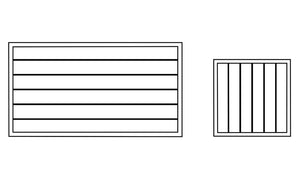
Peak Home Furnishings offers the Sereno Aluminum Patio Rectangular Coffee Table:

Choose An Outdoor Side Table When...
An outdoor side table fits best on small balconies or narrow patios with just 6–8 feet of depth. A compact table, maybe 12–18 inches wide, sits right beside the armrest and doesn’t block entryways.
This just makes the area feel more open and easier to navigate. If personal convenience matters to you, side tables are great. You get a spot for your drink, phone, or book right at your fingertips, so you don’t have to stretch across a shared table.
Flexibility is another plus. Lighter frames like aluminum or resin wicker make it easy to move side tables between chairs. Sometimes, you can even cluster two together to act like a coffee table when you need it.
Peak Home Furnishings offers the Patio Round Aluminum Side Table:

Coffee Table vs Side Table: Complete Comparison
Coffee tables and side tables differ in position, size, height, and function. These differences really shape how your outdoor seating looks and feels.
-
Position: A coffee table sits in front of the sofa as a central hub, while a side table stands right next to your seat. Placement affects how you move around—coffee tables need open space, side tables work in tight corners or narrow decks.
-
Function: Coffee tables are for sharing—think drinks, snacks, or a game night. Side tables are more personal, holding just your cup, phone, or book. For bigger gatherings, a coffee table’s better. For solo time, side tables win.
-
Size: Coffee tables usually run 30–48 inches long, giving you plenty of space. Side tables average 18–24 inches wide, so they save space and cut down on clutter. That also means coffee tables hold more weight and stuff.
-
Height: Coffee tables are typically 16–20 inches tall, sitting level with or a bit below seat cushions. Side tables are 22–26 inches high, right at armrest level. Matching the height to your seat or armrest keeps things comfortable and easy to reach.
-
Distance from Sofa: Coffee tables should sit 18–24 inches away for legroom. Side tables stay right next to the armrest. Good spacing means no crowding and safer movement.
-
Best Use Case: Coffee tables are perfect for patios and big seating groups. Side tables suit balconies, small lounges, or modular outdoor sets.
Conclusion
Coffee table and side table height really shapes comfort, reach, and how you move around outdoor sofas. A coffee table at 16–18 inches high usually lines up with most seat cushions.
That way, you can set down drinks without awkwardly lifting your arm. It just feels more natural and doesn’t strain your shoulder or elbow.
Side tables at 22–30 inches high sit closer to where your arm naturally rests. Since guests love to put lamps, phones, or cups there, the extra height makes things easier to grab from your seat.
This really changes how relaxed and at-home you feel. Spacing matters, too.
Designers tend to leave 12–18 inches between a sofa and coffee table. That helps protect your legroom.
Side tables usually sit right up next to the arm, which saves floor space. Using these clear measurements helps avoid crowding and keeps foot traffic flowing smoothly.
Peak Home's Sereno Aluminum Patio Rectangular Coffee Table has a balanced length for standard outdoor sofas, so it's easier to keep that comfortable spacing. Peak Home's Patio Round Aluminum Side Table works well for compact patios and skips the sharp corners, which feels safer in a tight spot.
Honestly, you might want to check out Peak Home’s collection today!
FAQs
How tall should an outdoor coffee table be?
16-20 inches, ideally within 1-2 inches of your outdoor sofa's seat cushion height.
What is the ideal distance between an outdoor sofa and coffee table?
18-24 inches for outdoor settings — slightly more than the indoor standard of 14-18 inches.
Should a side table be higher than a coffee table?
Yes. Side tables should match your sofa's armrest height (22-30 inches), while coffee tables align with seat height (16-20 inches).
Is wood grain aluminum heat resistant?
Yes. Peak Home's powder-coated aluminum with hand-brushed wood grain finish is heat resistant, rust-proof, and requires zero maintenance.
Can I use both a coffee table and side table on my patio?
Absolutely! A coffee table anchors your seating area, while side tables add convenience by each seat — the perfect combination for larger patios.
Related Articles

Outdoor Dining Chair Comfort Guide: Angles, Arm...
Comfort in outdoor dining chairs comes down to seat angle, arm height, and seat width. The most comfortable outdoor dining chairs usually have a slight backrest angle of about 10–15...
Outdoor Dining Chair Comfort Guide: Angles, Arm...
Comfort in outdoor dining chairs comes down to seat angle, arm height, and seat width. The most comfortable outdoor dining chairs usually have a slight backrest angle of about 10–15...
Continue Reading
Do You Need a Storage Side Table? Best Patio Sc...
A storage side table solves two common patio problems: clutter and lack of surface space. You need a storage side table when your patio lacks built-in storage and everyday items...
Do You Need a Storage Side Table? Best Patio Sc...
A storage side table solves two common patio problems: clutter and lack of surface space. You need a storage side table when your patio lacks built-in storage and everyday items...
Continue Reading
Conversation Set Buying Guide: 3-Piece vs. 5-Pi...
A conversation set buying guide helps you pick between a 3-piece, 5-piece, or built-in side table setup. The main factors? Patio size, how many people you want to seat, and...
Conversation Set Buying Guide: 3-Piece vs. 5-Pi...
A conversation set buying guide helps you pick between a 3-piece, 5-piece, or built-in side table setup. The main factors? Patio size, how many people you want to seat, and...
Continue Reading