









What Is a Quick-Dry Foam/Seat Board? Best for Rainy Climates?

A homeowner invests in a gorgeous outdoor sofa set, arranges it beside the pool, and then one thunderstorm turns the cushions into soggy sponges that take two days to dry and start to smell. For anyone living in a region with regular rain, morning dew, or coastal humidity, this is not a matter of if but when.
The solution is quick-dry foam and quick-dry seat boards — material innovations engineered to let water pass straight through cushions instead of being trapped inside. This guide explains what they are, how they work, and how to choose patio furniture that stays comfortable and mold-free season after season.
What Exactly Is Quick-Dry Foam and How Does It Work?
Quick-dry foam is a reticulated open-cell polyurethane foam engineered with large interconnected pores. Instead of absorbing water like standard foam, it allows rain and moisture to drain straight through, and can dry within one to three hours depending on sunlight and airflow conditions.
Think about the difference between a kitchen sponge and a mesh laundry bag. A regular sponge has tiny sealed pockets that trap liquid — that is how standard polyurethane foam behaves. Once saturated, it takes hours or days to dry, creating the perfect environment for mold.
Quick-dry foam works on the opposite principle. A specialized manufacturing process removes the thin walls between air cells, leaving behind a skeletal, web-like structure of open pores. Water has nowhere to get trapped — it flows straight through under gravity. The same open structure also enables continuous air circulation, which accelerates evaporation of any residual moisture. Some high-quality versions may include antimicrobial treatments that inhibit mold, mildew, and odor-causing bacteria.
How Is It Different from Standard Polyurethane Foam?
The performance gap is dramatic. Standard foam can retain a significant amount of water and remain damp for 24 to 72 hours. During that time, internal moisture easily exceeds the level required for mold colonization — generally, sustained relative humidity above 60 percent over 24 to 48 hours is sufficient for mold spores to begin growth. Quick-dry foam, by contrast, absorbs minimal water and dries significantly faster — often becoming sit-ready within one to three hours. This is not an incremental improvement — it is the difference between cushions that survive a rainy season and cushions that may require more frequent replacement in wet climates. Buyers shopping for weather-resistant outdoor furniture should treat this material choice as a foundational criterion.

What Is a Quick-Dry Seat Board and Why Does It Matter?
A quick-dry seat board is the rigid perforated or mesh-based support layer beneath the cushion foam. It replaces traditional solid plywood to prevent water pooling underneath, enabling the entire cushion system to drain and ventilate as a unified unit.
Most people focus entirely on foam when evaluating outdoor cushion performance, but the seat board is equally critical. If even the best quick-dry foam sits on a solid plywood board, water drains through the foam and then has nowhere to go. It pools on the board, seeps back up, and the same soggy problem returns. A quick-dry seat board uses perforations, channels, or mesh construction that lets water escape from the bottom of the cushion assembly entirely.
How Do Foam, Fabric, and Seat Board Work as a System?
The highest-performing outdoor cushions treat drainage as a three-layer system. The fabric layer (solution-dyed acrylic) allows water to filter through without trapping it on the surface. The foam layer drains water and enables continuous airflow. The seat board layer lets water exit the cushion completely rather than pooling at the base. When all three layers work together, a cushion can go from soaking wet to sit-ready in as little as one hour under direct sun and steady airflow — without anyone carrying it indoors.
Why Does Outdoor Foam Fail in Rainy and Humid Climates?
Because trapped moisture exceeds the level needed for mold colonization standard foam fails. In rainy or coastal climates, foam that cannot drain stays saturated for days, creating ideal conditions for mildew growth, structural breakdown, and persistent odor.
In climates with frequent rainfall — the Pacific Northwest, the Gulf Coast, Southeast US, or any coastal area — cushions face a relentless cycle of wetting and insufficient drying. If the next rain arrives before the foam has dried from the last, moisture accumulates progressively, and the foam essentially never returns to a dry state. This triggers three cascading problems: mold colonization that surface cleaning cannot remove, chemical degradation that makes cushions flat and saggy, and bacterial growth that produces persistent odors.
Does Morning Dew or Occasional Rain Still Cause Damage?
Yes. Even in relatively dry climates, overnight dew deposits moisture on cushion surfaces every morning during certain seasons. Over weeks, these small repeated moisture events accumulate inside standard foam just as effectively as heavy rainfall. This is why quick-dry foam is not a niche product for extreme climates — it is the smart default for any furniture that lives outdoors permanently.
Can UV Exposure Also Degrade Foam?
Ultraviolet radiation is a slower-acting but equally destructive threat. If sunlight penetrates cushion fabric and reaches the foam, it breaks down the molecular structure over time, making the foam brittle and crumbly. The best defense is fabric that balances water permeability with UV blocking — exactly what solution-dyed acrylics achieve. Frame material also matters: a powder-coated aluminum frame resists both rust and UV degradation.
How Comfortable Is Quick-Dry Foam Compared to Indoor Cushions?
Quick-dry foam provides comparable sitting comfort to standard cushions through medium-density open-cell construction. While slightly firmer than premium indoor foam due to its larger pore structure, it maintains consistent support without sagging even after repeated rain exposure.
This is the question that stops most buyers. Quick-dry foam is available in medium-density (softer, ideal for back cushions) and firm (more supportive, ideal for seat cushions) grades, both within the range most people would describe as normal cushion feel. Compared to high-end indoor foam, it tends to be slightly firmer — but for outdoor use, this difference is negligible. Those wanting a plusher feel can look for cushions that layer quick-dry foam with a polyester fiber wrap.

Can Indoor Foam Be Used for Outdoor Furniture Instead?
Almost always, no. Even premium indoor foam absorbs water like a sponge. Some manufacturers wrap indoor foam in waterproof vinyl barriers, but any seam or zipper imperfection lets water in, and sealed moisture is worse than open exposure. For any furniture facing real weather, purpose-built quick-dry foam is the correct choice.
How Long Does Quick-Dry Foam Last Outdoors?
Quick-dry foam typically lasts three to five years under normal outdoor exposure, and up to six or seven years with proactive care. Standard polyurethane foam used outdoors may deteriorate more quickly in wet conditions, often showing mold or sagging within a few seasons due to moisture retention.
Under worst-case conditions — full sun, no cover, and no maintenance — expect noticeable performance loss within two to three years. With proper care, including breathable furniture covers, vertical draining after rain, and following use and care instructions, many homeowners get six to seven years of performance. Factors that shorten lifespan include direct UV through mesh fabrics, leaving cushions flat during prolonged rain, and storing them in sealed plastic. Factors that extend it include UV-resistant fabrics, breathable covers, and seasonal indoor storage in cold climates.
What Should Buyers Look for When Shopping for Quick-Dry Cushion Furniture?
Evaluate three elements together: foam type (reticulated open-cell), fabric compatibility (solution-dyed acrylic), and frame material (powder-coated aluminum). All three must work together for reliable wet-weather performance.
Shoppers should check the foam type first — look for "quick-dry," "reticulated," or "open-cell" in the description. If a listing says only "foam cushions" without specifying, it is most likely standard polyurethane. Next, check the fabric: solution-dyed acrylic is the gold standard. Finally, check the frame: slatted or mesh seat platforms allow airflow beneath the cushion, and powder-coated aluminum resists rust.
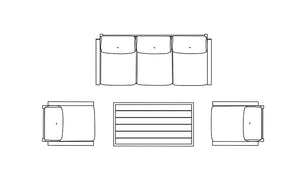
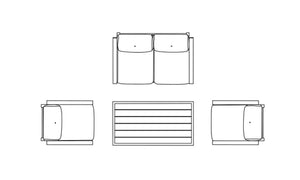
The benefit of quick-dry foam also scales with furniture type. Deep-seat sofa sets and sectionals benefit most due to their large foam volume. Because of full sun-and-rain exposure Chaise lounges rank second. Because they need to be sit-ready immediately after storms, dining chairs and swivel chairs benefit. Poolside furniture faces constant splashing and needs drainage as a baseline.
Is Quick-Dry Foam Worth the Higher Price?
Yes. While it costs more upfront, quick-dry foam eliminates recurring replacement costs, mold remediation, and the inconvenience of constantly moving cushions indoors. Over five years, it typically costs less than replacing cheap foam multiple times.
In consistently wet climates, budget cushions with standard foam often show visible mold or noticeable sagging within one to two seasons, prompting many homeowners to replace them two to four times over a five-year period. Quick-dry cushions, properly maintained, can last six to seven years as a single purchase. Beyond dollars, there is the convenience factor: outdoor furniture should let homeowners relax outside without managing cushions before every weather event. Quick-dry foam delivers exactly that freedom.
For homeowners who want minimal cushion maintenance, there is another option: lightweight stackable chairs with thin foam padding and fast-drying Textilene® sling fabric. For example, some lightweight stackable designs use a powder-coated aluminum frame with teak armrests and a slim quick-dry foam-padded seat — far less cushion volume means far less moisture to deal with, and the chairs stack flat for easy storage between uses. It is a practical low-maintenance choice for poolside or high-traffic patio dining.

Shop the look: Slam Stackable Patio Aluminum Textilene Dining Chair With Teak Armrests and Foam Padded Set of 2
FAQs
How fast does quick-dry foam dry after rain?
Under favorable conditions (direct sunlight and good airflow), approximately one hour. In shade or still air, allow up to three hours. Standing cushions vertically after rain accelerates drainage. Standard foam, by comparison, can remain damp for one to three days.
Is reticulated foam the same as quick-dry foam?
Closely related. Reticulated foam is the technical term for foam with cell walls removed through specialized manufacturing. "Quick-dry foam" is the consumer-facing commercial name for products built on this technology.
Can quick-dry foam cushions be machine washed?
No. Machine washing is generally not recommended, as it may affect the foam structure. Homeowners should hose off the foam directly, air dry in sunlight, and machine wash removable covers separately per the fabric care label.
Does quick-dry foam prevent mold completely?
It dramatically reduces risk but is not absolute. Rapid drainage keeps moisture below mold thresholds, and antimicrobial additives provide a second defense layer. Avoiding sealed storage closes the remaining gap.
Related Articles

How to Build an Outdoor Bar: Step-by-Step DIY G...
Building an outdoor bar means creating a sturdy, weather-resistant serving station with a level base, exterior-rated lumber, a durable countertop, storage, seating space, and proper sealing. This guide explains how...
How to Build an Outdoor Bar: Step-by-Step DIY G...
Building an outdoor bar means creating a sturdy, weather-resistant serving station with a level base, exterior-rated lumber, a durable countertop, storage, seating space, and proper sealing. This guide explains how...
Continue Reading
11 Small Backyard Landscape Ideas to Maximize Y...
Maximize a small backyard by utilizing vertical gardens, zoning functional areas with rugs, and selecting multi-functional furniture such as fire pit tables. These strategies effectively expand perceived square footage and...
11 Small Backyard Landscape Ideas to Maximize Y...
Maximize a small backyard by utilizing vertical gardens, zoning functional areas with rugs, and selecting multi-functional furniture such as fire pit tables. These strategies effectively expand perceived square footage and...
Continue Reading
How to Keep Cats Off Outdoor Furniture: 9 Prove...
Effectively keeping cats off outdoor furniture requires a strategic combination of natural repellents, physical barriers, and behavioral redirection. Felines target patio cushions for their elevated vantage points and soft textures,...
How to Keep Cats Off Outdoor Furniture: 9 Prove...
Effectively keeping cats off outdoor furniture requires a strategic combination of natural repellents, physical barriers, and behavioral redirection. Felines target patio cushions for their elevated vantage points and soft textures,...
Continue Reading