


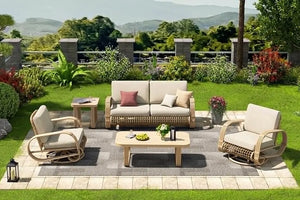





How to Choose the Right Coffee Table Height for the Patio: Expert Guide to Outdoor Comfort and Style

Choosing the right coffee table height for your patio starts with one clear rule: the patio coffee table should match the seat cushion height or sit 1–2 inches lower. This standard patio coffee table height—usually 16–18 inches for most lounge seating—works because it keeps drinks, plates, and decor within easy reach without forcing people to lean forward.
The right patio coffee table height also depends on three key factors: seating height, patio traffic flow, and outdoor use. Outdoor spaces face uneven surfaces and weather exposure, which affect stability and spacing. This guide explains standard height ranges, how to measure correctly, how seating type and use case change the ideal height, and what mistakes to avoid so the table fits the space and supports daily outdoor living.
What is Standard Patio Coffee Table Height and Why?
The standard patio coffee table height is 16–18 inches. This range aligns with average outdoor seat heights and supports comfortable reach during outdoor living.
- What are Standard Range and Suitable Conditions?
Most outdoor deep seating sofas and lounge chairs have an uncompressed seat height of 15–18 inches from the ground. However, because outdoor cushions are typically 4–6 inches thick and use softer foam for comfort, the actual seated height after compression usually falls between 14–16 inches.
This lower profile is intentional. Deep seating is designed for relaxed lounging, not upright dining posture. The deeper seat depth and reclined back angle shift the body's center of gravity backward, making lower seating ergonomically appropriate.
For this reason, the ideal outdoor coffee table height is generally:
- 1–2 inches lower than the compressed seat height
- Typically 12–15 inches tall for most backyard lounge setups
A coffee table that matches upright dining-height surfaces(17–19 inches high) will feel visually intrusive and functionally awkward when paired with low-profile patio seating. It can block sightlines across the conversation area and require users to lift their arms unnaturally when reaching forward.
When to Deviate from the Standard?
The height of an outdoor coffee table should change when the seating or use changes.
- If the seat height is under 16 inches, choose a table around 14–15 inches. Low-profile sectionals sit closer to the ground, and a standard 18-inch table will feel too tall.
- If the table doubles as a dining surface, consider 18–20 inches. The extra height reduces hunching because users lift food closer to elbow level.
-
If the patio includes mixed seating heights, size the table to the lowest seat. This prevents shorter guests from reaching upward.
Deviating from the standard coffee table height works when it follows seat measurements. The goal stays the same: keep the surface within easy reach and aligned with how people actually sit outdoors.
How to Measure Seat Height? (Including Cushion Compression)
To choose the right coffee table height for a patio, measure the compressed seat height, not the frame height. This method follows standard furniture measuring guides used by designers and manufacturers.
Step-by-step process:
- Place the chair or sofa on a level surface.
- Sit in the seat as you normally would.
- Measure from the floor to the top of the compressed cushion.
This number reflects real sitting posture because body weight compresses foam or fiber fill. In practice, this means the table will match how the seat performs, not how it looks when empty.
Outdoor cushions often use high-density foam cores wrapped in polyester fiber. When someone sits, a 4-inch cushion may compress to about 3–3.5 inches. That reduction changes the correct patio coffee table height.
How to Apply the 0–2 Inch Rule
A patio coffee table should sit the same height as the compressed cushion or 1–2 inches lower. This keeps the forearm level and prevents shoulder lift.
|
Compressed Seat Height |
Ideal Table Height |
Formula |
|
18 inches |
16–18 inches |
18" – (0–2") |
|
16 inches |
14–16 inches |
16" – (0–2") |
Example 1: If the compressed seat height is 18 inches, choose a table between 16 and 18 inches tall.
Example 2: If the seat compresses to 16 inches, the correct patio coffee table height falls between 14 and 16 inches.
For the user, this means drinks and plates stay within easy reach without leaning forward or raising the shoulder.
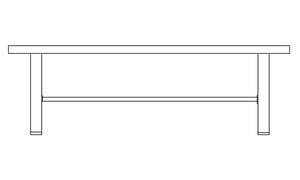
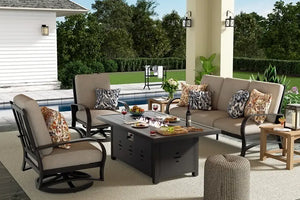
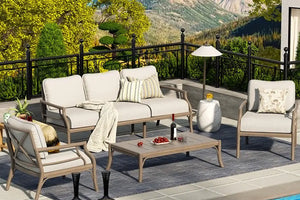
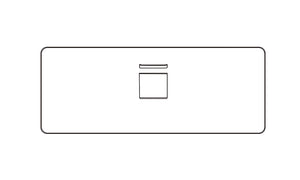
Peakhome furnishing provides aluminum patio rectangular coffee table with a weathered-teak finish

Choose Height by Seating Type
Choose the right coffee table height for your patio by matching it to the seat height of the outdoor seating. Designers often set the table at the same height as the cushion top or 1–3 inches lower. This keeps drinks and plates within easy reach because the arm stays in a natural position instead of lifting or dropping.
Low (12–15 in.)
Best for → Deep lounge chairs, low-profile sectionals, and modular outdoor sofas with seat heights around 14–16 inches.
Pros → Creates a relaxed look and keeps sightlines open.
Cons → It may feel too low for upright dining or firm seating.
Pairing example → A teak lounge set with 15-inch seat height pairs well with a 13–14 inch patio coffee table.
Standard (16–18 in.)
Best for → Most patio sofas and conversation sets with seat heights of 17–19 inches.
Pros → Supports balanced proportions and easy reach.
Cons → If the table rises more than 1–2 inches above the cushion, knees may hit the edge.
Pairing example → An aluminum-frame sofa with 18-inch cushions works well with a 17-inch table.
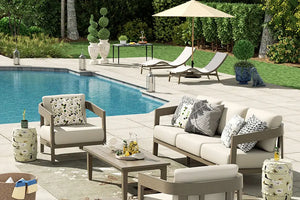
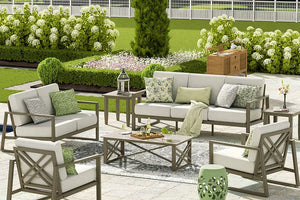
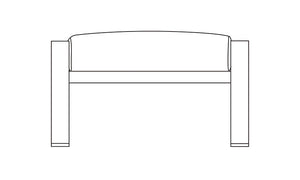
Peakhome furnishing provides sereno aluminum outdoor sofa

Tall (19–21+ in.)
Best for → Upright seating, high-back outdoor sofas, or deep cushions that compress under weight.
Pros → Makes serving food easier because the surface sits closer to hand level.
Cons → It can look bulky in low seating layouts.
Pairing example → A patio set with 20-inch seat height pairs with a 19–20 inch table for proper alignment.
Choose Height by Use Case
The right coffee table height for your patio depends on how people use the space. Seat height, table function, and traffic flow all affect comfort and safety. Designers often match table height to the sofa cushion height, which usually falls between 16–18 inches for standard lounge seating.
Different activities call for different height ranges and stability features.
-
Lounging – 16–18 inches
This height aligns with most outdoor sofa seats. Because the tabletop sits level with the cushions, guests can reach drinks without leaning forward. In practice, this reduces shoulder strain during long seating periods. Choose a wide base or four solid legs to prevent tipping. -
Drinks and Snacks – 1–2 inches lower than seat height
A slightly lower table keeps sightlines clear across the patio. This matters in seating areas where people face each other. improve stability through thicker-gauge aluminum, cast aluminum bases, teak tabletops, or a wider, lower center-of-gravity design.
-
Casual Dining, Work, or Games – 18–22 inches
A taller surface supports plates, laptops, or board games. The extra height improves elbow position, which reduces wrist strain during writing or typing. Look for reinforced joints or cross‑bracing for added rigidity.
-
Kids and Family Use – 14–17 inches with high stability
Lower tables suit smaller users. Rounded edges and a broad base reduce injury risk and wobble during active use.
What are Outdoor Factors That Affect the Ideal Patio Coffee Table Height?
Outdoor conditions can change how a patio coffee table height feels and functions. Traffic space and ground stability often matter as much as matching the seat cushion height.
Traffic Flow
Traffic flow directly affects the usable patio coffee table height. Even if the table matches the seat height of 16–18 inches, poor spacing can make it feel awkward or cramped.
Designers follow a clear rule: leave 16–24 inches of clearance between the coffee table and surrounding chairs or sofas. This range allows adults to walk through and sit down without turning sideways. In practice, this means guests can move naturally without bumping their knees on the table edge.
A lower table, such as 16 inches, often works better in tight layouts because it reduces visual bulk and knee contact. A taller table near 18 inches may feel closer in narrow patios, especially when paired with deep seating.
If the patio layout includes a main walkway, the table should not block that path. Keeping walkways clear improves safety and prevents spills.
Key measurements to follow:
- 16–24 inches between table and seating
- Clear path behind seating for main walkways
- Table width scaled to seating length
Surface Conditions
Surface conditions affect both the perceived height and the stability of a patio coffee table. Slopes, outdoor rugs, and pavers can shift how tall or level the table feels.
On a sloped patio, even a one-inch grade change can tilt a 4-leg table. Because the legs sit at uneven heights, drinks may slide or wobble. For the user, this means stability becomes just as important as choosing the correct 16–18 inch height.
Outdoor rugs add another factor. A thick polypropylene rug, often 0.5 inches thick, slightly raises the table base while the seating legs may sit off the rug. This small difference can change the distance and comfort.
Paver patios can also create gaps between stones. Narrow table legs may rest unevenly across joints, which affects balance.
Stability and height carry equal importance. A perfectly sized patio coffee table fails if it rocks or shifts.
Quick-Check Checklist
- ✅ 16–24 inches of clearance around the table
- ✅ Main walkway remains open and unobstructed
- ✅ Surface is level or adjustable feet are installed
- ✅ Table legs sit fully on rugs or fully off rugs
- ✅ No rocking on pavers or sloped concrete
How Height, Size, and Spacing Work Together?
Height, size, and spacing must work together to create a functional patio layout. When one measurement is off, the whole seating area feels awkward and hard to use.
Height sets comfort. Most outdoor sofas and lounge chairs have a seat height of 16–18 inches, so a patio coffee table should measure 14–18 inches tall. Designers often suggest keeping the table within 1–2 inches of the seat height. This alignment matters because when the table matches the seat level, guests can reach drinks or plates without leaning forward too far.
Size controls balance. A common rule is to choose a coffee table that is about two-thirds the length of the sofa. For example, a 90-inch outdoor sofa pairs well with a table around 60 inches long. This ratio works because it keeps the table large enough for serving trays while leaving open space at each end for movement.
Spacing protects flow. Leave 12–18 inches between the patio coffee table and the seating edge. This gap allows people to walk through while still reaching items easily. In practice, 15 inches often provides a good middle ground.
Use this quick guide:
|
Element |
Recommended Measurement |
|
Table height |
Within 1–2" of seat height |
|
Table length |
~2/3 of sofa length |
|
Distance from seating |
12–18" |
When these three factors align, the patio furniture layout supports both comfort and safe movement.
What Size Coffee Table Works Best on a Patio?
The right patio coffee table size depends on the seating layout and available floor space. Most designers follow the 2/3 sofa rule: the table should measure about two-thirds the length of the outdoor sofa. This proportion keeps the table within easy reach without overpowering the seating area.
Distance also matters. The table should sit 12–18 inches from the seat cushions. This gap allows guests to set down drinks without leaning forward too far, yet still move their legs comfortably.
Walking space shapes the final choice. Leave about 30 inches for foot traffic around the table. If the patio feels tight, shorten the table length, switch to a round shape, or use nesting tables that slide apart only when needed.
Height affects comfort as well. Most outdoor coffee tables measure 16–18 inches tall and sit 1–2 inches lower than the seat height. Because the surface sits slightly below the cushions, users can reach items naturally without raising their shoulders. In practice, this reduces strain during long gatherings.
Shape changes how people move around the patio:
- Rectangular tables suit long sofas and sectionals.
- Square tables work well with four chairs arranged evenly.
- Round tables improve traffic flow because they remove sharp corners.
Material weight also affects size choice. For example, an aluminum frame resists rust because it forms a natural oxide layer. For the user, this means the table stays lighter and easier to reposition than solid teak or steel options.
What are Common Patio Coffee Table Mistakes to Avoid?
Many patio coffee table problems come from poor planning. Most mistakes involve height, scale, shape, and stability, which directly affect comfort and traffic flow.
Choosing height based on looks alone causes discomfort. A patio coffee table should sit at the same height as the seat cushion or 1–2 inches lower. If a lounge chair seat measures 17 inches from the ground, the table should measure about 16–17 inches tall. This alignment matters because matching seat height keeps drinks and plates within easy reach. In practice, this reduces strain when guests lean forward.
Ignoring cushion compression also leads to errors. Outdoor cushions often compress 1–2 inches when someone sits down. If the table matches the uncompressed height, it may feel too tall once people sit. For the user, this means awkward arm angles and unstable drinks.
Picking the wrong size or shape disrupts movement. Designers often suggest a table about two-thirds the length of the sofa and placed 16–18 inches away. That spacing allows legroom and clear walkways. Round tables work better in tight layouts because they remove sharp corners in high-traffic areas.
Forgetting stability and material performance creates safety risks. Lightweight aluminum frames resist rust because aluminum forms a protective oxide layer, which slows corrosion outdoors. In practice, this means the table stays stable after rain exposure. Narrow bases or uneven legs, however, may wobble on pavers or decking.
Avoid these common patio furniture mistakes to ensure proper coffee table height, safe spacing, and long-term outdoor use.
What is the Best Height by Outdoor Space Type?
The best coffee table height for a patio depends on the outdoor space type and the seat height of the furniture. In most cases, a patio coffee table should match or sit 1–2 inches below the seat cushion, which for many outdoor lounge chairs falls between 16–18 inches. This range aligns with common patio furniture standards and supports a natural arm position.
On a balcony, space limits movement. A table around 16–17 inches high with a round or narrow rectangular top (24–30 inches wide) works well. The lower height keeps sightlines open, and a smaller footprint allows people to move around tight corners without blocking doors.
In a backyard lounge with deep seating, cushions often compress to 17–18 inches when someone sits. A 16–18 inch rectangular or square coffee table keeps drinks within easy reach because the surface lines up with the relaxed seating angle. In practice, this reduces the need to lean forward from low sofas.
For a poolside setup, chaise lounges often sit lower, around 12–15 inches at the seat. A 15–16 inch slim rectangular table fits best. The lower profile matches reclined seating and lowers the center of gravity, which improves stability on wet surfaces.
On a deck used for entertaining, sectionals and club chairs usually pair well with a 17–18 inch square or large rectangular table (30–36 inches wide). The wider top holds trays and plates, and the standard height keeps elbows near a 90-degree angle during conversation and light dining.
FAQs
Can people use the same coffee table height for sofas and lounge chairs?
Yes, but only if the seat heights are within about 1–2 inches of each other. Most patio coffee tables measure 16–18 inches high, which works when both the sofa and lounge chairs have seat heights around 17–19 inches after cushion compression.
If one seat is much lower, such as a deep lounge chair at 14 inches, a 18-inch table will sit too high. In practice, this forces users to lift their shoulders to reach drinks, which leads to strain over time.
Designers often base the coffee table height on the lowest seat in the group. For the user, this means everyone can reach the table without leaning forward or bending their wrists upward.
Are adjustable-height coffee tables suitable for patios?
Yes, if the adjustment hardware is built for outdoor exposure. Models that use powder-coated aluminum frames and stainless steel lift mechanisms resist rust because these metals form protective oxide layers. For the user, this means the table can handle rain and humidity without the lift system seizing.
Adjustable tables work well in patios that serve both lounging and casual dining. A table that shifts from 18 inches to about 22–24 inches allows light meals without replacing furniture.
However, buyers should check the weight rating and locking system. A secure locking pin or metal track prevents wobbling when the table is raised.
How do patio surface types affect coffee table stability?
Patio surface type directly affects how stable a coffee table feels. Concrete slabs provide the most even support because they have minimal flex. In other words, all four legs maintain full contact with the ground.
Wood decks can cause wobble not because of natural expansion, but because narrow table legs can fall into the gaps between deck boards. To prevent this, choose tables with broad glides, sled-style legs, or wide flat bases that distribute weight over multiple boards.
Pavers and stone surfaces create small height gaps between joints. Tables with adjustable leveling feet, usually threaded metal glides, solve this problem because each leg can be raised or lowered by a few millimeters. For the user, this means the table stays steady even on uneven ground.
Related Articles

Round Dining Tables: Best For Who? 4-Seat vs 6-...
Round dining tables work best for small groups, conversation-focused meals, and compact dining spaces. A 4-seat round dining table suits small families and tight layouts, while a 6-seat round table...
Round Dining Tables: Best For Who? 4-Seat vs 6-...
Round dining tables work best for small groups, conversation-focused meals, and compact dining spaces. A 4-seat round dining table suits small families and tight layouts, while a 6-seat round table...
Continue Reading
Poolside Storage Ideas: Towel, Float & Essentia...
Poolside storage ideas keep towels, floats, and essentials dry, easy to grab, and neatly organized—even with water splashes, wet fabric, and strong sun. The key to smart poolside storage is...
Poolside Storage Ideas: Towel, Float & Essentia...
Poolside storage ideas keep towels, floats, and essentials dry, easy to grab, and neatly organized—even with water splashes, wet fabric, and strong sun. The key to smart poolside storage is...
Continue Reading
Poolside Mold Prevention: Cushion Drying & Vent...
Poolside mold prevention starts with two rules: keep cushions dry and keep air moving. You prevent poolside mold by drying cushions for 30–60 minutes after use, letting them fully air-dry...
Poolside Mold Prevention: Cushion Drying & Vent...
Poolside mold prevention starts with two rules: keep cushions dry and keep air moving. You prevent poolside mold by drying cushions for 30–60 minutes after use, letting them fully air-dry...
Continue Reading