







Outdoor Dining Chair Comfort Guide: Angles, Arm Height & Seat Width for Optimal Patio Comfort

Comfort in outdoor dining chairs comes down to seat angle, arm height, and seat width. The most comfortable outdoor dining chairs usually have a slight backrest angle of about 10–15 degrees, armrests close to table height, and a seat that's wide and deep enough to support your thighs without pressing in.
These dimensions shape posture, leg support, and where your shoulders land, which really affects how long you can sit without getting sore. Outdoor settings just ask more of a chair than an indoor dining room ever could.
Patios and decks host long meals, barbecues, and sometimes even impromptu work sessions. Weather-resistant materials tend to feel firmer than what you'd find inside, so outdoor chairs need to balance durability with comfort.
Things like lumbar support, seat depth, the gap between table and chair height, and cushion thickness all play a role. This guide breaks down what outdoor dining chairs actually are, which angles help your back, how armrests should line up with the table, and what seat width and depth fit most adults.
We'll also look at cushioned versus non-cushioned options, compare materials for all-weather use, and point out some common buying mistakes that can make chairs less comfy over time.
What Are Outdoor Dining Chairs?
Outdoor dining chairs are seats made for exterior dining tables. Manufacturers use weather‑resistant materials like aluminum, teak, resin, or synthetic wicker.
Since these chairs face sun, rain, and humidity, they resist moisture, fading, and rust much better than your average indoor chair. People use them on patios, decks, gardens, balconies, and poolside areas.
Durable frames and breathable surfaces help them stay stable and dry, even as the weather changes. That really matters for comfort and how long the chairs last, especially during those long outdoor meals.
Outdoor dining chairs don't just look different from indoor ones—they're built differently, too. You'll often see powder‑coated metal or sealed hardwood frames to fight corrosion. Mesh or slatted seats let air flow through and keep you cooler on hot days.
Design plays a big role in supporting good posture. Seat height usually falls between 17–19 inches, lining up with standard outdoor tables that are around 28–30 inches high.
That height helps with leg clearance and keeps elbows in a comfortable spot, so diners can sit upright without feeling cramped. Common types include:
- Armchairs – Give your arms a place to rest; great for long meals.
- Side chairs – No arms and more compact; fit smaller tables easily.
- Stackable chairs – Stack up for storage; handy for parties or events.
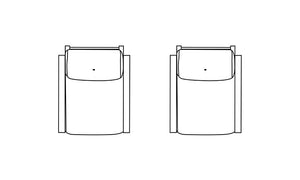
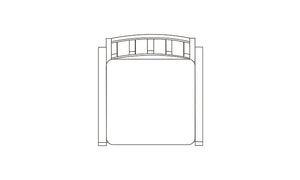
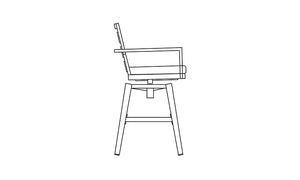
- Swivel chairs – Let you turn easily; make conversations smoother.
- Rocking or glider chairs – Add gentle motion; perfect for relaxed settings.
Material, frame shape, and seat size all affect comfort. That leads right into the angles, arm height, and seat width you should look for.
What Makes An Outdoor Dining Chair Comfortable For Long Sitting?
Outdoor dining chairs keep you comfortable during long meals by getting the angles, dimensions, and materials just right. The real test is if the chair can support your spine, hips, and arms in a neutral position—even with thinner cushions and firmer frames.
Why Is Comfort More Critical For Outdoor Dining Chairs Than Indoor Ones?
Outdoor dining chairs get used for longer stretches during barbecues, parties, and those drawn-out evening meals. It's not unusual for guests to stay seated for one to three hours. If the seat angle is off or the support is too shallow, you'll feel it in your back and legs pretty fast.
Indoor dining chairs usually have thicker foam and more padding. Outdoor chairs? Not so much. They rely on thinner cushions, mesh, sling fabric, or just plain wood and metal. So, things like seat depth, backrest tilt, and seat height end up doing the heavy lifting for comfort.
Weather-resistant materials change the feel, too. Metal and hardwood frames don't flex as much as indoor upholstered chairs, which can mean more pressure on your thighs and spine.
Because outdoor chairs need to handle moisture and sun, designers avoid heavy padding. Good ergonomic measurements help make up for that and keep you from constantly shifting in your seat.
What Are The Key Ergonomic Features That Prevent Sitting Fatigue?
Some ergonomic features really matter if you want to avoid getting sore. They keep your spine aligned, take pressure off your thighs, and let your arms and shoulders relax a bit.
-
Lumbar Support: The backrest should curve a little at the lower back, about 6–8 inches above the seat. That matches the natural inward curve of your spine and helps stop slouching and lower back pain during long meals.
-
Seat Depth: A depth of 16–18 inches works for most adults. If the seat's too deep, shorter folks end up leaning forward. The right depth leaves 2–3 inches between the seat edge and the back of your knees.
-
Backrest Angle: A recline of 100–110 degrees strikes a good balance between sitting up to eat and leaning back to relax. That angle is easier on your spine than sitting bolt upright at 90 degrees.
- Armrest Height: Armrests about 7–9 inches above the seat support your forearms without pushing your shoulders up. That helps keep your neck and shoulders from getting tense.

What Is The Ideal Seat Angle For Outdoor Dining Chairs?
The seat angle in an outdoor dining chair can make or break your comfort. A slight recline in the backrest and a gentle seat tilt help distribute your weight and ease pressure on your lower back.
What Seat-To-Back Angle Reduces Back Strain?
The seat-to-back angle decides how your spine rests against the chair. A 95° to 105° angle does a better job of reducing back strain than sitting straight up at 90°.
Sitting at a 90° angle keeps your torso upright, but it puts more pressure on your lower back. Since outdoor dining can last anywhere from 30 to 90 minutes (or more), that upright posture can get uncomfortable fast.
A slight recline of 5° to 15° lets the backrest support your spine's natural curve. When the backrest leans back a bit, some of your weight shifts from your spine to the chair back, which means your lower back muscles don't have to work as hard.
Chairs with a straight-up back might be okay for quick meals, but a 100° angle usually feels more relaxed without pulling you too far from the table.
How Does Seat Tilt Affect Your Posture During Long Meals?
Seat tilt changes how your weight spreads between your hips, thighs, and feet. A 0° to 5° backward tilt helps you stay comfortable during longer meals.
A flat seat (0°) keeps your pelvis neutral and works well with a slightly reclined backrest. But a gentle backward slope—up to 5°—stops you from sliding forward and means you don't have to brace with your legs.
Since the best dining chair height is 17 to 19 inches, you don't want the front edge too high. If it presses into your thighs, blood flow can slow down.
Keeping the tilt subtle supports an upright posture and lets your feet stay flat on the ground, knees bent at about 90° to 100°. A forward tilt makes you lean on your feet and can tire your legs. A slight backward tilt lets the backrest take some of the load, which feels better as the meal drags on.
How High Should Armrests Be On Outdoor Dining Chairs?
Armrests on outdoor dining chairs should line up with your elbows when you're seated and also fit under the table apron. The right height helps your posture, eases shoulder strain, and makes sure the chair slides under the table without a fight.
What Is The Ideal Armrest Height For Comfortable Dining?
Outdoor dining chair armrests usually sit 7–9 inches above the seat. That height supports your forearms at a comfy 90-degree bend, so your shoulders can relax and your neck doesn't get tight.
If the armrest is over 9 inches, it pushes your shoulders up. That gets uncomfortable fast, especially during long meals. High arms can also bump into the table and stop you from pulling the chair in all the way.
If the armrest is less than 7 inches, it doesn't support your forearms. You end up leaning forward or putting your elbows on the table, which tires out your shoulders after a while.
Armrest height needs to work with table clearance, too. Most dining tables have 10–12 inches from the seat to the tabletop. If you keep the total arm height below that, the chair fits under the table and you keep your legroom.
Should You Choose Outdoor Dining Chairs With Or Without Armrests?
Chairs with or without armrests each have their perks and drawbacks. It really depends on what you need for comfort, how much space you have, and how your table is built.
-
Chairs with armrests: These give your forearms and elbows some support.
-
-
Comfort: Arm support takes weight off your shoulders, which helps during longer meals.
-
Standing up: Armrests make it easier to get up, which is nice for older adults or anyone who needs a little extra help.
-
Space: They add 1–3 inches to each side, so you might fit fewer chairs at the table.
- Table fit: Sometimes the arms bump the table apron and stop the chair from sliding in all the way.
-
-
Chairs without armrests: These have open sides and no elbow support.
-
Space-saving: Their slim profile lets you fit more chairs around small patios or balconies.
-
Flexible: You can shift around more easily without anything in the way.
-
Cheaper: Fewer materials and simpler design usually mean a lower price.
-
Less support: No arm support means your shoulders might get tired faster during long meals.
-
What Seat Width And Depth Are Best For Outdoor Dining Comfort?
Outdoor dining chair seats need to balance enough width for personal space and enough depth for good leg support. Getting the dimensions right takes pressure off your hips and thighs, so you can sit up straight through a whole meal without having to fidget.
How Wide Should An Outdoor Dining Chair Seat Be?
Outdoor dining chair seat width usually falls between 16 to 20 inches (40–50 cm). This is the horizontal space between the inner edges of the seat frame.
Most adults need enough hip room to sit without feeling squeezed. A width of at least 18 inches works for most body types and feels comfortable for longer meals.
If you go narrower, closer to 16 inches, that fits compact patios and smaller folks. But the downside? Less movement, more hip pressure, and people might end up perching on the edge of the seat.
Armchairs often measure a bit narrower between the arms. Armrests add lateral support, which helps stabilize posture and distribute weight so comfort stays decent even if the inner seat width is just 17–18 inches.
For shared tables, keeping seat width consistent across all chairs makes the space feel balanced. This affects elbow room and helps prevent crowding during meals.
What Seat Depth Prevents Leg Discomfort?
Outdoor dining chair seat depth should land between 16 to 18 inches (40–46 cm) from the front edge to the backrest. This controls thigh support and knee clearance.
Since most people sit upright while eating, this depth keeps your back in contact with the backrest. A quick test: leave 2–4 fingers of space between the seat edge and the back of your knees.
This gap keeps circulation flowing and helps you avoid that annoying numbness or pressure behind the legs. If the depth goes over 18 inches, that’s more like lounge seating, and you might find yourself sliding forward at the table.
When depth drops under 16 inches, your thighs don’t get enough support. That means body weight gets concentrated in a smaller area, and fatigue creeps in faster during long meals.
How Do You Match Outdoor Dining Chair Height To Your Table?
Outdoor dining chair height needs to match table height for good posture, leg clearance, and easy movement. Getting this right keeps knees from feeling cramped, shoulders from hunching, and seats from feeling wobbly.
What Is The Standard Seat Height For Outdoor Dining Chairs?
Standard outdoor dining chairs usually have a seat height of 17–19 inches (43–48 cm) from the ground. Manufacturers design this to fit with a standard dining table height of 28–30 inches.
With this setup, most adults can sit with their feet flat and their thighs level. A 30-inch table and an 18-inch seat? That’s a pretty balanced combo for most people.
Diners can rest their forearms on the tabletop without needing to shrug their shoulders. Seat cushions also play a role here—a 2-inch thick cushion bumps up the sitting surface and eats into your leg clearance.
Measure from the top of the cushion, not just the frame, to avoid a tight fit. Bar-height tables (40–42 inches) and counter-height tables (34–36 inches) need taller seating.
If you use a standard dining chair at these taller tables, you’ll end up reaching up awkwardly and your shoulders will pay for it.

How Much Space Should Be Between the Chair Seat and Table?
The vertical gap between the chair seat and tabletop should be 10–12 inches (25–30 cm). This gives your knees room to move under the table.
Most tabletops are 1–2 inches thick, so measure from the underside of the table apron, not the top. If the gap shrinks to 8 inches, legroom disappears and people scoot forward, losing back support.
When the gap gets bigger than 12 inches, it just feels off—like you’re sitting too low and have to lift your elbows. Here’s a quick check: when you’re sitting, your forearms should rest naturally on the table at about a 90-degree angle.
This really affects shoulder comfort and how you sit during meals.
By matching these measurements, outdoor dining sets support stable posture and smooth movement.
What Materials Keep Outdoor Dining Chairs Comfortable In All Weather?
Outdoor dining chair materials matter for heat retention, moisture buildup, and how the seat feels in different seasons. Fabric choice and frame type really change how the seat handles sun, rain, and daily use.
Which Fabrics Work Best For Long Outdoor Sitting?
Outdoor fabric performance comes down to UV resistance, drying speed, and breathability. These details keep seats cooler and drier, which just makes sitting outside nicer.
-
Solution-Dyed Acrylic (e.g., Sunbrella): This stuff locks color into the fiber, not just the surface. UV rays usually break down surface dyes, but solution-dyed yarn resists fading and stiffness, so seats stay soft and cool even after years in direct sun.
-
Quick-Dry Polyester Blends: Open weaves or mesh let air pass through, cutting down on trapped heat and drying fast after rain. That helps keep mildew out of the cushions.
-
Olefin (Polypropylene): This synthetic fiber doesn’t soak up water, so it dries quickly and doesn’t get musty in humid weather.
-
Mold- and Stain-Resistant Treatments: Protective coatings stop spills from soaking in, so cushions stay cleaner and the surface stays smooth.
How Do Frame Materials Affect Seating Comfort?
Frame material sets the tone for seat stability, temperature transfer, and support. It really shapes how the chair feels, especially during a long dinner outside.
-
Aluminum:
-
-
Definition: A lightweight, rust-resistant metal often used in patio seating.
-
Lightweight Structure: Aluminum makes chairs easy to move around. No need to struggle just to rearrange your patio.
-
Rust Resistance: Powder-coated finishes keep corrosion at bay, which is a relief in wet climates.
-
Heat Conductivity: Aluminum heats up in the sun, so add cushions or slings to avoid a hot seat.
-
-
Teak:
-
Definition: A dense hardwood loaded with natural oils and built for durability.
-
Natural Oils: Teak shrugs off moisture and rot, even without chemical treatments. The surface stays smooth for ages.
-
Low Heat Retention: Wood doesn’t get as hot as metal, which is a win when the sun’s out.
-
Solid Support: The dense grain keeps the seat stable and solid.
-
-
Stainless Steel:
-
Definition: A corrosion-resistant steel alloy you’ll find in modern outdoor frames.
-
High Strength: Stainless steel handles heavier loads even with slim frames, so the seat feels firm and steady.
-
Cool Surface Finish: Brushed finishes cut glare, but the metal still gets hot in the sun—cushions help here too.
-
-
Resin Wicker:
-
Definition: Synthetic rattan woven over a metal frame.
-
Flexible Weave: The weave gives a little, so the seat isn’t as rigid as solid metal.
-
Weather Resistance: UV-stabilized resin won’t crack or peel, keeping the surface comfy in all kinds of weather.
-
Low Maintenance: The smooth synthetic surface wipes clean, so it’s easy to keep things tidy.
-
Outdoor Dining Chair With Cushions Vs Without: Which Is More Comfortable?
Outdoor dining chairs vary in comfort based on padding, support, and maintenance needs. Cushion thickness, frame ergonomics, and exposure to the elements all play a role in how long you’ll want to sit.
Advantages And Disadvantages Of Cushioned Outdoor Dining Chairs
Cushioned outdoor dining chairs use foam or fiber fill to add a soft layer between you and the seat frame.
- Immediate Comfort: Thick cushions (2–4 inches) cut pressure on hips and thighs, so you feel less strain during long meals.
- Lumbar Support: Some cushions have shaped backs or extra padding at the lower spine, which helps support your natural curve.
- Custom Style: Removable covers come in lots of colors and fabrics. If you use UV-resistant polyester or olefin, you can match your décor and worry less about fading.
- Maintenance Needs: Cushions need to be stored during heavy rain. Wet foam traps moisture and can get musty if you’re not careful.
- Sun Exposure: Direct sun weakens fabric over time. After a few seasons, expect some fading and wear.
Advantages And Disadvantages Of Cushion-Free Outdoor Dining Chairs
Cushion-free outdoor dining chairs rely on frame design, material flexibility, and seat shape for comfort.
- Low Maintenance: Solid seats made from teak, aluminum, resin, or sling fabric just need a quick clean. No loose padding means you skip the daily setup and storage routine.
- Weather Resistance: Materials like powder-coated steel or synthetic rattan handle rain and sun without a fuss, which is great for uncovered patios.
- Easy Cleaning: Smooth or mesh surfaces wipe down with soap and water, so spills don’t become a headache.
- Firm Seating Feel: Hard surfaces can put more pressure on your hips and thighs. Some people notice discomfort after half an hour or so.
- Ergonomic Dependence: Comfort depends on seat width (usually 18–20 inches), seat depth, and a back angle of about 100–110 degrees. If the design’s off, you’ll feel it in your back pretty quickly.
How To Choose Between Cushioned And Cushion-Free Chairs?
Choosing between cushioned and cushion-free chairs really comes down to how often you use them, your local climate, and what feels best to you.
- Frequent Use: If your family gathers for meals every day, cushion-free chairs just make life easier. No need to fuss with setup, so you save a bit of time and hassle.
- Long Gatherings: For those long, lingering dinners, cushioned models are the clear favorite. A little extra padding goes a long way for your back and legs.
- Climate Conditions: Living near the coast or anywhere humid? Go for quick-drying foam and airy covers. Mesh sling or fast-dry cushions help keep mold at bay, which is honestly a relief.
- Storage Space: Smaller patios without storage boxes do better with cushion-free chairs. Fewer loose bits means less clutter to worry about.
- Style Preference: Tailored cushions often suit formal dining sets, while modern looks tend to favor simple, cushion-free frames. It’s a matter of taste, really.
How To Choose The Right Outdoor Dining Chair For Maximum Comfort?
Finding the right outdoor dining chair for maximum comfort is about matching chair size, materials, and features to your body, your space, and your climate. It’s not always obvious, but these little details can make or break your setup.
-
Space Fit: The size of your patio dictates chair width and depth. A tiny balcony works best with armless or stackable chairs, while a big deck can handle wider frames.
Proper spacing—at least 24 inches per chair—keeps things from feeling cramped and lets everyone move around easily. -
Dining Habits: If you host often, pick durable frames like aluminum or teak. Occasional use? Lighter plastic might be fine.
Heavy use wears chairs down fast, so sturdy materials last longer and keep you from replacing them every year. -
Seat Height: Most dining tables are about 28–30 inches tall. Your chair’s seat should be 17–19 inches high.
This keeps your knees at a comfy angle and your legs relaxed.
-
Seat Width & Depth: Adults generally need at least 18–20 inches of seat width and 16–18 inches of depth. Enough space spreads your weight and eases pressure on your hips.
-
Backrest Angle: A gentle recline of 100–110 degrees helps support your spine, especially during long meals.
Using a supportive back angle keeps lower back pain in check.
-
Armrest Height: Armrests should slide under the table and let your elbows rest naturally. Good alignment takes the tension off your shoulders.
-
Weather Resistance: If you live where it rains a lot, pick quick-drying mesh or sling fabric. Places with strong sun need fade-resistant textiles.
Coastal areas do best with rust-proof aluminum or stainless steel. The right materials keep chairs comfy and looking good for years.
Common Mistakes To Avoid When Buying Outdoor Dining Chairs
Outdoor dining chairs often fail when buyers focus on appearance instead of ergonomic support. A slim profile or trendy frame may look refined, yet poor seat depth or a back angle outside the 100–110° range reduces comfort.
Guests end up shifting around and cutting meals short. Chairs with a proper lumbar curve, supportive cushions, and a balanced seat width (18–22 inches for most adults) really help with posture and avoid strain.
Table and chair height compatibility directly affects dining posture. Standard outdoor dining tables are usually 28–30 inches high, and seat height should fall near 17–19 inches.
If the difference is more than 2 inches, you lose leg clearance and might end up hunching or shrugging your shoulders. Armrests that sit higher than the tabletop can block movement and throw off your arm position too.
Weather resistance determines how long the chair maintains structure and comfort. Indoor-grade wood, untreated steel, or low-density foam just can’t handle moisture or sun.
Frames rust, fabrics fade, and cushions flatten after one season. Powder-coated aluminum, teak, all-weather wicker, and quick-dry foam hang in there much better.
Common buying errors include:
- Choosing style over ergonomic dimensions
- Ignoring seat height vs. table height alignment
- Selecting materials not rated for outdoor exposure
- Overlooking cushion drainage and fabric durability
If you focus on measurable features instead of just looks, you’ll avoid a lot of regret and unnecessary replacements.
Our Top Recommendations For Comfortable Outdoor Dining Chairs
Comfortable outdoor dining chairs really come down to the right seat angles, supportive materials, and stable frames. If you want to enjoy a meal outdoors that lasts more than an hour, that stuff matters.
-
Amario Collection: Premium Comfort Meets Modern Design – This chair gets those ergonomic angles right, with a backrest tilt close to 100–110 degrees and a seat height around 17–18 inches. That’s the sweet spot for keeping your lower back happy, so you can linger at the table without feeling stiff.
They use powder-coated aluminum and Sunbrella fabric, so you don’t have to worry about rust or fading. This makes them a solid choice for patios that get a lot of sun and rain, and the cushions don’t lose their shape. -
Azur Collection: Elegant Ergonomics for Extended Outdoor Dining – Here, you get a rust-resistant aluminum frame with a hand-painted teak-weathered finish and a back that actually follows the natural curve of your spine. The powder-coated aluminum construction handles moisture and weather without concern, requiring minimal maintenance.
If you’re in a humid or coastal spot, that’s a big deal for durability. The seat is usually about 18–20 inches wide, with armrests sitting 7–9 inches above the seat, which feels just right for resting your arms during dinner. - Nuova Stackable Dining Chairs: These aluminum and teak stackable chairs feature contoured backs for comfort and easy storage. The lightweight yet sturdy frames make them ideal for moving and stacking. Perfect for smaller decks, balconies, or events where flexible seating is needed.

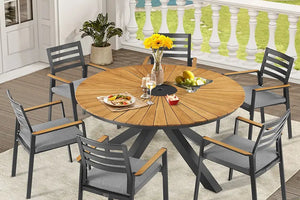
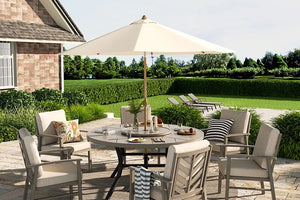
Peak Home Furnishing provides Amario 9 Pieces Outdoor Dining Set with Rectangle table & Aluminum Chair


Peak Home Furnishings offers the complete Azur Collection, including Patio Dining Armchairs, Armless Chairs, and Swivel Dining Chairs—all featuring premium Sunbrella® cushions and aluminum frames with a teak-weathered finish.
FAQs
What is the ideal backrest angle for outdoor dining chairs?
A backrest angle of 100–110 degrees (or a 10–15 degree recline from vertical) provides the best balance between upright dining posture and comfortable spine support during long meals.
How high should armrests be on outdoor dining chairs?
Armrests should sit 7–9 inches above the seat to support your forearms at a natural 90-degree bend while still fitting under most dining table aprons.
What seat dimensions work best for outdoor dining comfort?
A seat width of 18–20 inches and depth of 16–18 inches accommodates most adults, providing enough hip room and thigh support while leaving 2–4 fingers of clearance behind the knees.
Should I choose cushioned or cushion-free outdoor dining chairs?
Cushioned chairs offer better comfort for extended gatherings (2–4 inch cushions reduce pressure on hips and thighs), while cushion-free chairs with ergonomic frames are lower maintenance and better suited for wet climates or daily use.
Related Articles

Pool Chaise Lounge Features: Are Adjustable Bac...
Pool chaise lounge features like adjustable backs and wheels really shape comfort, mobility, and how long these chairs last. Adjustable backs almost always make the experience better, while wheels are...
Pool Chaise Lounge Features: Are Adjustable Bac...
Pool chaise lounge features like adjustable backs and wheels really shape comfort, mobility, and how long these chairs last. Adjustable backs almost always make the experience better, while wheels are...
Continue Reading
Outdoor Dining Chair Materials Compared: What A...
Outdoor dining chair materials shape comfort, durability, maintenance, and how well your chairs age outside. Metal brings strength and low upkeep, wicker gives you texture and style, cushioned seats boost...
Outdoor Dining Chair Materials Compared: What A...
Outdoor dining chair materials shape comfort, durability, maintenance, and how well your chairs age outside. Metal brings strength and low upkeep, wicker gives you texture and style, cushioned seats boost...
Continue Reading
Coffee Table vs Side Table: Height Rules & Spac...
Outdoor coffee tables and side tables need to match your sofa height and allow enough space for a comfortable, balanced layout. An outdoor coffee table should sit about 1–2 inches...
Coffee Table vs Side Table: Height Rules & Spac...
Outdoor coffee tables and side tables need to match your sofa height and allow enough space for a comfortable, balanced layout. An outdoor coffee table should sit about 1–2 inches...
Continue Reading